
访谈 | 葡萄牙涂鸦艺术家Vhils的艺术世界
自2000年到2005年左右,作为一名高产的涂鸦作家,葡萄牙艺术家亚历山大?法托(Alexandre Farto)(b.1987)一直以Vhils作为代号与城市环境进行视觉互动。
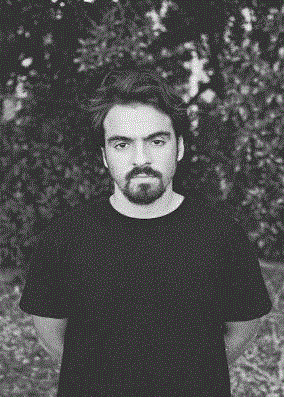
维尔斯(Vhils)
他开创性的“刮擦表面”浅浮雕雕刻技术,于2007年在里斯本的VSP集团展览会上首次向公众展示,次年在伦敦的罐头节(The Cans Festival)再次向公众展示。在过去的十年里,这种创作技术被誉为最引人注目的艺术创作方法之一。这种引人注目的诗意视觉形式,在世界各地的室内外环境中都有展示,残酷和复杂的表达了人类情感的核心。
Portuguese artist Alexandre Farto (b. 1987) has been interacting visually with the urban environment under the name of Vhils since his days as a prolific graffiti writer in the early- to mid-2000s. His groundbreaking bas-relief carving technique – which forms the basis of the Scratching the Surface project and was first presented to the public at the VSP group exhibition in Lisbon in 2007 and at the Cans Festival in London the following year –, has been hailed as one of the most compelling approaches to art created in the streets in the last decade.
借此次Vhils来上海的机会,Moca君有幸见到艺术家并采访了他几个问题,看看他是怎么回答的吧!
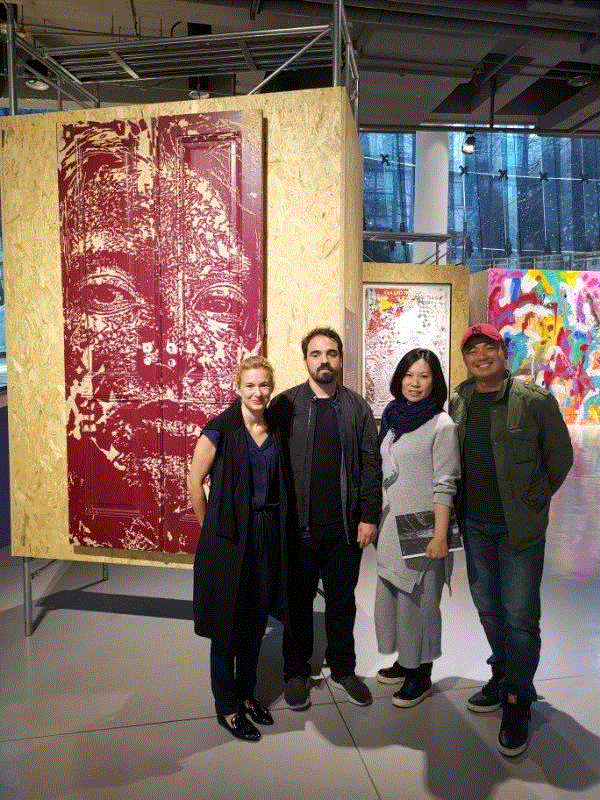
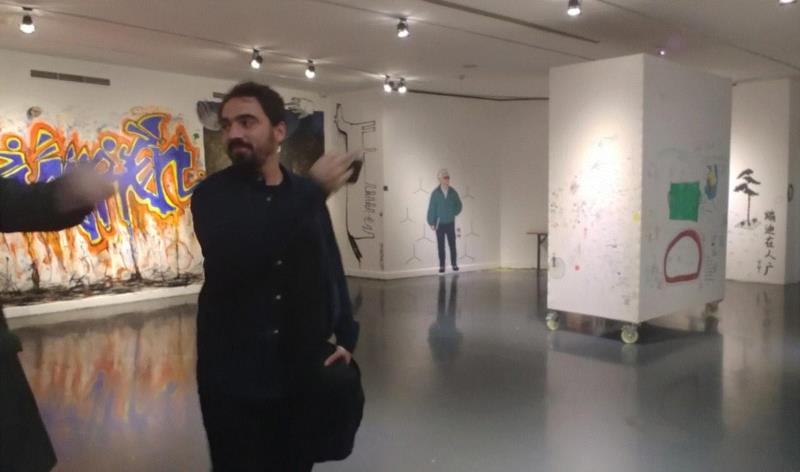
左起: Magda Danysz, Vhils, MocA执行馆长孙文倩, Yusi
Moca君: 第一次涂鸦是什么时候,在什么地方,画了什么?为什么开始涂鸦?最开始的时候涂鸦的题材是什么?
Vhils:第一次涂鸦是在2000年的里斯本,最初只是随意地玩一下。涂鸦的内容也只是传统的涂鸦表现形式,我想任何人都可以画出来的。涂鸦是一种表达方式的改变,你可以表达任何事,并且需要团队合作,我的团队由7个人组成,他们都是我的朋友。
一开始是使用喷漆,在涂鸦的过程中我们成长很多,并且开始思考街头涂鸦的意义,我们常常看到满街都是涂鸦,涂鸦推动城市里的人都去参与绘画,往墙面上添加东西 ,通过涂鸦的添加与改变,我希望让人们意识到时间的流逝。但这只是一个停留在表面上的想法,我还想通过今后的探索进一步实现该目的。
Moca君:你觉得涂鸦是城市的创造者还是破坏者?在城市力量中涂鸦起到了什么作用?你的作品中充满许多城市力量,那你生活的城市对你的创作产生了哪些影响?
Vhils:我的创作和城市的关系很大,我去过的每个城市都存在这样的涂鸦作品,所以作品不仅仅是艺术家的作品,也成为了城市的一部分,并且已经刻在城市的结构中,这就是我创作的一种方式。
Moca君: 你对于中国有着什么样的印象?
Vhils:中国变化非常大,并且好的方向发展,我在12年第一次来到中国,对中国文化非常着迷,包括艺术方面,曾经在上海和香港居住过一段时间,也在17年时参加过北京的驻留项目,这些地方都带给我艺术上的启发,并且改变了我对世界的看法。
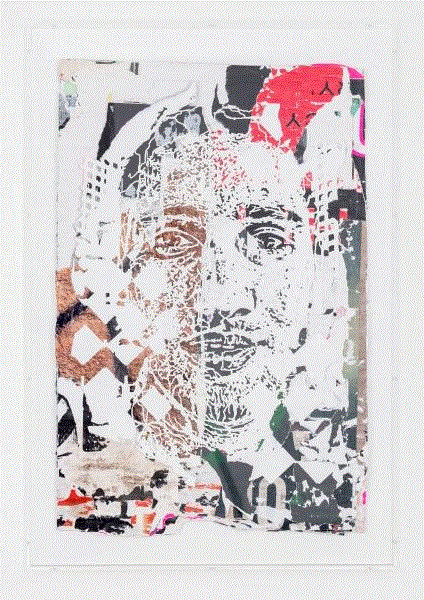
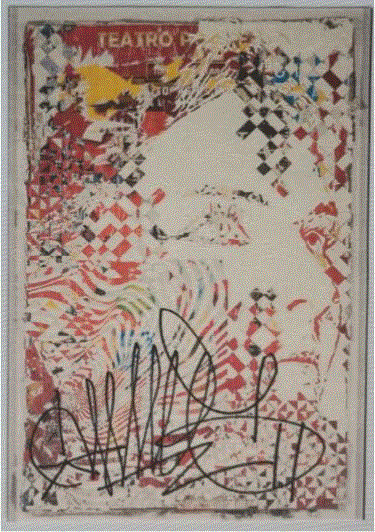
Vhils, Visual Cacophony 5, 2013, advertising posters collected from the street, hand carves, 90 x 60 cm
Moca君: 对你来说有没有什么难忘的涂鸦经历?
Vhils:第一个是一件作品,关于宗教基督教徒,一半是基督徒,一半是穆斯林,我参与了绘画其中一对兄弟的部分,不同的宗教群体也可以相安无事的相处,即便是不同背景。在巴西做的一个项目,是在收集文物时采集到的一个镜子。
Moca君:在一面墙上作画和在纸板上作画有什么不同或者不同的意义?
Vhils: 不经常在纸上作画 而是拿着材料走上街头,在墙壁或是板子上进行创作,并且灵感和素材都没有脱离外面的世界,都是城市的内容,创作也影响着城市,我选择的创作载体通常是人们不关心的,比如说废弃大楼,旧板子,或者废旧的墙面,想通过涂鸦来让人们引起新的关注。
Moca君:你觉得现在涂鸦艺术走入主流市场了吗?人们应该如何更好地欣赏和理解这种艺术?
Vhils:涂鸦艺术是否走进主流市场是一个很难回答的问题,因为通过某些艺术运动推动涂鸦走进主流市场,对人们来说是很好的,因为大家多了接触艺术的途径,这也是传递信息及艺术表达的新方式,但对于大多数人来说,真正走近并且了解涂鸦艺术,还需要时间。
MoCA: When and where did you create your first graffiti? What was the content?What inspires you to create graffiti initially? What was the theme?
Vhils: I think it was 99, so 2000 and that was in my home town (Lisbon) and I was just playing around. It was typography so very very traditional graffiti. It was the beginning and that went to trains and different things.
I think it was an alternative, different ways of expression. It was really a group of friends, that was just exploring. I was kind of growing up in Lisbon in the suburbs, where there’s not a lot to be or to do. And in the end it was something that taught me a lot discipline, how to express myself, how to express myself, how to participate in the public space. So this will to reclaim the public space is present when I was creating art.
MoCA: Do you consider graffiti as a creator, or a disruptor to the city scene? What kind of role does the urban energy (urban ethos) play in graffiti? Your graffiti is always imbued with urban energy (urban ethos), so what specific influences have the city that you’ve lived in exerted on your work?
Vhils: At the beginning it was just spray paint, and then it was just a lot of graffiti. And then I started to reflect on the act of painting on the street and what does it mean to add paint on top of layers that were already there. So when I was growing up I started to conceptualize more and think of what was doing art in the public space. I started realize of all the walls in the streets already accumulate layers, and they were used for advertising. There was a mural movement, people started to paint everything white, so the walls in the street were constantly gaining layers. And they are getting fatter with everyone adding. And there was already graffiti everywhere. So I came up with the idea that instead of painting everything white, and painting by extracting. To expose the visceral part of the city and to expose the passage of time because in our daily routine, sometimes we don’t even realize or think about how the streets were evolving. So in my scratching the surface, in my act of destruction I reveal what’s underneath them. Almost like an archaeological process. But if in archaeology you go into the ground to see the different strata, but for cities walls are where you can feel the history of the city and see what composes the city.
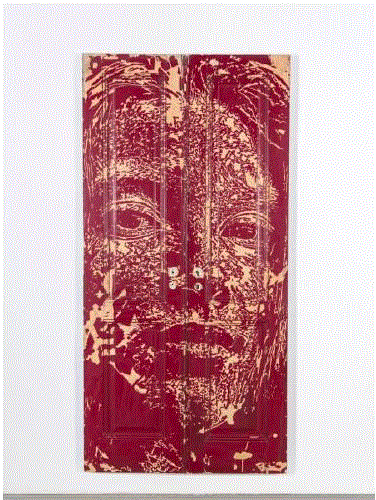
Vhils, Depict Series #09, 2018, Hand carved old wooden doors, 232 x 120 cm.
I think graffiti adds onto the city, it’s an energy that exists in every city. You can choose to oppose and fight it and you can spend a lot of money to have artists arrested. Or you can work with them and create a dialogue. Of course there’s illegal graffiti is going to happen and that's impossible to eradicate. But a lot of artists want to participate and work together. So if cities can work together with these artists, cities can actually win from the dialogue with these artists. They can give artists public space since they do the same for advertising. It’s something important because it can bring cultural offer for the citizens as a social and economical impact. Since it can change neighborhoods poorly perceived from one to another. It can drive people to come to locations that they would otherwise not go if there were not art on them.
There’s always going to be illegal art, it’s part of the essence of what we do. But we can always have a dialogue and do something legal. I believe in both instances of street art.
For sure, in every city I go the layers from every city are there. So in a way my work adapts to each place, and each country has different layers and histories. And I work with these histories and layers. So in a sense my work is not just (unintelligible) from different cities, it’s engraves in the fabric of different cities.
MoCA: What were your impressions of China?
Vhils: It was life changing in a very good way. The first time I came to China it was in 2012, and it was the first time I came to China. Coming from the suburbs from a country in Europe, I didn’t know much about it. But since then I’ve been very fascinated by it. By Chinese culture, by all things, by Shanghai particularly. The art scene in Shanghai, the energy coming out of here. And I always come full of inspiration, and I lived in Hong Kong for a while, and I did a project in Beijing. So it changed my perception of the world.
MoCA: Are there any special or unforgettable experience about graffiti that you might share with us in detail?
Vhils: There was several. There was a project we did in Sierra Leone not long ago, it was about religious tolerance and was very meaningful. There was a family that was part Christian and part Muslim living in peace and sharing a place of faith. And I did a portrait of the cousins together. It got attention in a country that had gone through a lot of struggle and it demonstrated religious tolerance. That the two can live in peace even if two were from completely different backgrounds. There was a project in favela in Brazil.
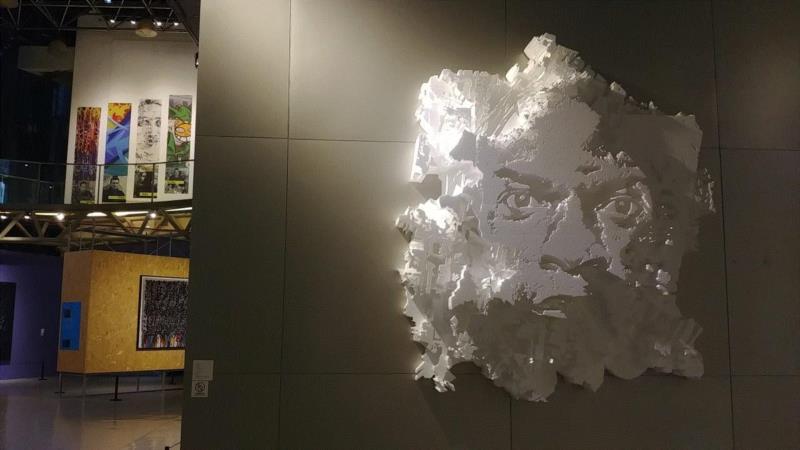
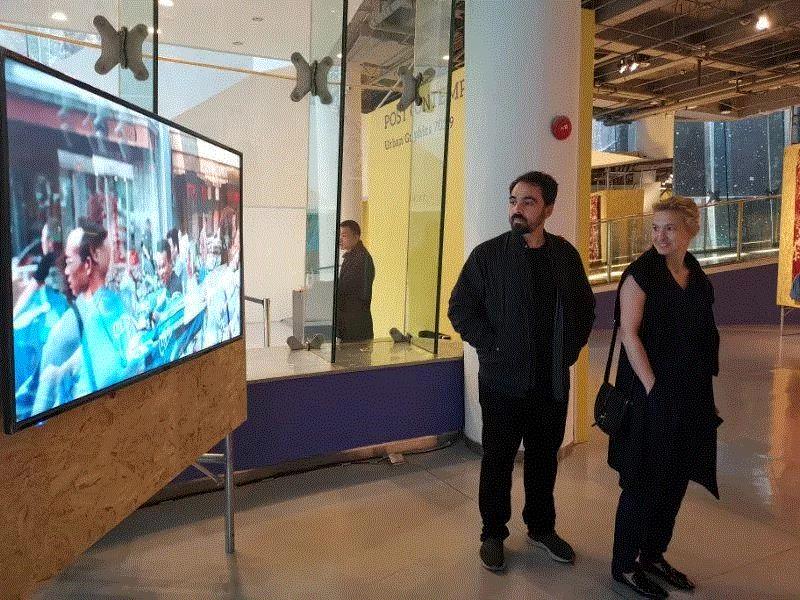
展览现场
MoCA: What’s the difference between painting on a wall versus a piece of paper, in your opinion?
Vhils: I don’t use canvas usually, I work with materials. I don’t like adapt to a canvas. I like to go into the streets to take the billboards or the wall. I don’t discriminate between materials or whether its in doors or outdoors. I usually revolve around the urban context and how we humans are influenced by it and how we influence the city. My art is a reflection of that. I always collect and pick up materials that the city expels or doesn’t want and I take them into a gallery to work on them. I’m comfortable working indoor or outdoors and different materials. I’ve worked on abandoned buildings, old doors, metals, walls. Anything the city doesn’t want and throw away, I like to elevate them and bring them to attention.
MoCA: Do you think that graffiti and street art have crossed into the mainstream market? How should people better understand or appreciate graffiti?
Vhils: It's difficult to take a stance on that. I think for sure, the fact that its an art movement that speaks to a new generation that really relates to it made it more approachable and made people understand the messages that sometimes conceptual art distances itself from. I think that this kind of art creates a dialogue with the people, yes you have a lot of public that now accepts it and towards the market you see signs of people accepting it. But at the same time the contemporary art movement still perceives street art and graffiti as a lesser art. Showings in the museum such as MoCA are a good beginning but there is still a prejudice against the movement, not particularly in China but abroad as well.
观众福利:
留言写下你认为涂鸦对于城市的意义,点赞最多的赠送Vhils作品签名。
当前展览 / CURRENT EXHIBITION
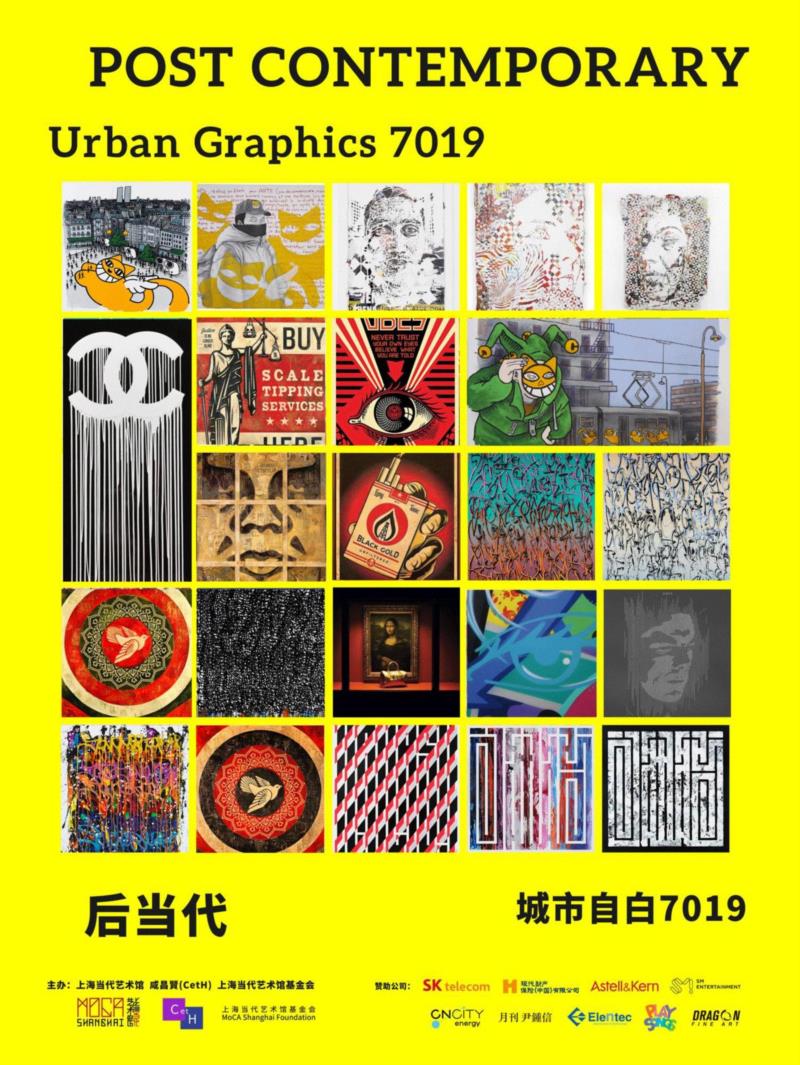
《 后当代城市自白7019 》
"Post Contemporary——Urban Graphics 7019"
策展人 | CURATOR 孙文倩 | Miriam Sun
林志秀 | Jisoo Lim
主办 | Organized by 上海当代艺术馆 MoCA Shanghai
票价:80元
Admission: 80 RMB
优惠票价:40元
Discount: 40 RMB
(学生/70岁以上老人/现役军人/残障人士)
(Full-time students/People over 70
Soldiers on service/Disabled people)
购票请扫一下二维码
Scan the QR code to purchase tickets.

长按关注我们
Scan the QR code to follow us.


 {{newsData.good_count}}

 {{newsData.transfer_count}}


 {{item.good_count}}k
已展示全部
{{item.publisher_name}} 发布了 文章
{{item.title}}
更多功能等你开启...


 分享
分享