
Preview|Vacuum. Dry Land. Into the Room: NI ZHIQI solo exhibiton
Shanghai—Pearl Lam Galleries is pleased to present a debut solo exhibition for Ni Zhiqi in Shanghai, Vacuum. Dry Land. Into the Room, brings together his mixed media paintings produced in recent years as well as selections from the past two decades. Ni is a collagist in the way he executes and explores mark-making, and the exhibition can be considered as an evocative mapping of fragmented spatial territories, disclosed through an active engagement with the show as a whole.
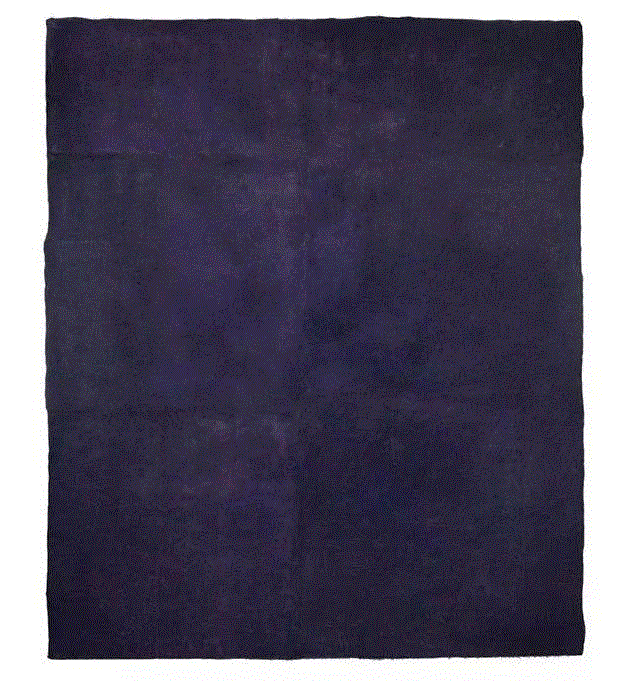 In to the Deep, 2018, Mixed media, 180 x 150 cm
Patterns, scribbles, dynamics, perception, and play are spaces and movements in themselves; they are generators of multiple experiences and key elements of a creative path that strive towards constant connectivity, trying to find a way to explore ideas of chance and circumstances. Process, or rather the evidence of process, is the primary focus of Ni’s artworks. The Shanghai-based artist realizes them freehand without the assistance of either preparatory blueprints or technological aids. In short, they long for the nature that eventually will suggest its very richness—both structural and textural.
Ni’s works are largely inspired by his travels and take their cue from a montage of associative imageries found in interiorized windows and floorings, such as mosaic tiles. The influence is evident in the artist’s sharpened use of geometrical variations that dominate his compositions. He captures the non-referential manifestation of perception by combining painting and collage, implementing the stylistic forms of contours and muted hues to the layered treatment of the exhibiting works. Ni utilizes a diverse range of found materials that form personal assemblages of time, including handmade paper he collected from Guizhou, vintage book pages he sourced from his travels, yarn from fashion design classes he teaches, anonymous old envelopes and discarded packages, etc.
Furthermore, the artist’s deliberate and calculated use of these sourced items alongside his attention to the particular sensuality of their materiality are what shapes his works. He strips away the objects’ innate nature, dismantles and reassembles them, squeezing them into a dense perceptual vacuum. Through this process, not only are different layers of perception extracted, but the gap in between the shifting layers is compressed to such an extent that the emptiness of the vacuum becomes as solid as dry land, inviting viewers “into the room”—a perceptual realm that is both an illusion and reality, a presence indicating an absence, a series of traces in place of a missing referent. This is further exemplified in Combat where words and sentences are randomly written in such a way as to make them difficult to immediately perceive. And even when the texts are revealed, their meanings remain obscure since they work on an associative intuitional plane rather than follow any rational logic.
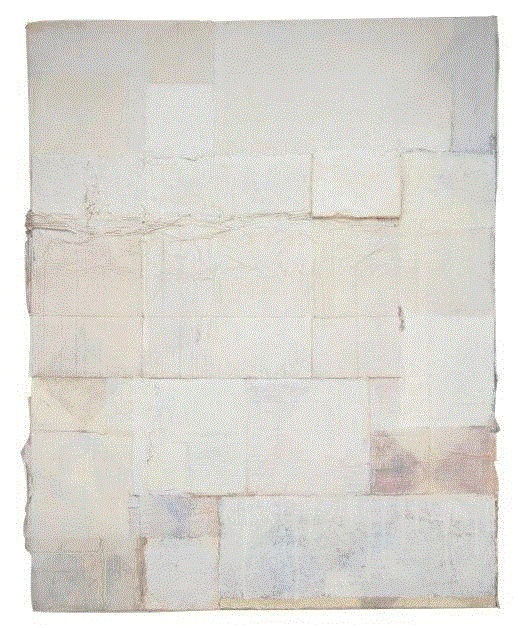 Alhambra No. 26, 2018, Mixed media, 165 x 130 cm
While this exhibition professes to highlight the artist’s interest in encountering and re-encountering the idiosyncratic ready-made through its insertion alongside other prop-aided articulations such as fabric swathes to form spatial arrangements, Ni’s work, as it emerges in this exhibition, creates a sort of textured system, one whose formalist aspirations remain as a site of action, a space in which to play, drawing and defeating limits in productive tension with its sensual tactility, in relation to the determining mechanism of the artist’s oeuvre.
About the Artist
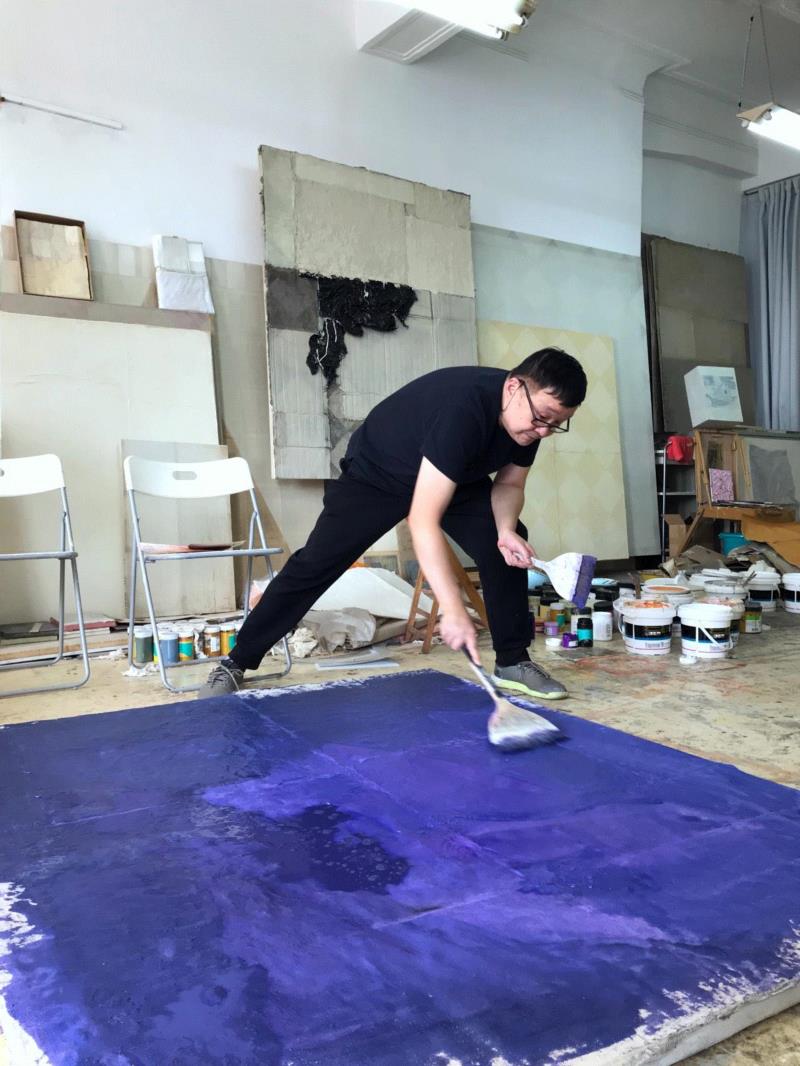
Ni Zhiqi (b. 1957, Shanghai, China) graduated from the Shanghai Light Industry College (now known as the Shanghai Institute of Technology) in 1981. In the 1980s, he came to prominence with his early expressions and explorations in surrealism as an up-and-coming young artist during the ’85 New Wave Movement. In the 1990s, the artist furthered his studies at the Royal Academy of Fine Arts in Belgium, where he was awarded the first-class prize in the exhibition by Karel Veslat. He currently lives and works in Shanghai.
When the artist first went abroad, he was shocked by Joseph Beuys’ “everyone is an artist” concept and the aggressive contemporary artistic environment at the time that challenged Western traditional techniques. This inspired him to experiment with artistic techniques that were extremely different from those that were predominant in China. He used anything he could find—such as containers, eggshells, chairs, etc.—as materials in his series of installation works called Mona Lisa’s Rebirth (1993), which centred around the Oriental concept of the cycle of life and renewal. When he returned to China in 1995, he began his lifelong artistic pursuit of achieving a misty and hazy atmosphere in his paintings. The streetscapes in his Scenery series (1999–2011) along with elements in his Portrait, Windows, and Chairs series (2011) seem to be concealed in half-transparent sunlight or mysteriously hidden behind frosted glass. Ni considers his works to be a special type of abstract painting that focuses on the simplification and extraction of a concrete and particular object. Even an enormous representational system can be simplified and portrayed as a close-up of one of its parts under his expression, retaining an emotional or tactile feeling or fragments of memories.
In Ni’s Alhambra series (2017), which combines both collage and paint, the artist has chosen to cover the canvas with a specific handmade paper produced by ancient and secretive Chinese papermaking techniques. The works focus on the Alhambra’s tile patterns and evoke a feeling of infiniteness while recalling memories of the red palace built by the Moors in Spain in the Middle Ages. With the help of Chinese traditional techniques, his gentleness and warmth are slowly revealed. The core concept hidden in the faded colour and rough edges of his works is a philosophical outlook on time and memories from an Asian perspective.
Ni’s exhibitions include Memories in the Books, 10 Corso Como, Shanghai; Under the City, Above the Sea: New Images of Eight Artists (2015), Da Hu Art Center, Shanghai, China; President’s Charity Art Exhibition (2014), The Arts House (formerly Old Parliament House), Singapore; The Third China Oil Painting Exhibition (2003), National Art Museum of China, Beijing, China; International Contemporary Art Invitational Exhibition (2002), Pinakothek der Moderne, Munich, Germany; Exhibition by Karel Veslat (First-class prize, 1994), Antwerp, Belgium; Ni Zhi Qi: Paintings (SCHILDEREN) (1994), National Higher Institution of Fine Arts, Antwerp, Belgium; The First China Oil Painting Exhibition (1987), Shanghai Exhibition Center, Shanghai, China; Itinerant art exhibitionin Osaka and Kobe (1986), University Gallery, Osaka, Japan; and Progressing Chinese Youth Art Exhibition (Third-class prize, 1985), Shanghai Art Museum, Shanghai, China.
About Pearl Lam Galleries
Founded by Pearl Lam, Pearl Lam Galleries is a driving force within Asia’s contemporary art scene. With over 20 years of experience exhibiting Asian and Western art and design, it is one of the leading and most established contemporary art galleries to be launched out of China.
Playing a vital role in stimulating international dialogue on Chinese and Asian contemporary art, the Galleries is dedicated to championing artists who re-evaluate and challenge perceptions of cultural practice from the region. The Galleries in Hong Kong, Shanghai, and Singapore collaborate with renowned curators, each presenting distinct programming from major solo exhibitions, special projects and installations to conceptually rigorous group shows. Based on the philosophy of Chinese literati where art forms have no hierarchy, Pearl Lam Galleries is dedicated to breaking down boundaries between different disciplines, with a unique gallery model committed to encouraging cross-cultural exchange.
Further building on the Galleries’ commitment, Pearl Lam Galleries is delighted to announce the opening of its new gallery at H Queen’s, Hong Kong’s latest art hub, in March 2018. The four gallery spaces of Pearl Lam Galleries in Hong Kong, Shanghai, and Singapore represent an increasingly influential roster of contemporary artists. Chinese artists Su Xiaobai and Zhu Jinshi, who synthesize Chinese sensibilities with an international visual language, are presented internationally with work now included in major private and public collections worldwide. The Galleries has also introduced leading international artists, such as Leonardo Drew, Jenny Holzer, Carlos Rolón/Dzine, and Yinka Shonibare MBE, to markets in the region, providing opportunities for new audiences in Asia to encounter their work. Pearl Lam Galleries encourages international artists to create new work which engages specifically with the region, collaborating to produce thought-provoking, culturally relevant work.
Vacuum. Dry Land. Into the Room
Artist:Ni Zhiqi
Dates|3 November – 30 December, 2018
Vernissage|5-7pm, Saturday, 3 November, 2018
Hours|Monday-Sunday, 10:30am-7pm
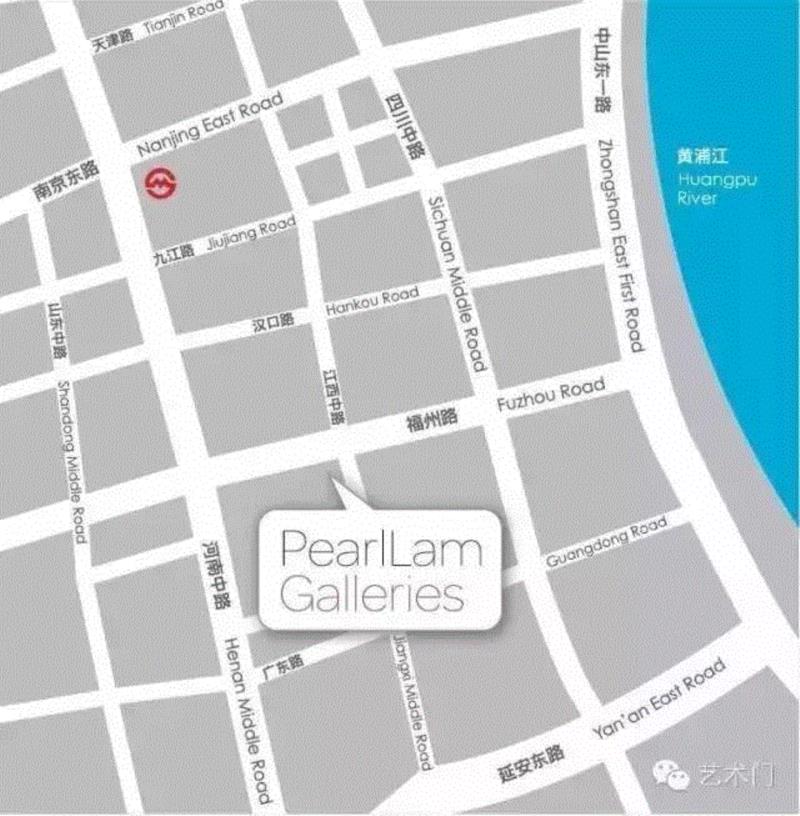
Venue|G/F, 181 Middle Jiangxi Road, Shanghai, China

 {{newsData.good_count}}

 {{newsData.transfer_count}}


 {{item.good_count}}k
已展示全部
{{item.publisher_name}} 发布了 文章
{{item.title}}
更多功能等你开启...


 分享
分享