
【中间活动预告】历史中的情感与理性 ——“沙龙沙龙:1972-1982年以北京为视角的现代美术实践侧影”展系列演讲与座谈会第二回
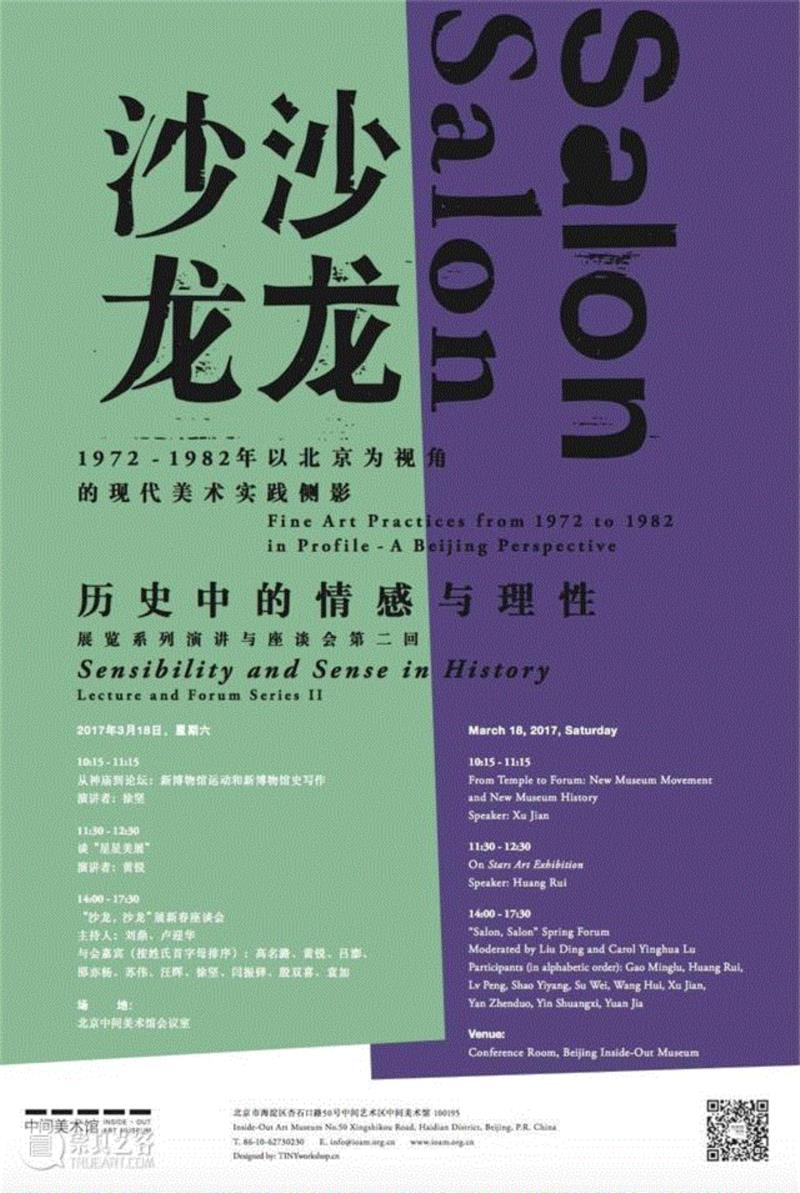
历史中的情感与理性
——“沙龙沙龙:1972-1982年以北京为视角的现代美术实践侧影”展系列演讲与座谈会
请输入标题 bcdef
“沙龙沙龙:1972-1982年以北京为视角的现代美术实践侧影”是“从艺术的问题到立场的问题:社会主义现实主义的回响”系列研究的第三部分展览。该系列研究由艺术家刘鼎与批评家卢迎华共同发起,通过持续进行的展览和写作来辨析与反思中国有关“当代艺术”的历史叙述与建构。在历史现实与历史叙述中,个体、群体参与者和叙述者的情感与理性既是历史现实的一部分,也决定了历史叙述的思想基础、价值取向和具体内容。对于重访历史现实的研究者而言,既要承认参与者的情感在具体语境中的历史合理性,也要留意历史叙述与历史现实的缝隙、差距与重合。
在本展览中,我们将围绕展览议题,组织多场次的展览系列演讲和座谈会,欢迎大家持续关注!
请输入标题 abcdefg
“历史中的情感与理性”系列演讲与座谈会第二回
时间:2017年3月18日,星期六
场地:中间美术馆会议室
活动安排
(预约方式如下)
【10:15-11:15】
从神庙到论坛:新博物馆运动和新博物馆史写作
演讲者:徐坚
博物馆究竟是神庙还是论坛?1971年提出的“卡梅隆之问”至今还在博物馆界发酵。这一质问实际上表达了新博物馆学的核心主张,因此,新旧博物馆更迭远未尘埃落定。新博物馆运动将博物馆视为论坛,旨在强调博物馆的阐释性、互动性和多元性,博物馆史也就成为博物馆学在学科遗产认知上的表现形式。《名山:作为思想史的中国早期博物馆史》就是在此观念之下,作为新博物馆史写作的尝试出现的。作为论坛的博物馆具有独特的叙事方式和技巧。《名山》揭示,虽然表达多元,中国早期博物馆就是以物质和空间为独特词汇,通过馆藏、馆舍和展陈三种结构,搭建出公共属性、知识和认知的。
徐坚,中山大学历史学系教授。2000年获考古学及博物馆学博士学位。主要研究方向为南中国及东南亚大陆地区考古学、艺术史和物质文化。2005-2006年担任美国巴德学院访问助理教授,2008年担任法国高等人文研究基金会爱马仕学人,2010年担任中山大学高等人文研究院驻院学人,2014年担任日本创价大学访问教授。2004年以来的主要研究项目包括美国温纳-格兰人类学基金会支持的中国考古学史口述史项目,大英图书馆和美国国家地理学会支持的西南中国濒危文化研究,日本住友财团支持的鸟居龙藏研究、滨田耕作研究等项目。出版有专著《暗流:1949年之前安阳之外的中国考古学传统》(科学出版社,2012年)、《时惟礼崇:东周之前青铜兵器的物质文化研究》(上海古籍出版社,2014年)和《名山:作为思想史的早期中国博物馆史》(科学出版社,2016年),译著《考古学思想史》、《阅读过去》、《艺术中国》、《中国艺术史》和《理解早期文明》,在《汉学研究》、《新史学》、《历史人类学学刊》、《学术月刊》等杂志上发表论文20余篇。
【11:30-12:30】
谈“星星美展”
演讲者:黄锐
1979年9月27日,“星星画会”在中国美术馆东侧小花园铁栅栏外举办了第一次展览,但两天后便被警察取缔,引发了口号为“要政治民主,要艺术自由”的游行。同年11月,展览移至北海公园画舫斋举办,《人民日报》为其刊登了广告。1980年,第二届“星星美展”在中国美术馆展出。作为当时由独立艺术家组成的独立艺术团体,“星星画会”的历史意义在今天“去政治化”的背景中更加凸显出来。作为“星星画会”的发起人之一,艺术家黄锐将与我们一起回顾包括他自己在内的画会成员如马德升、王克平等艺术家具有现代主义风格的作品,重新走进历史的现场。
黄锐,艺术家,1952年生于北京,“星星美展”的发起者之一。
【14:00-17:30】
“沙龙,沙龙”展新春座谈会
主持人:刘鼎、卢迎华
与会嘉宾(按姓氏首字母排序):高名潞、黄锐、吕澎、邵亦杨、苏伟、汪晖、徐坚、闫振铎、殷双喜、袁加
本次座谈会将围绕展览“沙龙沙龙:1972-1982 年以北京为视角的现代美术实践侧影”的主题展开讨论,参与者包括艺术家、艺术批评家、史学家及年轻学者。与会者将共同重访1972-1982 年这一历史时期,重新开启有关这一时期的历史情境、文艺创作、活动以及历史叙事等课题的讨论。
座谈会涉及的具体问题包括:
在20世纪70 年代末求变的浪潮中,艺术家们的自我组织、自我实践构成了那个时期的重要艺术事件,不同艺术经验、不同背景和不同诉求的个体形成短暂的合流。而这一切在1981年之后渐渐落幕。今天我们如何评估这个短暂的合流?这个短暂的合流在当时的意义是什么?
在有关中国当代艺术历史起源的叙述中,普遍截取了这个短暂的合流中具有更显性的政治姿态的“星星画会”做为开端,但缺乏对当时历史情境的充分描述,包括当时存在的自上而下求变的诉求和相对宽松的政治氛围。这是否导致了片面地设定当代艺术的历史渊源?如果不以简单地对立关系来论述当代艺术与中国社会政治背景之间的关系的话,我们如何认识深处于中国复杂的政治语境中的当代艺术?
80年代中期之后,以“新潮艺术”为口号的年轻艺术家的创作与传统艺术、官方艺术逐渐形成分野,而在此断裂之后,当代艺术、当代艺术家自成体系,与在官方系统和机制内的创作和艺术家渐行渐远。这两个表面上似乎并无交集的创作和话语系统在基因上的亲缘关系似乎可以追溯到70年代甚至更早。今天我们应该如何看待它们之间的断裂与互文关系?
70年代末,美术与艺术、美术与当代艺术这些词汇的内涵与指涉各是什么? 70年代末,艺术界再次出现有关“印象派”与“形式美”的讨论,其背后的指向和遗产是什么?文革之后的新艺术与从新中国开始到文革结束之间的艺术之间的关系是什么?在中国严苛的政治条件下,源自自由主义社会语境的“反抗”一词的适用性何在?如何评价在文革结束后,党内左翼艺术家在历史变革中的意义和其相对于今天而言的历史局限性?
嘉宾简介:
高名潞,出生于1949年10月,天津人。1984年获中国艺术研究院文学硕士学位。1991年作为访问学者,受邀到俄亥俄州立大学做博士后研究。后在美国哈佛大学获得博士学位。曾任美国萨凡纳艺术学院教授。现任美国匹兹堡大学建筑与艺术史系以及四川美术学院美术学系教授。
黄锐,艺术家,1952年生于北京,“星星美展”的发起者之一。
吕澎,策展人、艺术评论家。曾任《戏剧与电影》杂志社编辑、《艺术·市场》杂志执行主编;1992 年担任“广州双年展”艺术主持。现为中国美术学院艺术人文学院副教授、成都当代美术馆馆长。
邵亦杨,中央美术学院副教授,外国美术史教研主任,硕士生导师。任教于中央美术学院人文学院美术史系,教授西方美术史和西方现当代艺术。
苏伟,北京中间美术馆高级策展人、生活在北京和香港的策展人、艺术写作者。他最近几年的工作聚焦于对中国当代艺术历史的重绘和深描,探索其合法性和断裂性的根源。
汪晖,现为清华大学人文学院中文系教授、博士生导师,清华大学人文学院学术委员会委员。
徐坚,湖南长沙人,历史学博士。现为中山大学历史系教授,主要研究方向为考古学、艺术史和物质文化等。
闫振铎,生于河北蓟县(今天津市蓟县),著名油画家。1963年毕业于北京艺术学院美术系,1967年毕业于中央美术学院油画系。北京画院一级画师,1970年代末曾组织筹办北京油画研究会,举行“新春画展”等展览。
殷双喜,2002年毕业于北京中央美术学院美术历史与理论系,获博士学位。现为中央美术学院编辑部副研究员,《美术研究》杂志主编,全国城市雕塑建设指导委员会艺术委员会委员、中国建筑学会环境艺术专业委员会委员、北京市城市雕塑与环境艺术委员会委员、吴作人国际美术基金会副秘书长、北京市油画艺术委员会秘书长、《雕塑》杂志编委。
袁加,1963年生于北京。1983年毕业于中央美术学院附中,1987年毕业于中央工艺美术学院装饰艺术系。1987—1989年留校任中央工艺美术学院环境艺术研究设计所设计师。1989年赴瑞典莱克桑德市海特凯佛克斯学校进修一年。现任职国家画院公共艺术院壁画艺术研究所秘书长。
预约报名
邮件报名:
请将报名信息姓名、人数、联系方式,于2017年3月16日前发送至info@ioam.org.cn 。
致电报名:
010 - 6273 0230
我们将邮件、电话与您确认报名信息,请注意查收邮件!
特别声明
由于场地限制,请感兴趣的朋友务必提前报名预约,以免给您造成不便,感谢您的配合!
展览信息
沙龙沙龙:1972-1982年以北京为视角的现代美术实践侧影
策展人:刘鼎、卢迎华
展览日期:2017年1月7日至5月7日
展览地点:北京中间美术馆,海淀区杏石口路50号中间艺术区
Salon, Salon: Fine Art Practices from 1972 to 1982 in Profile - A Beijing Perspective
“Sensibility and Sense in History” Lecture and Forum Series II
Time: March 18, 2017, Saturday
Venue: Conference Room, Beijing Inside-Out Museum
Programs & Events
【10:15-11:15】
From Temple to Forum: New Museum Movement and New Museum History
Speaker: Xu Jian
Is the museum a temple or a forum? The question raised by Cameron in 1971 is still fermenting in the museum circle. This question actually expresses the core idea of the new museology, so transformation from the old museums to the new is far from completed. The new museum movement regards the museum as a forum, emphasizing its interpretativeness and interactiveness. Therefore, the history of museum has become a manifestation of museology in the perception of the heritage of the discipline. Great Foundations: An Intellectual History of Early Chinese Museums, a new historical writing of museums, appears under this concept. The museum, as a forum, has a unique narrative style and skill. Great Foundations reveals that, although expressed in a variety of ways, early Chinese museums establish their publicness, knowledge and perception through a structural triad of collection, architecture and exhibition with a unique vocabulary of material and space.
Xu Jian, Professor at the Department of History, Sun Yat-sen University. He received his Ph.D. in archeology and museology in 2000. His main research interests cover archeology, art history and material culture in South China and mainland Southeast Asia. He was Visiting Assistant Professor at Bard College, NY from 2005 to 2006, Hermes Fellow at Foundation Maison des Sciences de l'Homme in 2008, Residency Fellow at the Institute of Advanced Studies in Humanities, Sun Yat-sen University in 2010, and Visiting Professor at Sōka University in Japan in 2014. His major research projects since 2004 include the Oral History of Chinese Anthropology and Archaeology Project, supported by the Wenner-Gren Foundation in the United States, various endangered cultural studies projects supported by the British Library and the National Geographic Society, researches on Torii Ryūzō and Hamada Kōsaku supported by the Sumitomo Foundation in Japan. His recent publications include Alternative Traditions in the Pre-1949 Chinese Archaeology (Science Press, 2012), Bronze Weapons before the Eastern Zhou: a Material Cultural Study (Shanghai Classics Publishing House, 2014), Great Foundations: An Intellectual History of Early Chinese Museums (Science Press, 2016), and papers on Chinese Studies, New History, Journal of Anthropological History, Studies of Art History, Academic Monthly and other peer-reviewed journals. He also translates A History of Archaeological Thoughts by Bruce Trigger, Reading the Past by Ian Hodder, The Arts of China by Michael Sullivan and Understanding Early Civilizations by Bruce Trigger.
【11:30-12:30】
On Stars Art Exhibition
Speaker: Huang Rui
On September 27, 1979, the “Stars Group” held the first exhibition on the fence of the small garden in the east of the National Art Museum of China, but was banned by the police two days later, triggering the demonstration with the slogan “asking for political democracy, asking for art freedom”. In November the same year, the exhibition moved to Painted Boat Pavilion of Beihai Park, for which People's Daily published an advertisement. In 1980, the second Stars Art Exhibition was held at the National Art Museum of China. As an independent art group composed of independent artists at that time, the historical significance of the “Stars Group” is highlighted in the context of “de-politicization” today. As one of the initiators of the “Stars Group”, the artist Huang Rui will revisit the historical scene with us, and review the modernist artworks by the group members, such as Ma Desheng, Wang Keping, Huang Rui himself and other artists.
Huang Rui, artist, born in Beijing in 1952, one of the initiators of the Stars Art Exhibition.
【14:00-17:30】
"Salon, Salon" Spring Forum
Moderated by Liu Ding and Carol Yinghua Lu
Participants (in alphabetic order):Gao Minglu, Huang Rui, Lv Peng, Shao Yiyang, Su Wei, Wang Hui, Xu Jian, Yan Zhenduo, Yin Shuangxi, Yuan Jia
The discussion of the forum will focus on the theme of the current exhibition Salon, Salon: Fine Art Practices from 1972 to 1982 in Profile - A Beijing Perspective. Participants include artists, art critics, historians and young scholars, who will revisit this historical period from 1972 to 1982 to reopen the discussion of the historical context, literary practice, artistic activities and historical narratives of this period.
The specific issues involved in the forum include:
In the wave of seeking for change in the 1970s, the self-organization and self-practice of the artists formed important artistic events of that period. Different artistic experience, different backgrounds and different demands of individuals formed a fleeting convergence, all of which gradually disappeared after 1981. How do we assess this fleeting convergence today? What is the significance of this brief confluence at the time?
In the narrative of the historical origin of Chinese contemporary art, the Stars Group, a part of the “fleeting convergence”, is generally selected as the origin because of its more explicit political gestures. But the narrative lacks a sufficient description of the historical context at that time, including that of the seeking for change and relatively relaxed political atmosphere from top to bottom. Is this a partial narrative in tracing the origin of contemporary art? If we do not discuss the relationship between contemporary art and the social and political background of China in a simplistic structure of antagonistic dualism, how, then, should we understand the contemporary art in the complex political context of China?
After the mid-1980s, the young artists, in the name of "New Wave Art", started to separate their practice from traditional art and official art. After this break, contemporary art and artists formed their new system, drifting away from the art and artist in the official system and mechanism. The genetic relationship between these two sides, now seemingly without any intersections in creative practice and discursive system, might be traced back to the 1970s, if not earlier. How should we consider the rupture and the intertextual relationship between them today?
In the late 1970s, what do such terms as art, fine arts and contemporary art allude or refer to? In the late 1970s, the art world saw the reemergence of discussions on Impressionism and “formal beauty”. What does it imply and what heritage does it leave us? What is the relationship between the new art after the Cultural Revolution and the art from the beginning of the new China to the end of the Cultural Revolution? What is the applicability of the term “resistance” derived from the liberal social context under the harsh political conditions in China? How to evaluate the significance of the left-wing artists within the party in the past and their limitations in today’s perspective after the Cultural Revolution?
About Forum Participants:
Gao Minglu,born in Tianjin in October 1949. He received his Master of Arts degree at the Chinese National Academy of Arts in 1984. In 1991, he was invited to the Ohio State University to do postdoctoral research as a visiting scholar. He later received his PhD at the University of Harvard. He was a professor at Savannah College of Art and Design in America. He is currently a professor in the Department of History of Art and Architecture at the University of Pittsburgh and a professor at the Sichuan Fine Arts Institute.
Huang Rui, artist, born in Beijing in 1952, one of the initiators of the Stars Art Exhibition.
Lv Peng, curator, art critic. He was editor of Drama and Film, and executive editor of Art Market. He was the artistic director for Guangzhou Biennale in 1992. Now he is an associate professor at the School of Art and Humanities at China Academy of Art, and director of Chengdu Contemporary Art Museum.
Shao Yiyang, associate professor of Central Academy of Fine Arts, director of Foreign Art History Teaching and Research, Master Student Supervisor. She teaches Western art history and Western modern and contemporary art.
Su Wei, curator and art writer based in Beijing and Hong Kong. His recent work focuses on the re-depicting and deepening of the history of Chinese contemporary art, exploring the roots of its legitimacy and rupture.
Wang Hui, professor and doctoral supervisor in the Department of Chinese Language and Literature at Tsinghua University. He is a member of the academic committee of the School of Culture and Humanities at Tsinghua University.
Xu Jian, born in Changsha, Hunan. As a Professor of History at Sun Yat-sen University, his research covers archeology, art history and material culture.
Yan Zhenduo, born in Tianjin in 1940, a well-known painter in China. In 1963, he graduated from the Beijing Academy of Fine Arts, and later graduated from the Central Academy of Fine Arts in 1967 with a major of oil painting. Now he is the first-class oil painter at Beijing Fine Art Academy, director of Oil Painting and Sculpture Workshop, deputy secretary-general of China Oil Painting Association. He has been awarded “Outstand Artwork” at the Sixth and Eighth National Art Exhibition. At the end of the 1970s, he initiated the Beijing Society of Oil Painting and held exhibitions such as Spring Art Exhibition and so on.
Yin Shuangxi,graduated from the Department of Art History and Theory at the Beijing Central Academy of Fine Arts, and received his PhD in 2002. He is now a associate research fellow at the editorial department of the Beijing Central Academy of Fine Arts, member of the Art Committee of the National Guiding Committee for Urban Sculpture Construction, member of the Environmental Art Committee of the Chinese Architectural Society, member of the Beijing Urban Sculpture and Environment Art Committee, Deputy Secretary-General of Wu Zuoren International Art Foundation, Secretary-General of Beijing Oil Painting Art Committee, editorial board member of Sculpture magazine.
Yuan Jia, born in Beijing. In 1983, he graduated from the High School Affiliated to the Central Academy of Fine Arts, and graduated from the Department of Decorative Art at the Central Academy of Arts and Crafts Art in 1987. From 1987 to 1989, he was a designer in the Environmental Art Research and Design Institute at the Central Academy of Arts and Crafts. In 1989, he went to the University of Lexington, Sweden, for a year-long study. He is currently the secretary-general of the Institute of Mural Art in the School of Public Art at China National Academy of Painting.
Sign up via mail:
Please send your information to info@ioam.org.cn before March 16, 2017, including your name, number of participants, and contact details.
Or via phone call:
010 - 6273 0230
We will confirm your registration information via email or phone call, please remember to check your email!
Special Note
Due to the limit of space, please make sure to book in advance if interested, thank you for your cooperation!
Current Exhibition
Salon, Salon: Fine Art Practices from 1972 to 1982 in Profile - A Beijing Perspective
Curators: Liu Ding, Carol Yinghua Lu
Exhibition Dates: 2017.1.7 – 2017.5.7
Venue: Beijing Inside-Out Museum, No.50 Xingshikou Road, Haidian District, Beijing
中间美术馆
【参观指南】
开放时间:周三—— 周日
10:00 — 18:00 ,
周一、周二闭馆
票价 :免费
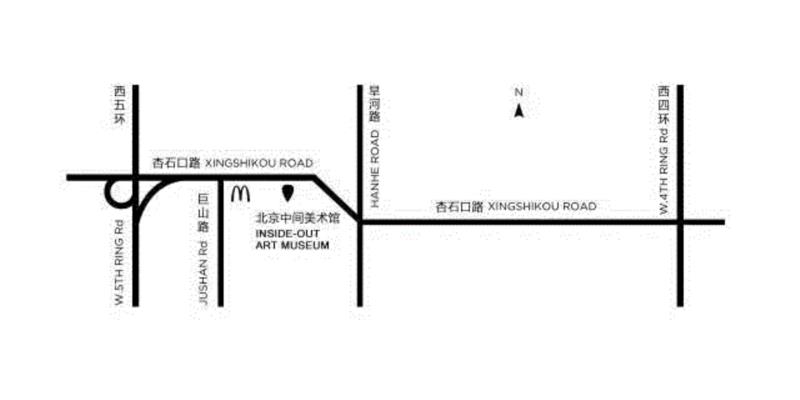
地址:北京市海淀区杏石口路50号中间艺术区中间美术馆
公交路线: 489路 505路 992路 347路运通101路西平庄站路南侧
驾车路线: 1、西四环四季青桥上杏石口路,向西4公里左右, 路南侧抵达中间美术馆
2、西五环杏石口桥出口,向东1公里左右,
路南侧抵达中间美术馆
【参观咨询】
电话: 8610 6273 0230
微博 :weibo.com/insideoutart
邮箱 :info@ioam.org.cn
微信公众开放平台:中间美术馆
(微信号zhongjianmeishuguan)
豆瓣小站:中间美术馆

 {{newsData.good_count}}

 {{newsData.transfer_count}}


 {{item.good_count}}k
已展示全部
{{item.publisher_name}} 发布了 文章
{{item.title}}
更多功能等你开启...

 分享
分享