2.5 D
陈子豪 个展
Chen Zihao solo exhibition
策展人 Curator:孙文杰 Sun Wenjie
开幕 Opening:2019.10.4 6-8pm展期 Duration:2019.10.4 - 10.31地点 Location:泰国曼谷三攀他旺区石龙君路24巷23号河城艺术中心二层201-206Room 201-206, River City Bangkok , 23 Soi Charoenkrung24 , Talad Noi, Sampantawong, Bangkok 10100, Thailand 当代唐人艺术中心荣幸地宣布,将于2019年10月4日在曼谷空间推出艺术家陈子豪个展“2.5D”。这是唐人曼谷空间迁至Sampantawong区全新空间的启幕展。展览由孙文杰策划,将展出艺术家2019年最新创作的油画及综合材料作品二十余件。陈子豪新近创作的一批作品中,嶙峋瘦石、金属、矿物质等材料或高明度色块穿插在抽象的油画肌理中,镶嵌在铁、木质、铜、不锈钢以及彩色亚克力的框架里。这批被艺术家称为“2.5维大地艺术”的作品画面色彩鲜明。2.5维是一个幽默的修辞,作品没有像科幻小说描写的那样将三维现实降维。陈子豪以绘画为主要媒介记录了不在场的多重景色,这些作品明显有别于——但却参照了大地艺术。陈子豪曾描述他经验过的不同绚烂天色的情景。通过重新唤起那些的记忆,他用厚重的笔触呈现地景的机理,在一些作品中塑造了非定形风格的画面。他的图像往往是俯瞰图,画面中色块拼接、遮盖,仿若是大地脉络和天空颜色的重叠,不过经由艺术家之手切换了视角,最终展示在唐人曼谷新空间里。
几何?景 No.1 (局部) Geometric Landscape No.1(detail), 木板丙烯,沙子,铜, acrylic on wood panel, sand, copper, 2019他的调色板让人联想到欧普艺术家约瑟夫·亚伯斯的“硬边艺术”风格绘画。展览中的两件作品以环形假山替代亚伯斯《向正方形致敬》系列构图里的方形外缘,最终形成了中式园林月门的熟悉感。亚伯斯曾如此解释色彩关系:“同时对比/视场比拟不仅是一种奇特的光学现象,它是绘画的核心”。[1] 另一件紫、黑白、红色的三联画被红色的亚克力罩住了外立面,借用古典油画“罩染法”,陈子豪将三联画的色彩削弱至黑白画面的错觉,观者由此获得单色视觉体验。展览作品中的画面肌理、形式对比以及其对光的沉浸式应用也与詹姆斯·特瑞尔等以光为媒的艺术家关联起来,以特瑞尔最具雄心的罗丹火山为例,项目结合光与大地艺术,复杂且细致地强调了视觉感知的微妙,因此该方向的艺术实践也被视作大地艺术的一个延伸。
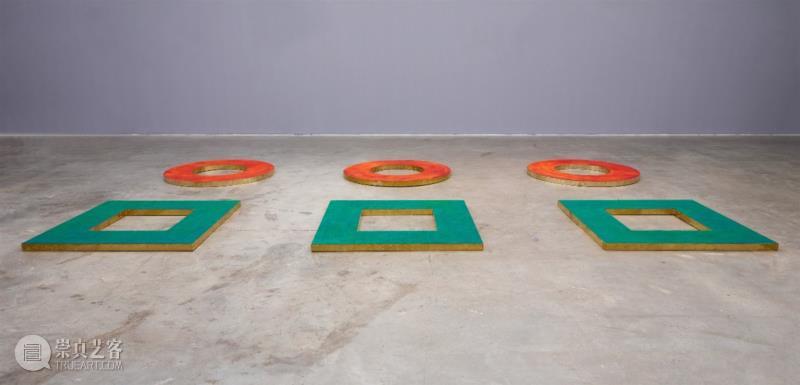
“几何?景”系列 Geometric Landscape, 木板丙烯,沙子,铜, acrylic on wood panel, sand, copper, 2019
《几何风景》系列是一批几何形状的雕塑绘画,是对瓦尔特·德·玛利亚 1976至77年作品“对等面积”系列的回应。除了形式上的借鉴,同样放置在展厅地面的《几何风景》通过以铜箍边的绘画模拟了特定光线下大地环境的景色。这组作品与德·玛利亚那组同时具有极简主义、观念艺术以及大地艺术特征的作品之间的区别在于,《几何风景》把应在场所中发生的大地艺术的图象,带到一个非场所的展览空间,并压缩了观众想象、移植户外场所至室内空间的过程。罗伯特·史密森认为在非场所中真正面对的是场所的缺席。作品呈现——即从外部收集材料在展厅呈现的行为中,非场所起到镜子的作用,而场所起了映射的作用。[2] 在展览语境中,物体决定了所在空间的性质,艺术家叙述里的“2.5维大地艺术”意指对物体与空间的转译。笔触与画布,身体与大地,两个概念在陈子豪的创作里彼此平行,它们关乎作品的创作过程,也指涉作品的空间经验。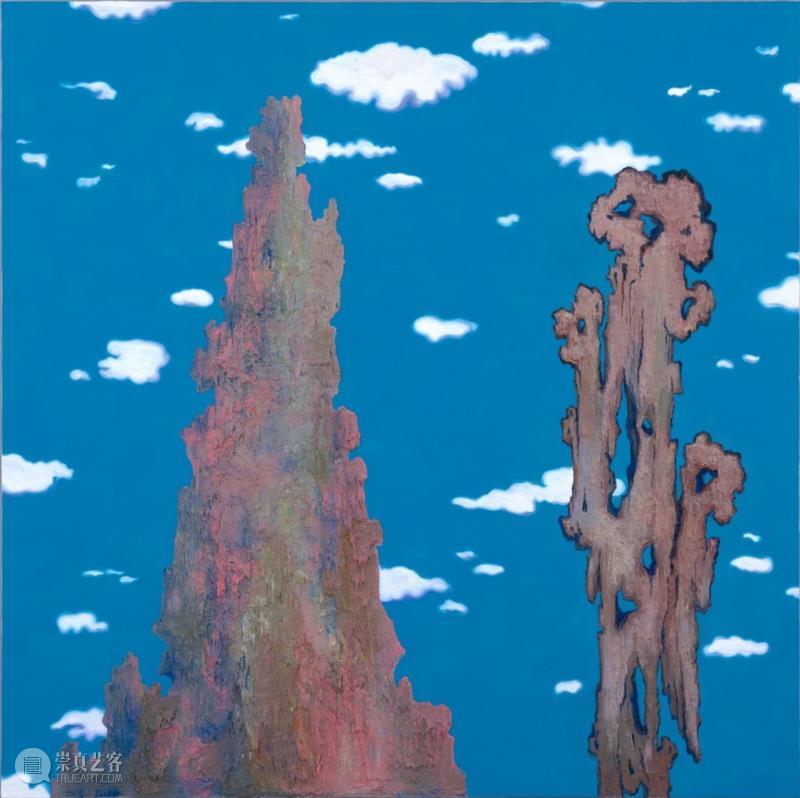
愚公移山 2013 Yugong removing the mountains 2013,布面油画 oil on canvas,200×200×5cm,2019
在全球化的背景下,艺术家截取了多样的地景元素进行创作。在帆布表面, 他用厚重的油画笔触模拟国画山水的皴法,呈现或许是俯瞰或者散点透视的地景;在对奇石的选择上,他执着地遵循传统文人的标准。艺术家曾偶然提起他从新闻报道了解到福建商人曹德旺在美国投资办厂的经历。这则全球化视角解读的轶闻使得陈子豪的作品中有了明确的现实指向:他在一件作品中描绘了俄亥俄州——曹德旺投资产业所在地的风景,并以当代愚公移山的角度看待曹德旺的故事。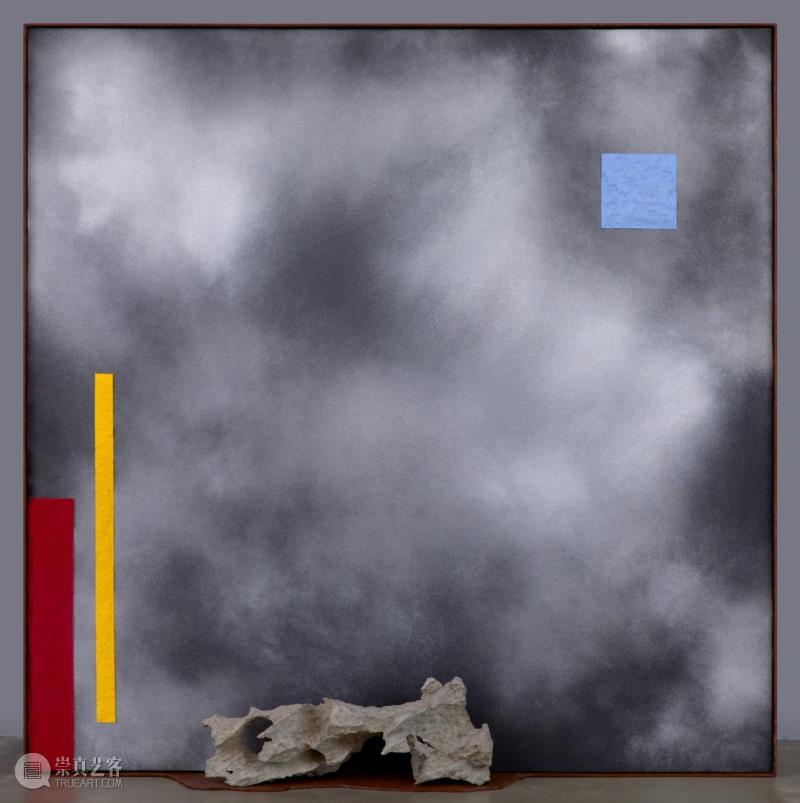
2-2.5-3 No.12,布面丙烯油画,沙子,石头,钢 oil and acrylic on canvas, sand, stone, steel,151.1×151.2×22.3cm,2019
将绘画式表现和拾得物结合,陈子豪以此作为方式来调整正式语言来完成他的目标。作为“流散”群体的一员,出生于福建的陈子豪熟悉于旅居他乡过程中消化、定位自身与复数的文化政治之间关系。他的作品模糊绘画与雕塑、装置之间的界限,投射未来想象并探究其不确定性。史蒂芬·尼尔森的论述里, 流散意识不去展示过去,它指向现在(和未来)的神话和现实。[3] 诸如石头的物体经常被艺术家视作重叠之物,处于不同个体或族群经验的交界处。作品中的物体是坐标,是传送门,亦是缺口。这种理解不仅来自于个人的体验或者记忆,更来自于对诸如全球化或者星际殖民的或现实或虚构的论述。从视觉实践的历史来看,流散中的艺术家有着多重世界观,他们改变了现代主义及其后的视觉语言,一如展览中艺术家对知识、资本等方面的多文化、跨国界的表达。
[1]约瑟夫·亚伯斯,《色彩互动学》,纽黑文:耶鲁出版社,1963
[2]罗伯特·史密森,“1969年4月,与P·A·诺维尔的采访片段”,《六年:1966至1972年艺术的去物质化》,露西·利帕德编著,伯克利:加州大学出版社,1973.
[3]史蒂芬·尼尔森, “流散:多样实践,多重世界观”,艾美利亚·琼斯编著,《A Companion to Contemporary Art since 1945》, 牛津: 布莱克维尔,2006.
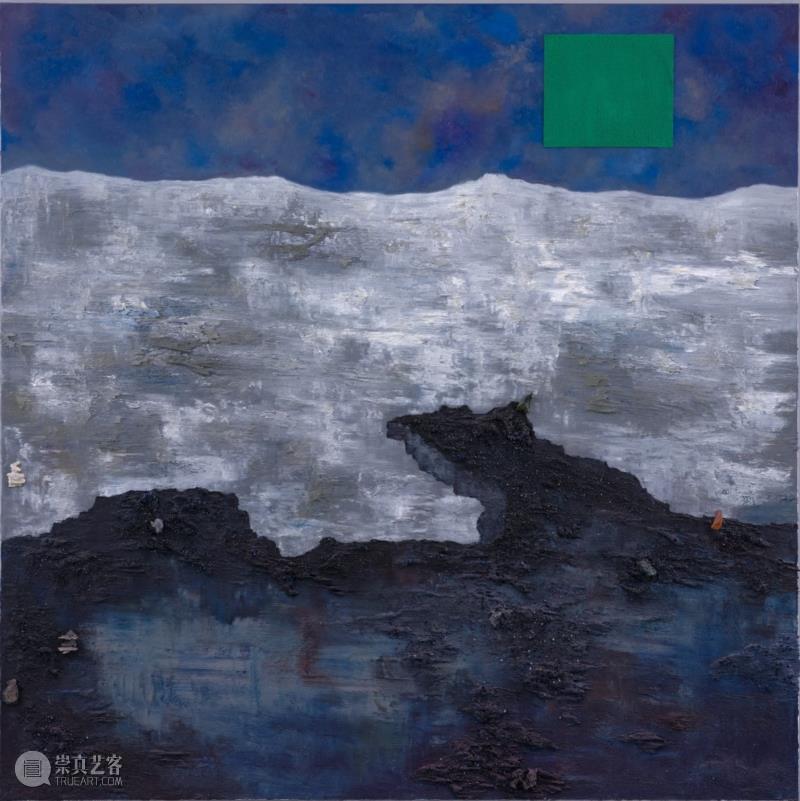
2-2.5-3 No.14,布面丙烯油画,沙子,石头 oil and acrylic on canvas, sand, stone,200×200×5cm,2019
陈子豪,1991年生于中国福建,现工作生活于纽约和北京。陈子豪毕业于中央美术学院附中,在阿尔佛雷德大学获得艺术学士学位,研究生就读罗德岛设计学院。陈子豪曾获得斯普林菲尔德艺术中心、纽约电子艺术研究院、罗斯维尔艺术中心奖项和支持。孙文杰,1989年生于大连,目前生活和工作在北京。她是一位策展人、撰稿人和机构工作者。孙文杰求学于中央美术学院以及伦敦大学金史密斯学院,并取得策展专业艺术硕士学位。她参与策划的展览包括:“一个关于展览的展览”(2011),中央美术学院美术馆、“温普林中国前卫艺术档案之80、90年代”(2016),红砖美术馆、“安德烈斯·塞拉诺:一个美国人的视角”(2017-2018),红砖美术馆等。她供稿于多本杂志,同时她也负责数本艺术家图录的编撰。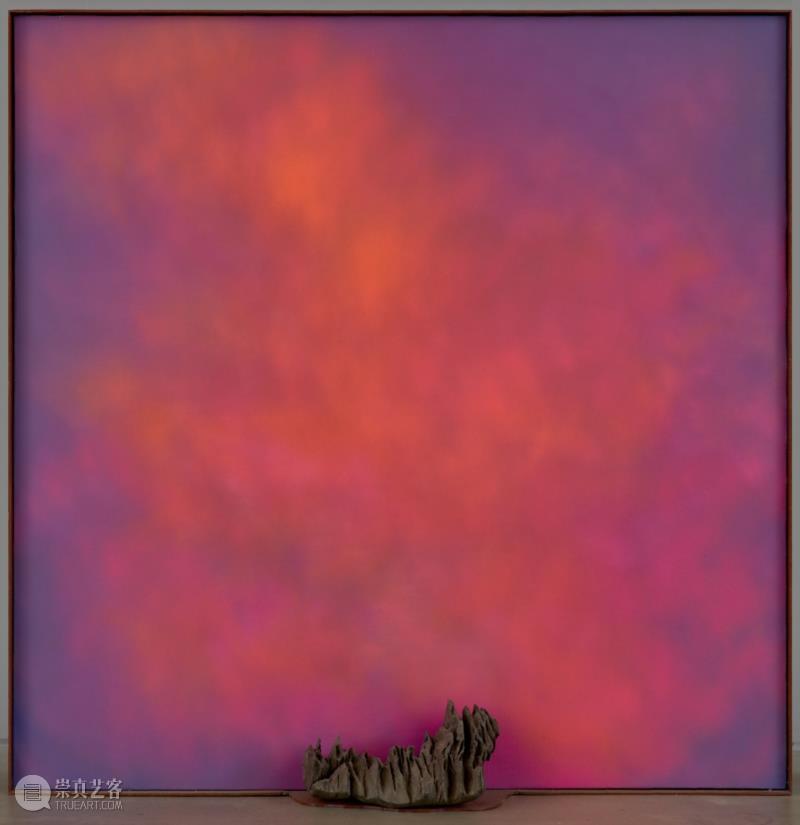
2-2.5-3 No.11,布面丙烯,石头,钢 acrylic on canvas,stone,steel,150×150×23.3cm,2019
Tang Contemporary Art Bangkok is pleased to present an exhibition "2.5 dimensions" by artist Chen Zihao on October 4, 2019. This is the first exhibition after Tang Contemporary moves to a new space in Sampantawong, Bangkok. Curated by Sun Wenjie, the exhibition will show more than 20 new excenllent works by artist.
In Chen Zihao’s recent work, materials such as thin, craggy rocks, metal, and minerals, or highly saturated blocks of color are inserted into the textures of abstract oil paintings placed within frames of iron, wood, copper, stainless steel, and colored acrylic. The artist calls these brightly-colored works “land art in 2.5 dimensions.” This “2.5 dimensions” is a humorous turn of phrase, as the work is not the dimensional descent of three-dimensionalreality described in science fiction. Chen Zihao primarily uses oil painting torecord multiple landscapes that are not present; these works are obviously different from, but still reference, land art. Chen describes the various magnificent scenes that he has experienced, and after re-awakening those memories, he uses thick brush strokes to present geographic textures, creating Informe-style works. His imagesare often birds-eye views, with connecting and overlapping blocks of color, as if layering the patterns of the earth and the colors of the sky based on hisown change in perspective. This new body of work will be presented in Tang Contemporary Art Bangkok’s new space.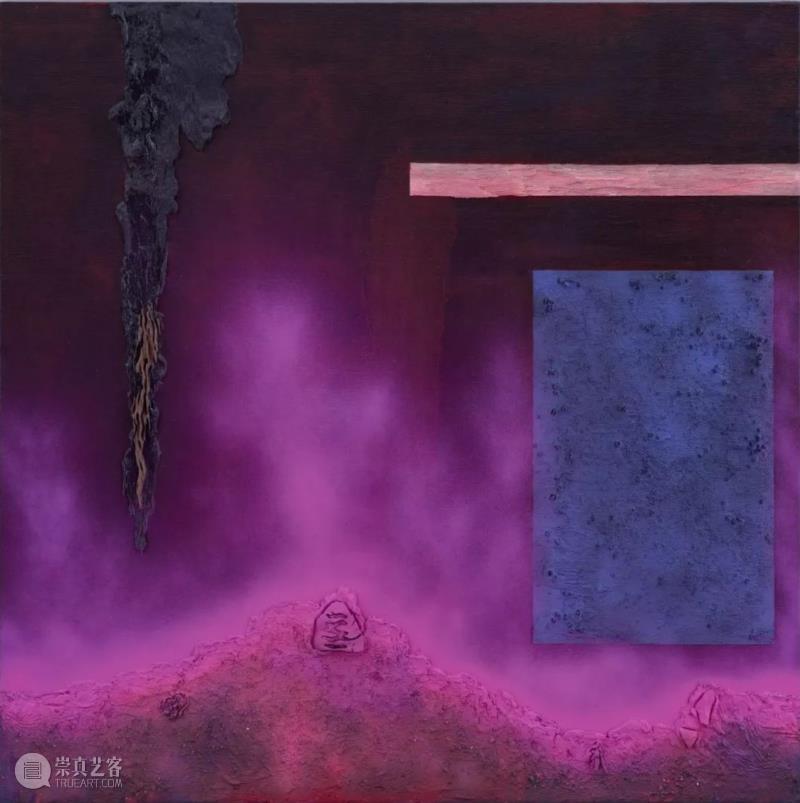
2-2.5-3 No.7,布面丙烯油画,木头,沙子,石头,孔雀石 acrylic and oil on canvas, wood, sand, stone, maliceite,150×150×6cm,2019
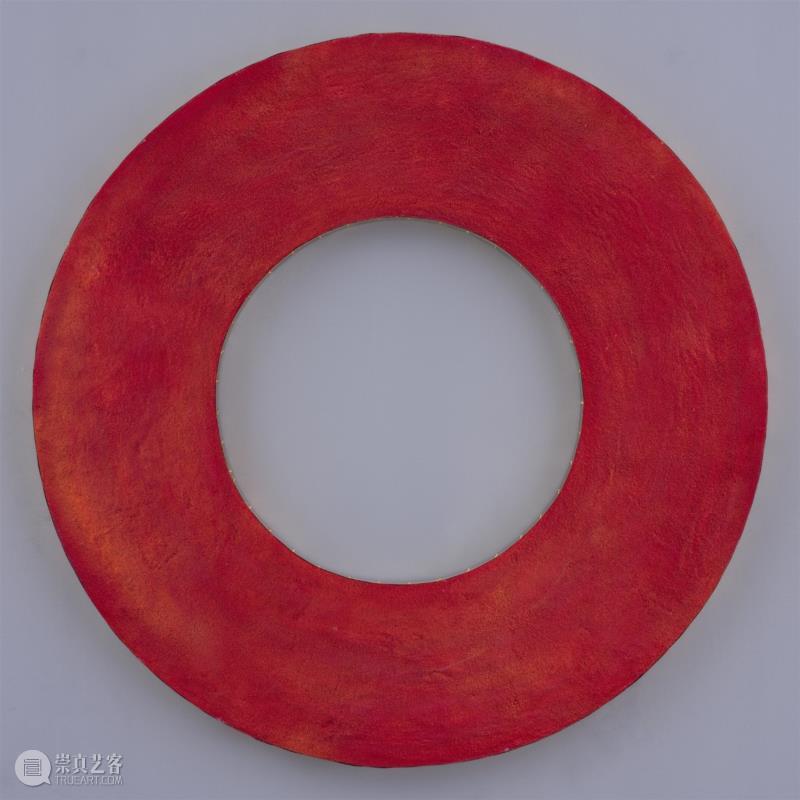
His palette immediately brings to mind the Hard Edge paintings of Op artist Josef Albers. Two works inthe exhibition use ring-shaped ornamental rocks to replace the square edges in Albers’Homage to the Square compositions, creating something akin to thefamiliar moon gate in a Chinese garden. Albers once explained color relationships as, “Simultaneous contrast is not just a curious optical phenomenon - it is the very heart of painting.”[1] Another purple, black and white, and red triptych is covered with red acrylicon the outside. Drawing on the idea of glazing from classical oil painting, Chen weakens the colors in the triptych to the illusion of black and white images, giving viewers a monochrome visual experience. In the exhibited works, the textures, formal contrasts, and immersive applications of light also reveal connections to James Turrell and other artists working with light. In Turrell’s ambitious Roden Crater, for example, he combined light and land art. This was a complex and careful way of emphasizing the subtlety of visual perception, and so this direction in hisartistic practice was seen as an extension of land art.
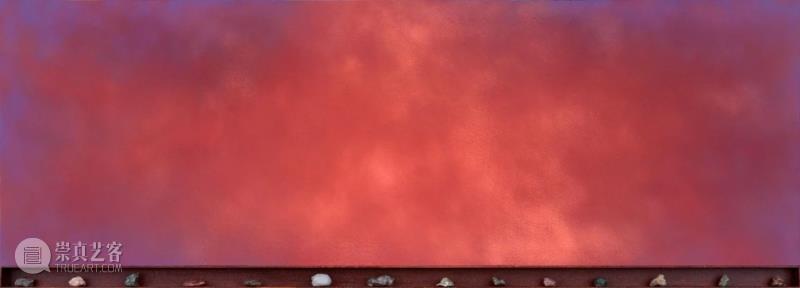
2-2.5-3 No.4,布面丙烯,石头,钢 acrylic on canvas,stone,steel,300×106.5×6cm,2019
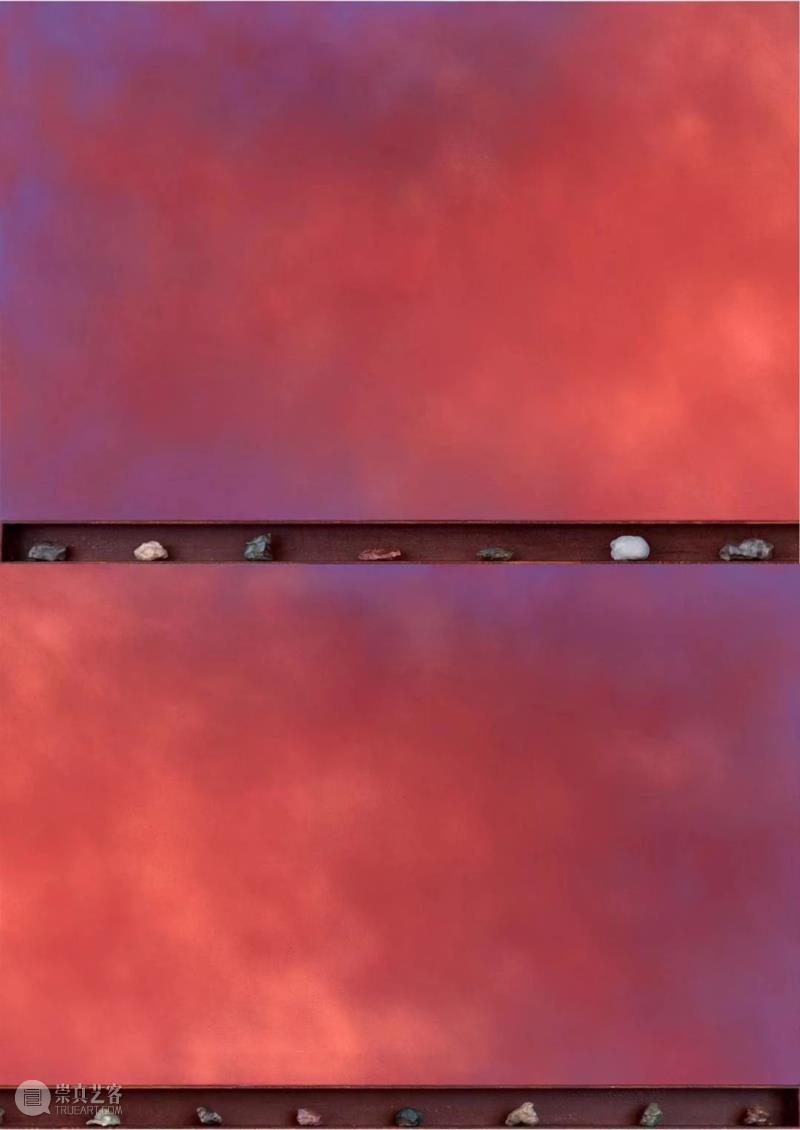
2-2.5-3 No.4 (局部 detail)
Geometric Landscape is a set of sculptural paintings in geometric shapes and a response to Walter de Maria’s The Equal Area Series (1976-1977). In addition to the formal influences, Geometric Landscape is also placed on the floor of the exhibition hall, imitating scenery from various landscapes in specific lights with paintings in copperframes. This body of work is different from Walter de Maria’s works, which hadelements from Minimalism, Conceptual Art, and Land Art. Geometric Landscape brings images of land art happening at a site into a nonsite exhibition spaceand condenses the process of viewers imagining and transplanting outdoor spaces into indoor spaces. Robert Smiths on believed, “What you are really confronted with in a nonsite is the absence of the site… What I did was go out to the fringes, pick a point in the fringes and collect some raw material… so that youhave the nonsite functioning as a mirror and the site functioning as are flection.”[2] In the context of the exhibition, the objects determine the nature of the spaces in which they are placed. “Land art in 2.5 dimensions,”as the artist describes it, is the translation of objects and spaces. The brushstrokes and the canvas, the body and the land are parallel concepts in Chen Zihao’s work. They are related to the creative process and the spatial experience of the work.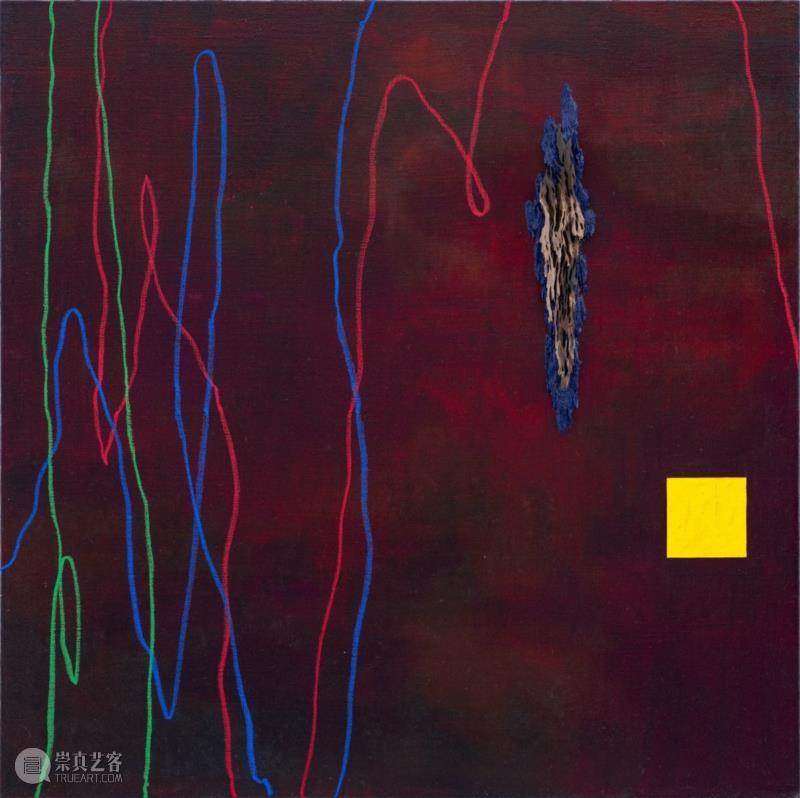
2-2.5-3 No.6,布面丙烯油画,木材,油画棒,沙子 acrylic and oil on canvas, oil stick, wood, sand,150×150×9cm,2019
In a globalized context, Chen extracts many landscape elements to make his work. On the surface of the canvas, he uses thick strokes of oil paint to imitate the craggy effects of Chinese ink paintings, presenting a landscape from overhead or using a multi-point perspective. In choosing the strange rocks, he rigidly adhered to traditional literati standards. The artist once mentioned that he saw a news report on Fujian businessman Cao Dewang’s experiences investing in factories in the United States. This anecdote, examined from a global perspective, gives the artist’s work a clear, real reference. In one of his works, Chen depicts Ohio, the place where Cao invested, viewing him as a contemporary version of “the foolish oldman who removed the mountains.”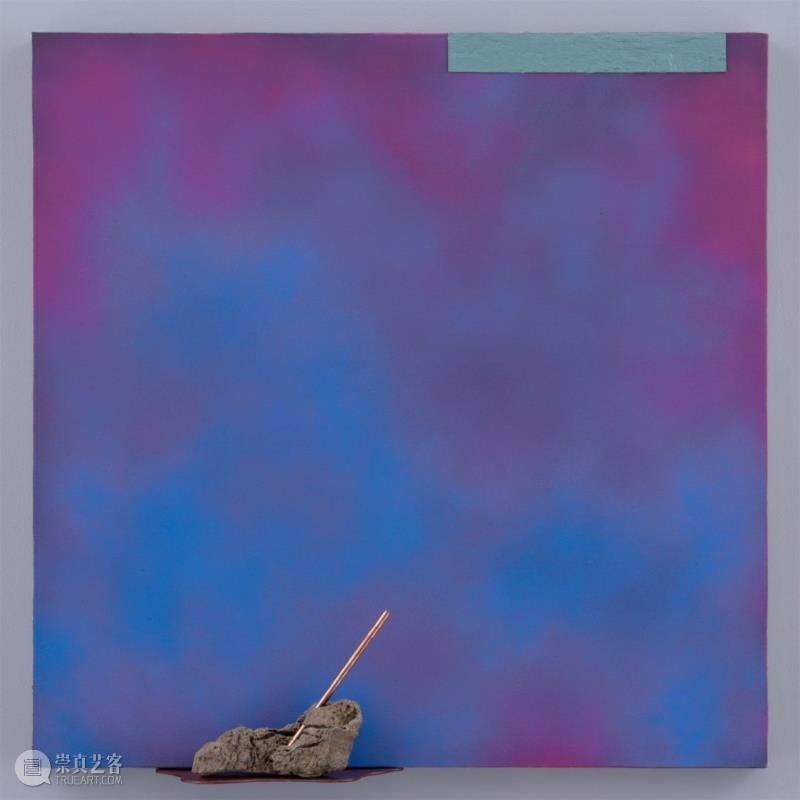
2-2.5-3 No.3,布面丙烯油画,石头,钢,青铜 acrylic and oil on canvas,stone, steel, bronze,100×100×15.7cm,2019
By combining painterly expressions and found objects, Chen Zihao adjusts formal language to achievehis goal. Chen is a member of a diaspora group. The artist was born in Fujian province, but he has engaged with the relationships between absorption, definition, and the plural culture and politics while living abroad. His works blur the lines between painting, sculpture, and installation, projecting visions of the future and exploring its uncertainties. Steven Nelson wrote, “Instead of merely representing the past, diaspora consciousness points to the present (and future) myths and realities.”[3] The artist often sees the objects, such as stones, as overlapping objects that stand at the intersection of the experiences of different individuals and groups. The objects in the works are coordinates, portals as well as breaches. This understanding comes from individual experiences or memories, but it also stems from narratives of globalization and interstellar colonies, whether realor fictional. In the history of visual practice, artists in a diaspora have multiple world views, and they have changed modernism and later visual languages, just as Chen’s multi-cultural, expressions of things, such as knowledge and capital, have.
[1] Josef Albers, Interactionof Color (New Haven: Yale University Press, 1963).
[2] Robert Smithson, “Fragmentsof an Interview with P.A. Norvell, April 1969,” in Six Years: The Dematerialization of the Art Object from 1966 to 1972, ed. Lucy R. Lippard(Berkeley: University of California Press, 1973), 88.
[3] Steven Nelson,“Diaspora: Multiple Practices, Multiple Worldviews,” in A Companion toContemporary Art Since 1945, ed. Amelia Jones (Oxford: Blackwell, 2006),314.
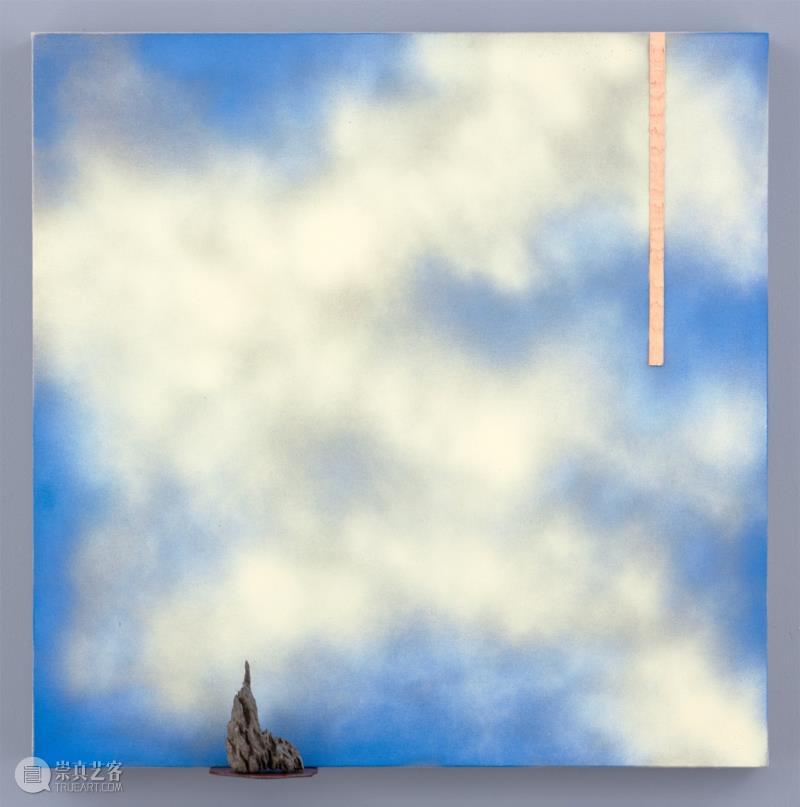
2-2.5-3 No.1,布面丙烯油画,石头,钢 acrylic and oil on canvas, stone, steel,100×100×16.5cm,2019Chen Zihao, born in Fujian Province in 1991. Now works and lives in New York and Beijing. Chen Zihao graduated from Fine Arts School Affiliated to China Central Academy of Fine Arts, A bachelor of Fine Arts degree from Alfred University, and study in RhodeIsland School of Design. Artist used to received awards and support from Springfield art center, New York institute of electronic arts, Roseville artcenter.
Born in Dalian in 1989, Sun Wenjie livesand works in Beijing. She is a curator, writer, and she works for an art institution. Sunstudied at the China Central Academy of Fine Arts, and later at the Goldsmiths College, University of London, where she obtained a MFA’s degreein Curating. The exhibitions she participated include: “An Exhibition on Exhibiting” (2011), CAFA Art Museum, Beijing; “Wen Pulin Archive of Chinese Avant-garde Art of the 80s and 90s” (2016), Red Brick Art Museum, Beijing, Red Brick Art Museum, “Andres Serrano: An American Perspective"(2017-2018), Red Brick Art Museum, Beijing,etc. She is contributing to a number of magazines, and she is also responsible for the publishing of several artists’ catalogues.
BANGKOK | BEIJING | HONG KONG泰国曼谷三攀他旺区石龙君路24巷23号河城艺术中心二层201-206Room 201-206, River City Bangkok , 23 Soi Charoenkrung24 , Talad Noi, Sampantawong, Bangkok 10100, Thailand +662 652 2732 | bkk@tangcontemporary.net


 {{newsData.good_count}}

 {{newsData.transfer_count}}



 分享
分享