{{sindex}}/{{bigImglist.length}}
{{memberInfo.real_name}}
{{commentname}}

≡ 陶辉 | 群展“具身之镜:中国录像艺术中的行为与表演” | 新世纪当代艺术基金会

{{newsData.publisher_name}} {{newsData.update_time}} 浏览:{{newsData.view_count}}
来源 | {{newsData.source}}   作者 | {{newsData.author}}


展览导览 Exhibition video
视频由新世纪当代艺术基金会提供
Video courtesy of New Century Art Foundation


当前展览 Current Exhibition

群展 Group Exhibition 

“具身之镜:

中国录像艺术中的行为与表演” 

"Embodied Mirror: 

Performances in Chinese Video Art"

陶辉 Tao Hui

展期 Duration: 2020.05.22-08.30 (预约观展)

地址 Address: 新世纪当代艺术基金会

北京朝阳区798艺术区797东街

New Century Art Foundation

A05 No. A05, 797 East Road, 798 Art Zone, Chaoyang District, Beijing


(Scroll down for English version)


在费伦这样的表演原教旨主义者眼中,表演一旦沦为图像再生产的对象便会彻底堕落,这背后自然有第二次前卫艺术运动所宣扬的“去物质化”立场——认为媒体与资本主义同构——只不过这种意识形态在新的媒介现实面前多少显得不堪一击。自1960年代开始,表演便逐步与媒体艺术相结合,在现场经验与再生产、呈现与再现间摆荡,进而我们发觉,如今被称为经典的“行为艺术”,往往都以某种媒介化的形式得以留存。录像艺术无疑是其中极为重要的一环。录像化的表演或表演性的录像衍生出了多种复杂的形态,身体与技术的互动将两种不同的话语糅合在一起,有机与人工、即时与纪录、肉身与屏幕不可避免的发生着摩擦与交融。而这正成为了本次展览的出发点。


“具身之镜”试图梳理中国录像艺术中的表演性因素。从早期具备强烈观念色彩的录像表演作品开始,中国录像艺术中的表演因素逐步多元化,不同世代的艺术家携带着相异的技术、文化、社会以及政治诉求开展着自身的实践。因此展览分为五个单元,分别针对不同的主题:“自传”对应主体性,“事件”瞄准社会性,“舞者”强调身体性,“讲者”凸显体制批判,“剧场”则着力于思想性。展览展出了陶辉的作品《谈身体》(2013)。

“具身之镜”指向了这样一个事实,即录像并没有为表演带来新的“舞台”,而是一个通往世界的“镜面”或“出口”;其作用亦并非仅仅在于解放身体,或令其摆脱社会与历史语境的规约,而是提供了新的战术装置或解码器:影像化的身体如同一个“不朽的”与“可传播”的化身,在这种情境中,媒介呈现为崭新的生命情景,而主体对于现实的回应已被转化为共通的媒介感知。


——文字来源于新世纪当代艺术基金会


≡ 陶辉 Tao Hui

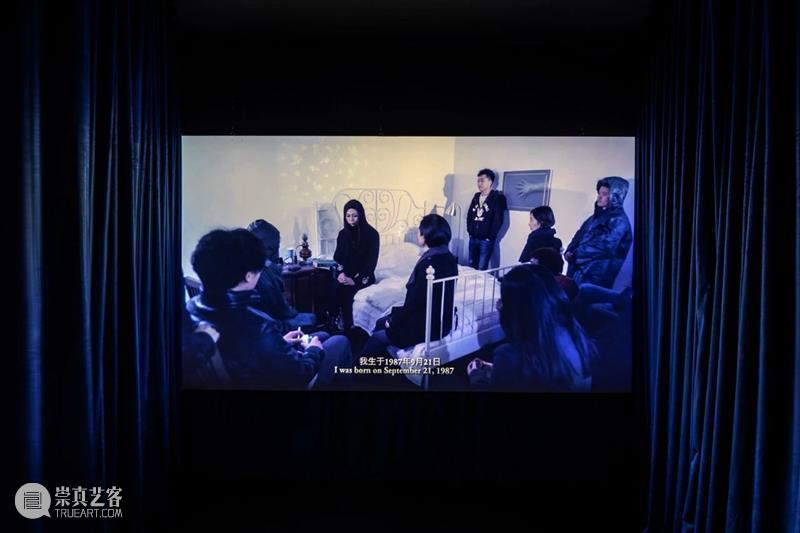
展览现场 Installation view

谈身体 Talk About Body, 2013

单频录像,彩色,有声

Single-channel video, color, sound

3 min 45 sec

图片由新世纪当代艺术基金会提供

Image courtesy of New Century Art Foundation


谈身体 Talk About Body, 2013


由艺术家自己扮演的伊斯兰女孩儿,在自己的房间进行了一场演说,她以一个体质人类学学者对他的身体分析文章为蓝本;后期配以一个老年女性的声音详细客观的分析了自己的身体结构,外形特征,血统基因,用真实的材料杜撰了一个仪式式的场景。他企图撇除感情,关注自己的物质身体,反思传统宗教的精神禁锢,寻找“物质身体”和“精神身体”之间的平衡点。 


The artist addressed in her own room, acting as an Islamic girl. She toke the article which was written by a physical anthropologist analyzing his own body as the chief source. He analyzes the body structure, physiognomy characteristic and blood lineage gene objectively in detail and fabricates a ceremony scene according to the authentic materials. He attempts to abandon emotion and focus on his own body, resist the over-spiritual confinement by traditional religion and try to make a balance between them.


In the eyes of a performance fundamentalist like Phelan, once this medium degrades to the object of reproduction of images would be fully degenerate. Behind this, one would likely find its supporting position of "dematerialization," advocated by the second avant-garde art movement.  Where the medium is isomorphic to capitalism – only that such ideology seems somewhat flimsy before the realities of a new medium. Since the 1960s, performance became integral to media art, in the swings of live experience and reproduction, presentation and representation, we come to realize that what was once referred to as the classic "performance art"  often preserved in a mediated form. Video art is undoubtedly one of the critical loops. Recorded performance or performance videos derived into many complicated forms, the interactions between the body and technological media bring together two different types of discourse, where the organic and the artificial, the immediate and the documentary, the flesh and the screen generate unavoidable friction and integration. These are the points of departure for this exhibition.  


“Embodied Mirror” attempts to sort out the performative elements in Chinese video art. Since the appearance of early video performance works possessing a strong conceptual bent, the elements of performance in Chinese video art have gradually diversified, as artists of different generations adopted various types of technology and set cultural, social and political goals in expanding their practices. Accordingly, the exhibition is presented in five thematic sections, where "Autobiography" addresses subjectivity, "Event" focuses on social features, "Dancer" emphasizes corporeality, "Speaker" highlights institutional critique, and "Theatre" focuses on intellectual thought. On view is Tao Hui's Talk About Body (2013). 


“Embodied Mirror" points to the fact that video art does not necessarily provide the "stage" for performance, but a "mirror" or "exit" to access the world. It does not necessarily emancipate the body or to isolate it from the confines of social and historical discourses, but provides new strategic device or decoder. Where the body becomes the embodiment of "eternity" and "transmission" in the context of moving image, and the medium becomes a new scenario of life. At the same time, the subject's response to reality translates into a shared media sensibility.  


- Text from New Century Art Foundation


艺术家简介 About the artist


陶辉1987年出生于重庆云阳,毕业于四川美术学院的油画系,现工作生活于北京。虽然毕业于油画系,但陶辉的作品以影像和装置艺术为主,从个人记忆、视觉经验和大众文化中积累素材,通过提炼与改造形成崭新的叙事模式和影像风格。陶辉从社会身份、性别地位、种族问题和文化危机等问题入手,以荒诞、吊诡、夸张的场景搭建,充满隐喻和错位感的人物设置,呈现出当代人的集体经验,带动观者正视自身的文化历史、生存现状和社会身份。他曾于2008年获得四川美术学院的“当代艺术档案特殊奖”,并在2015年荣获三亚艺术季华宇青年奖评委会大奖。2015年陶辉在SESC巴西录像艺术节“南部全景”单元上获得特奖,又于2017年先后入选HUGO BOSS亚洲新锐艺术家大奖和KINO DER KUNST电影节“国际竞赛”单元。2019年,他入围首届由香港M+展亭成立的希克奖。他的个展包括:OCAT西安馆的“一点儿不多余”(2017)和北京尤伦斯当代艺术中心的“新倾向:陶辉”(2015)。参加的群展包括:国立亚洲文化殿堂(ACC)群展(2019);罗马当代艺术博物馆的“SESC巴西录像艺术节影像展”(2019);第四届温哥华双年展"re-IMAGE-n"(2019);上海外滩美术馆和Para Site艺术空间的”百物曲“(2019);上海当代艺术博物馆的第11届上海双年展“何不再问”(2016年);巴黎路易威登基金会的“本土:变革中的中国艺术家”(2016);上海K11基金会的“骇客空间”(2016);圣保罗SESC巴西录像艺术节“南部全景”单元(2013)。
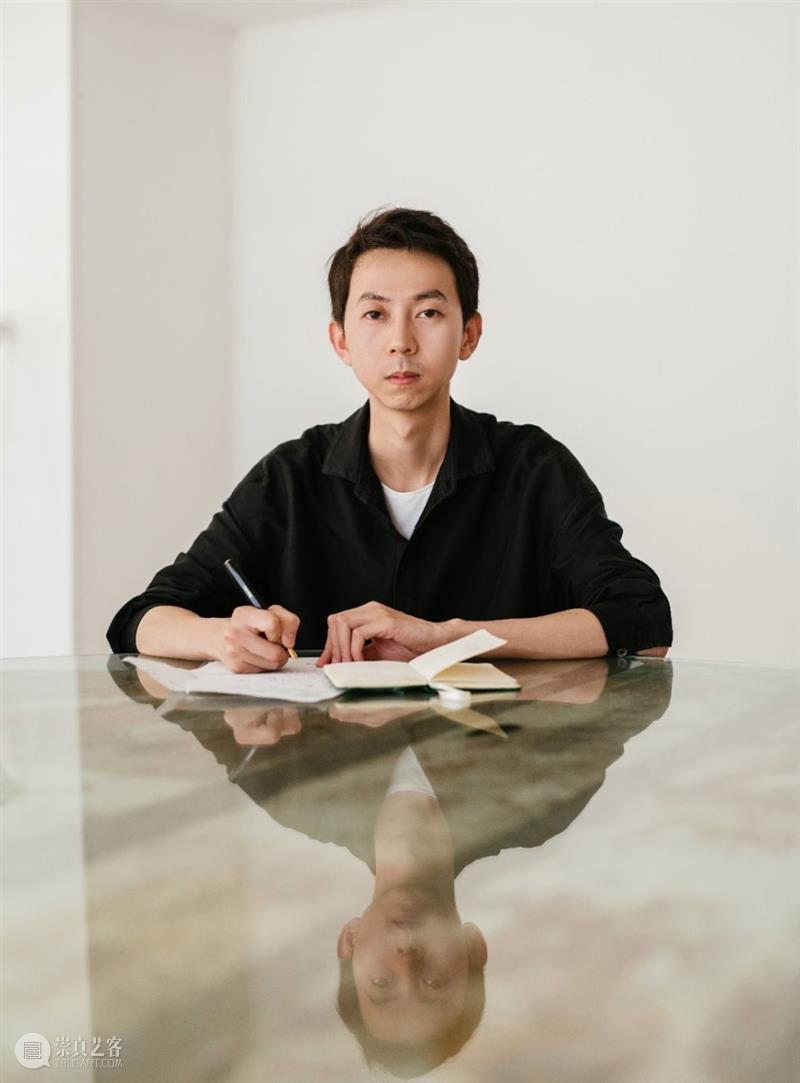

图片由艺术家,马凌画廊和施博尔画廊提供

Image courtesy of the Artist,

Edouard Malingue Gallery

and Esther Schipper Gallery


Tao Hui was born in Yunyang, Chongqing, China. He graduated from Sichuan Fine Arts Institute with a BFA in Oil Painting in 2010 and currently lives and works in Beijing, China. Tao traversed into the art of video and installation, drawing from personal memories, visual experiences and popular culture to weave an experimental visual narration, the focus of which is often our collective experience. Running throughout his work is a sense of misplacement vis-à-vis social identity, gender status, ethnicity and cultural crisis, prompting the audience to face their own cultural histories and living conditions. He won the special award of Contemporary Art Archive from Sichuan Fine Arts Institute in 2008 and ‘Art Sanya & Huayu Youth Award’ in Sanya in 2015. He also won the grand prize of 19th “Contemporary Art Festival Sesc Videobrasil”, and was shortlisted for “HUGO BOSS ASIA ART Award for Emerging Asian Artists” and International Competition sector of the KINO DER KUNST festival in 2017. In 2019, he is shortlisted for the inaugural Sigg Prize. His solo exhibitions include OCAT Xi’an, Xi’an, China, 2017; UCCA, Beijing, China, 2015. Group exhibitions include Asia Culture Center(ACC) group exhibition, Gwangju, Korea, 2019; ‘Collezione Videobrasil, Opere Vincintrici Del Contemporary Art Festival Sesc_Videobrasil’, MACRO ASILO, Rome, Italy, 2019; ‘re-IMAGE-n’, the 4th Vancouver Biennale, Vancouver, Canada, 2019; ‘An Opera for Animals’, Rockbund Art Museum, Shanghai, China / Para Site, Hong Kong, China (2019); 11th Shanghai Biennale’, PSA, Shanghai, China, 2016; Fondation Louis Vuitton, Paris, France, 2016; chi K11 Art Space, Shanghai, China, 2016; ‘Contemporary Art Festival Sesc Videobrasil: Southern Panoramas’, São Paulo, Brazil, 2013, 2015.



陶辉“希克奖2019”展览限定商品

{{flexible[0].text}}
{{newsData.good_count}}
{{newsData.transfer_count}}
Find Your Art
{{pingfen1}}.{{pingfen2}}
吧唧吧唧
  • 加载更多

    已展示全部

    {{layerTitle}}
    使用微信扫一扫进入手机版留言分享朋友圈或朋友
    长按识别二维码分享朋友圈或朋友
    {{item}}
    编辑
    {{btntext}}
    艺客分享
    {{mydata.real_name}} 成功分享了 文章
    您还可以分享到
    加载下一篇
    继续上滑切换下一篇文章
    提示
    是否置顶评论
    取消
    确定
    提示
    是否取消置顶
    取消
    确定
    提示
    是否删除评论
    取消
    确定
    登录提示
    还未登录崇真艺客
    更多功能等你开启...
    立即登录
    跳过
    注册
    微信客服
    使用微信扫一扫联系客服
    点击右上角分享
    按下开始,松开结束(录音不超过60秒)