
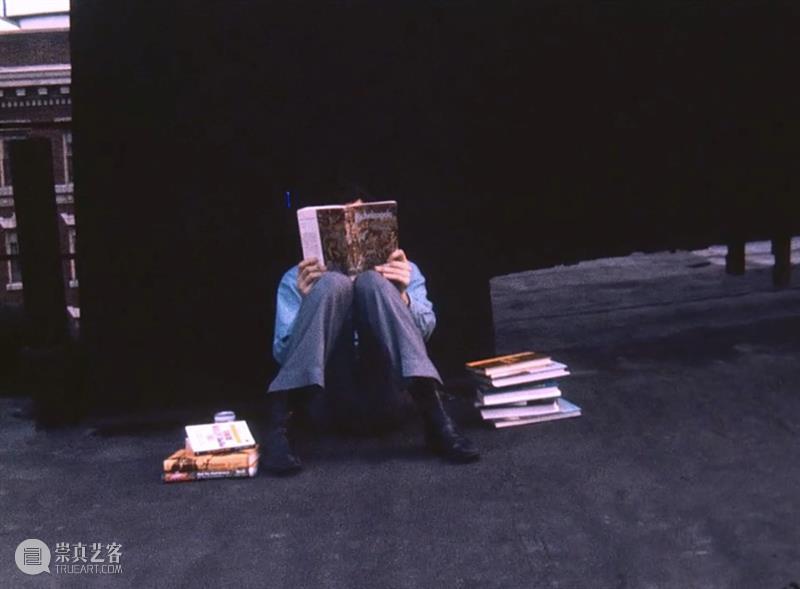
南希 · 霍特 /《鲍勃和书:格林威治大街799号楼顶,纽约》,1971 / 数码化影像(静态图),16mm,彩色,无声,2分59秒© Holt/Smithson Foundation, Licensed by VAGA at ARS, New York. Distributed by Electronic Arts Intermix, New York.

玛丽安 · 古德曼画廊
线上展厅
罗伯特 · 史密森
点击阅读原文可直接进入线上展厅
“想像你自己站在中央公园的位置但身处一百万年前:你应该是立于一片广袤的冰原上,脚下是一堵长达4000英里(约6400公里)、厚达2000英尺(约600米)的冰墙。你孑然一人,在无垠的冰川上,毫未察觉它向南推进时,因缓慢的碾压、粉碎或劈裂左右,在所经之处留下大量碎石。”
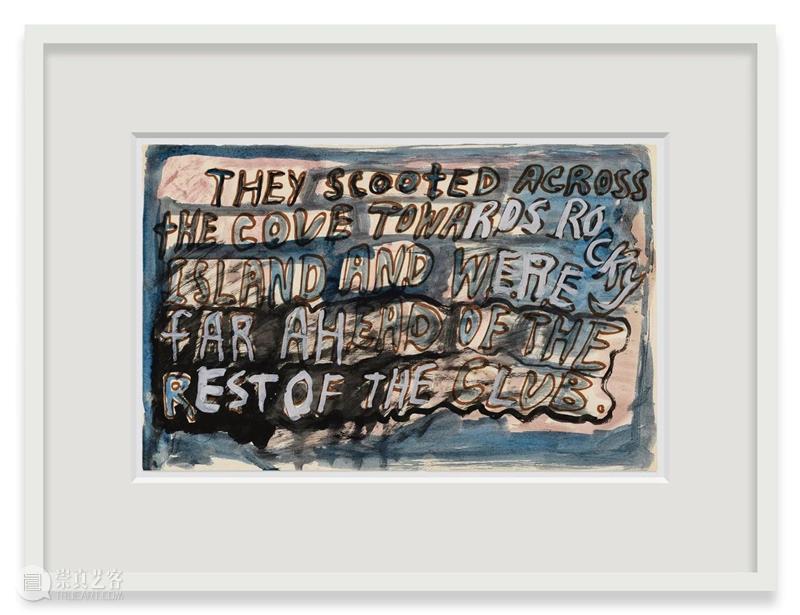
罗伯特 · 史密森 / 《他们溜走》,1961-1963 / 纸上墨水和水粉 / 作品:27.9 x 45.7 cm,装框:48.6 x 64.8 x 4 cm
史密森对旅行、制图、地质、建筑遗址、史前史、哲学、科幻小说、流行文化和语言的兴趣在其创作中相互交织。他投入于定义一种受制于时间且不稳定的艺术,不在于追求长存不朽的状态,而是与熵(entropy,一个描述系统状态的函数,计算系统中的失序现象)协作。直到1973年去世前,他证明了艺术可以是一种手段,去探索我们可以怎样尝试理解自身在地球的位置,且将地球的所有复杂性纳入考量。
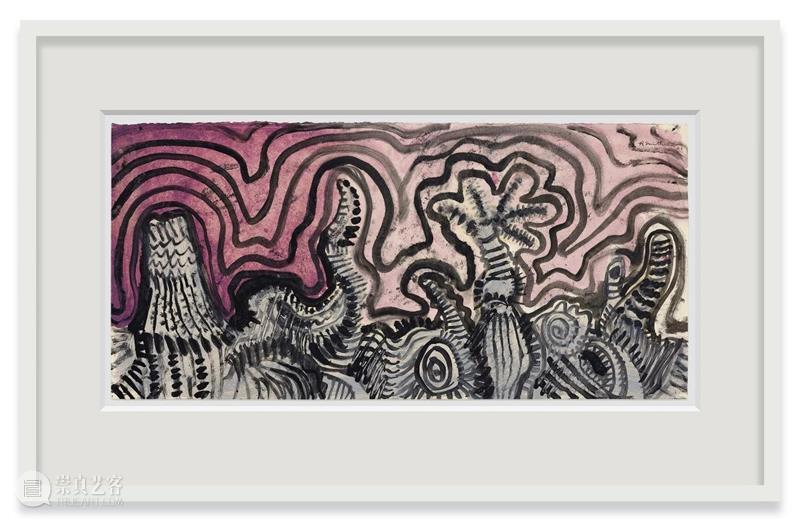
罗伯特 · 史密森 / 《无题》,1961 / 纸上颜料 / 作品:29.2 x 61 cm,装框:49.6 x 79.2 x 4cm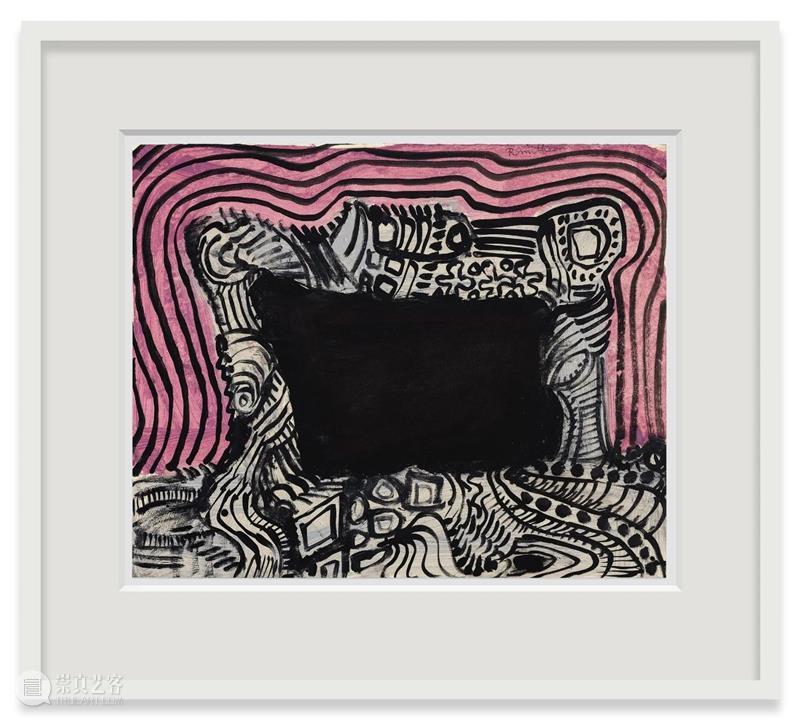
罗伯特 · 史密森 / 《无题》,1961 / 纸上颜料 / 作品:38.1 x 45.7cm,装框:57.3 x 63.8 x 4cm
“我喜欢让人联想到史前时期的风景。作为艺术家,挑战一个地质因素所呈现的面貌是很有趣的,在其中人仅仅是属于这个过程的一部分,而非凌驾其之上。
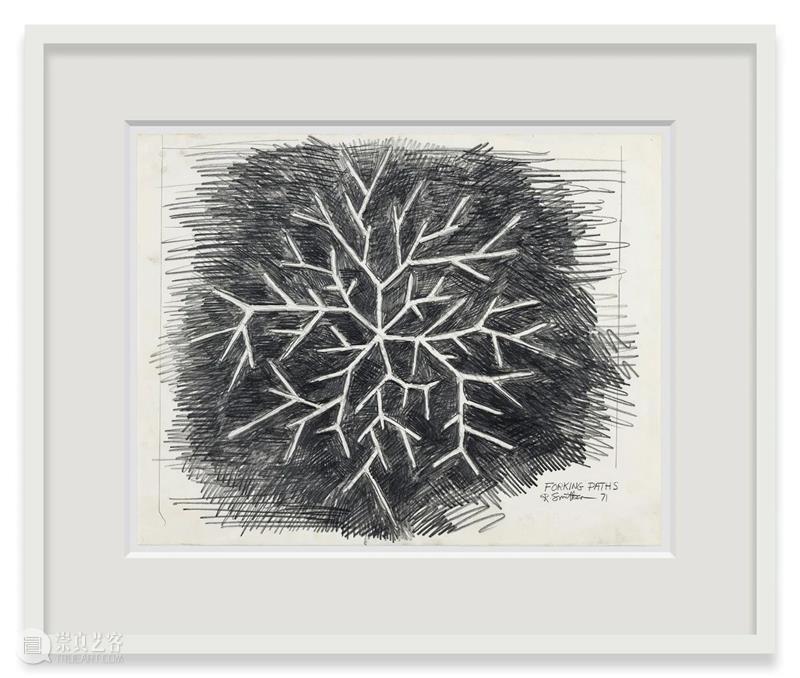
罗伯特 · 史密森 / 《分叉的路》,1971 / 纸上铅笔 / 作品:48.3 x 61cm,装框:66.6 x 80.2 x 4cm
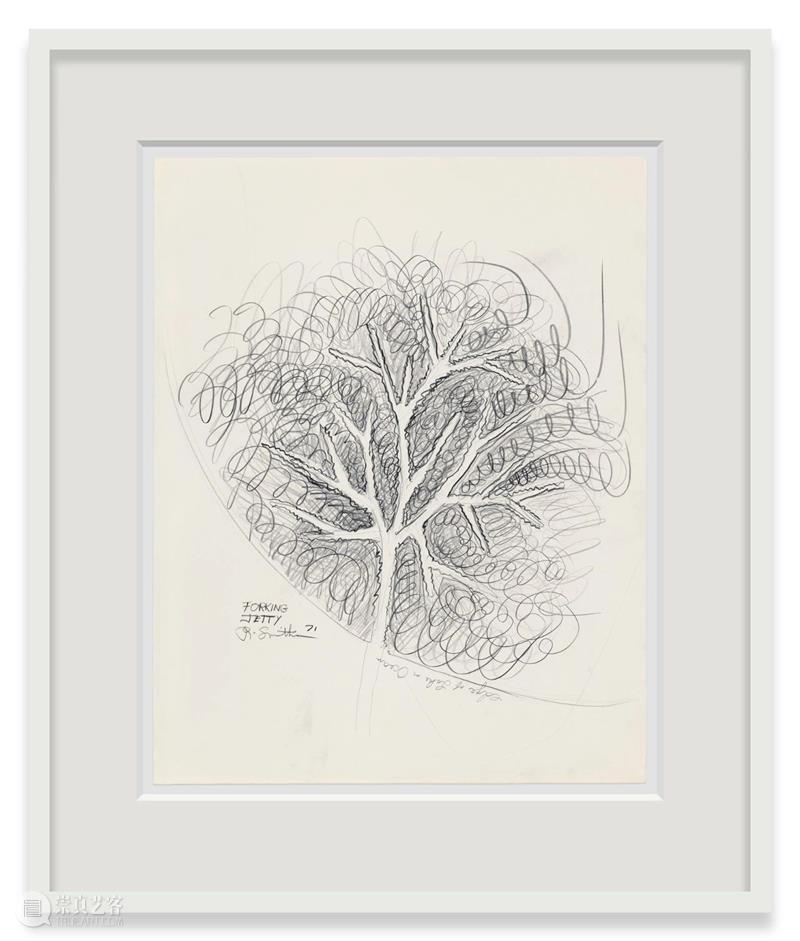
罗伯特 · 史密森 / 《分叉堤》,1971 / 纸上铅笔 / 作品:61 x 47.9cm,装框:80.2 x 66.5 x 4cm
“自然的演进不是呈直线状的,它更像是向四处延伸式的发展。而且自然的演化从未终结。”
——罗伯特 · 史密森
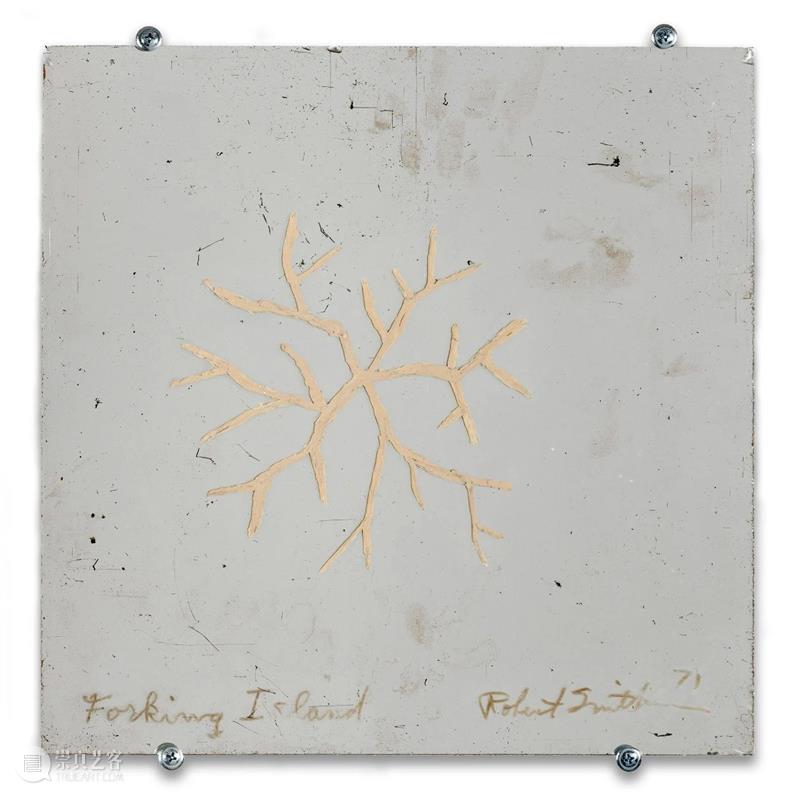
罗伯特 · 史密森 / 《分叉的岛》,1971 / 颜料,记号笔,镜面 / 镜面:30.5 x 30.5cm,装框:48.9 x 47.9 x 4cm对史密森而言,岛屿就像想象中的环境,可展示不断变化的世界面貌和人类知识的局限。在他的岛屿中,一些是实现雕塑创造的地点,另一些则是探索景观形成的场域。
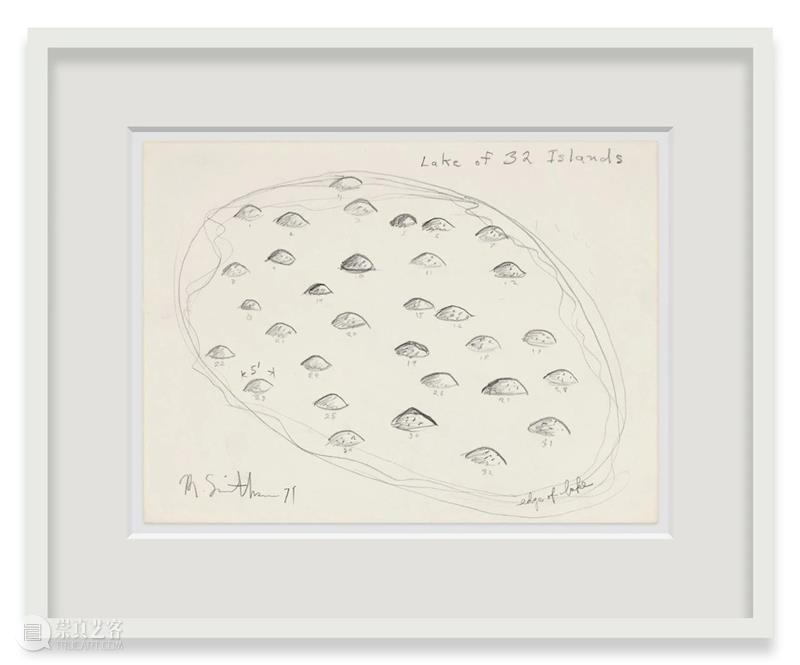
罗伯特 · 史密森 / 《拥有32座岛的湖》,1971 / 纸上铅笔 / 作品:22.9 x 30.5cm,装框:38.8 x 48.94cm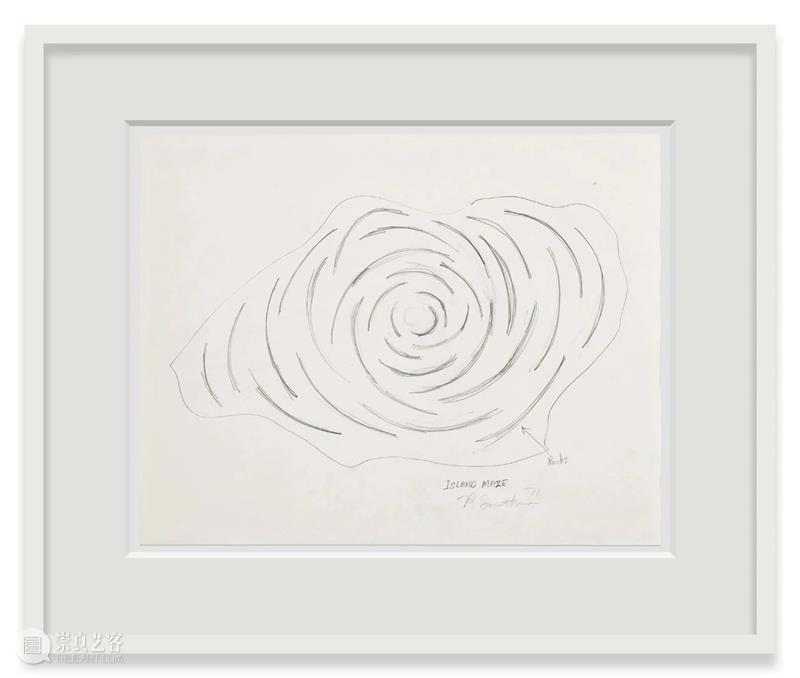
罗伯特 · 史密森 / 《岛屿迷宫》,1971 / 纸上铅笔 / 作品:47 x 59.7cm,装框:66.5 x 80.2 x 4cm
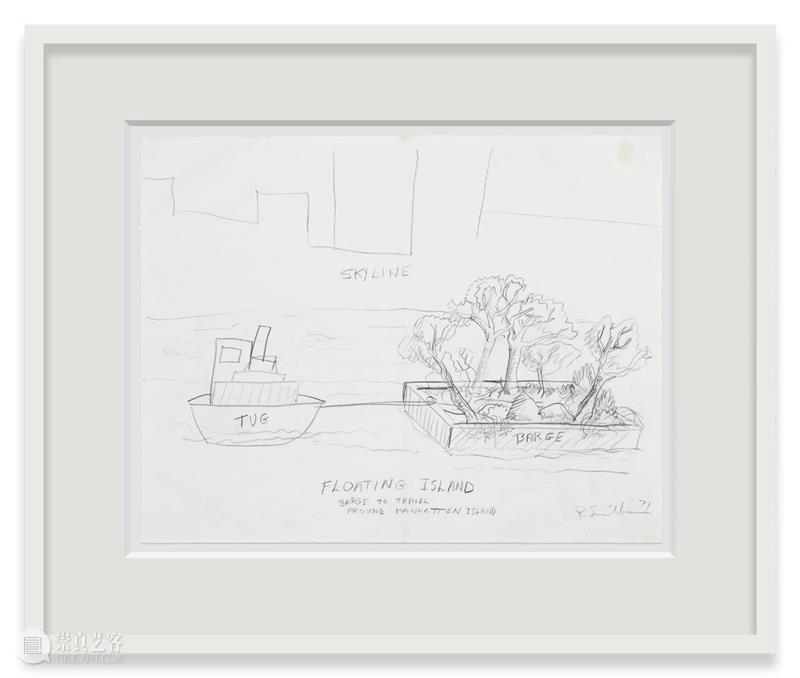
罗伯特 · 史密森 / 《漂浮的岛-环游曼哈顿岛的船》,1971 / 纸上石墨 / 作品:46.2 x 58.9cm,装框:66.6 x 80.1 x 4cm
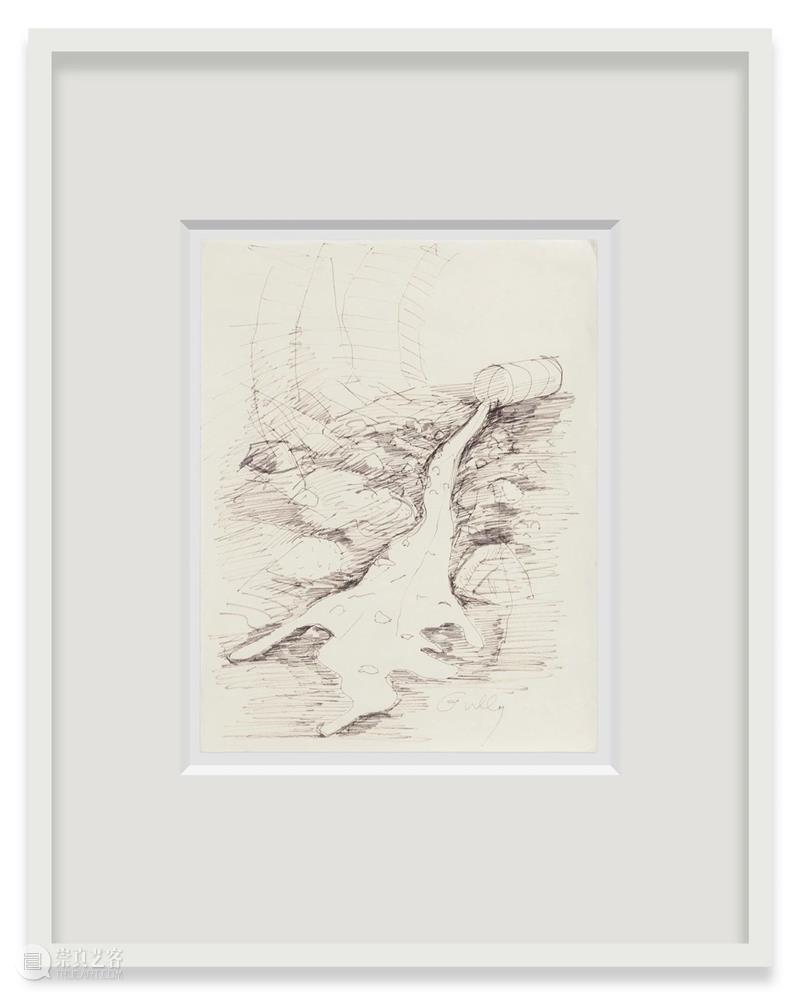
罗伯特 · 史密森 / 《溪谷》,1969 / 纸上墨水 / 作品:27.9 x 21.6cm,装框:48.8 x 38.3 x 4cm史密森观察到景观和其中的生物总是在经历着变化。1969年,他开始制作因重力引起流动及倾泄作用而形成的临时雕塑,并用素描记录下了这些制造冲积效果的想法。
从他的早期科幻式景观到雕塑和大地创作中都会出现火山口和火山,这显示了他对地质时间的长期关注。例如,其著名作品《螺旋堤》(Spiral Jetty,1970)中的玄武岩,就是来自死火山,而且加利福尼亚州摩诺湖附近的众多火山也指引他找到了地点。
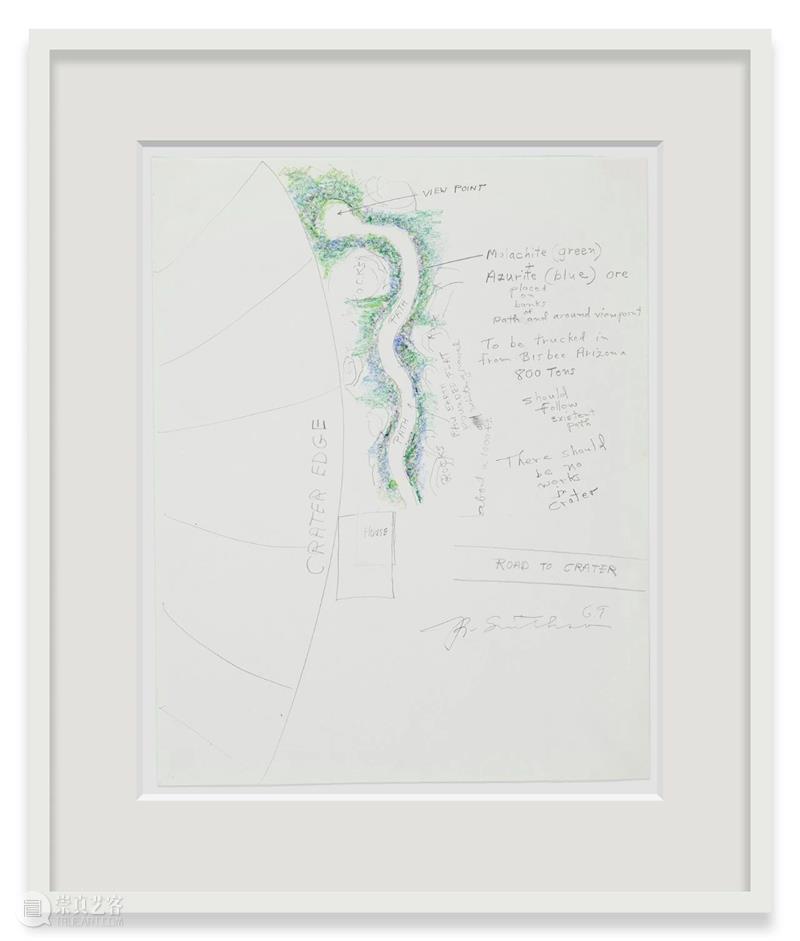
罗伯特 · 史密森 / 《去往火山口的路》,1969 / 纸上铅笔及蜡笔 / 作品:61 x 45.1cm,装框:80.2 x 66.5 x 4cm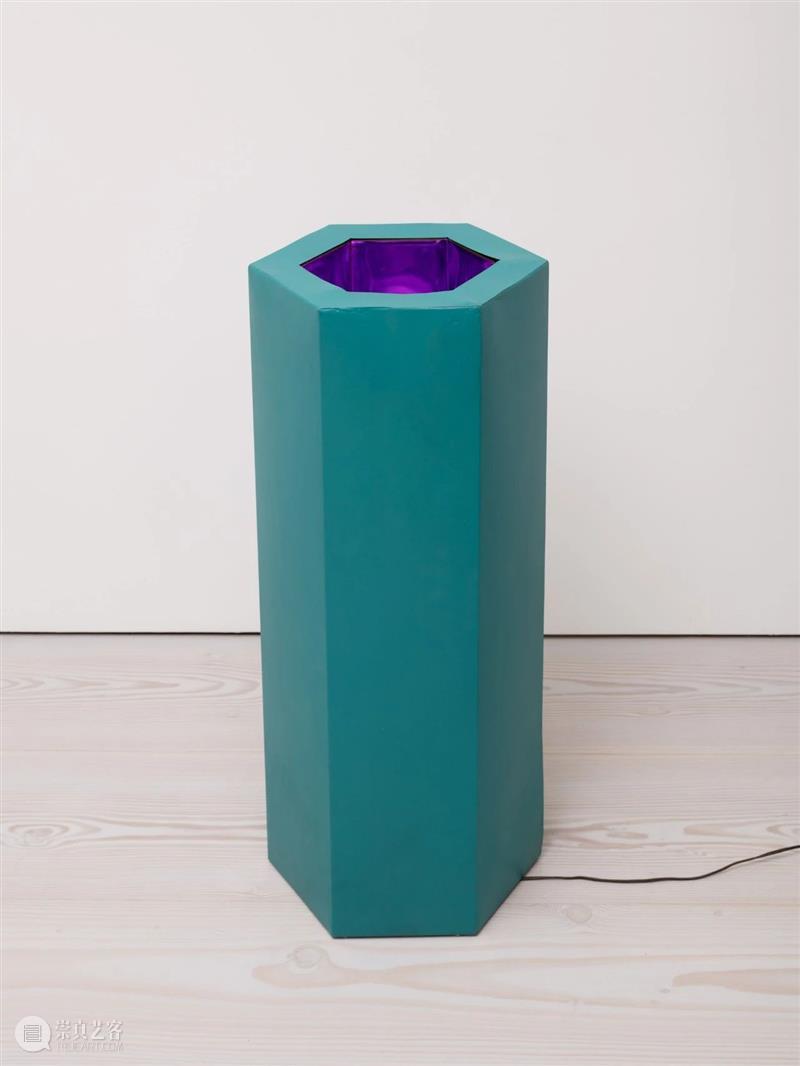
罗伯特 · 史密森 / 《火山口》,1965 / 绿色金属,内表面反光,灯 / 88.9 x 38.1 x 38.1cm罗伯特 · 史密森(Robert Smithson,1938年1月2日-1973年7月20日)出生于新泽西州帕萨克,并在新泽西州度过了他的成长期。1963年,他与艺术家南希 · 霍尔特(Nancy Holt,1938–2014年)结婚,后者在1973年至2014年期间管理罗伯特 · 史密森艺术遗产,并将史密森的作品捐赠给了霍尔特/史密森基金会。史密森最著名的创作包括大地艺术作品《螺旋堤》(Spiral Jetty,1970),《缺损的圆/螺旋山丘》(Broken Circle / Spiral Hill,1971)和《阿马里洛坡道》(Amarillo Ramp)(1973)。在这些大地艺术作品之前,史密森创作了表演性熵地作品,如临时雕塑《沥青倾泻》(1969,罗马),《胶水倾泻》(1969,温哥华),《混凝土倾泻》(1969,芝加哥)和《半掩埋的木屋》(1970,肯特州)。这些作品深刻地探讨了时间和人类境况的话题。罗伯特 · 史密森在玛丽安 · 古德曼画廊伦敦和巴黎空间的个展“假想岛屿”和“初始起点”将在2020年12月到2021年1月举办。
"Imagine yourself in Central Park one million years ago. You would be standing on a vast ice sheet, a 4,000-mile glacial wall, as much as 2,000 feet thick. Alone on the vast glacier, you would not sense its slow crushing, scraping, ripping movement as it advanced south, leaving great masses of rock debris in its wake."
Robert Smithson’s interests in travel, cartography, geology, architectural ruins, prehistory, philosophy, science-fiction, popular culture, and language spiral through his work. He was invested in a definition of art that was timebound and precarious, that would not claim monumental status, rather collaborate with entropy. Up until his death in 1973, Smithson demonstrated that art can be a means to explore how we might try to understand our place on the planet, with all of its complexities."I like landscapes that suggest prehistory. As an artist it is sort of interesting to take on the persona of a geological agent where man actually becomes part of that process rather than overcoming it."
"(…) Light, mirror reflection, and shadow fabricate the perceptual intake of the eyes. Unreality becomes actual and solid. […] The Eliminator is a clock that doesn't keep time, but loses it."
—Robert Smithson
"Nature does not proceed in a straight line, it is rather a sprawling development. Nature is never finished."
For Smithson, islands were speculative sites showing the constantly changing surface of our world and the limits of our knowledge. Some of his islands are locations for sculptural invention, others are sites investigating the formation of landscape.Smithson observed that landscape and its inhabitants were always undergoing change. In 1969 he started working with temporal sculptures made from gravitational flows and pours, thinking through these alluvial ideas in drawings.
Craters and volcanoes can be found in Smithson’s early science fiction landscapes, in his sculptures, and earthworks, demonstrating his long-standing interest in geological time. The basalt rock comprising much of Spiral Jetty (1970) is, for instance, the product of extinct volcanoes, and the rings of volcanoes around Mono Lake drew him to the site.Born in Passaic, New Jersey, Robert Smithson (January 2, 1938 – July 20, 1973), spent his formative years in New Jersey. In 1963 he married the artist Nancy Holt (1938–2014), who managed the Estate of Robert Smithson from 1973 to 2014, and who literally willed Holt/Smithson Foundation into being. Smithson is best known for his earthworks Spiral Jetty (1970), Broken Circle/Spiral Hill (1971), and Amarillo Ramp (1973). Prior to these earthworks Smithson created performative entropic land works, such as the ephemeral sculptures Asphalt Rundown (1969, Rome), Glue Pour (1969, Vancouver), Concrete Pour (1969, Chicago), and Partially Buried Woodshed (1970, Kent State), which speak poignantly to issues of time and the human condition.
Smithson's forthcoming exhibitions at Marian Goodman Gallery in London and Paris, Hypothetical Islands and Primordial Beginnings respectively, are scheduled for December 2020 - January 2021.
正 在 展 出 I CURRENT EXHIBITIONSABOUT THE SPACE OF HALF AN HOUR 2 NOVEMBER – 23 DECEMBER 2020
Please use this link to make an appointmenthttps://app.artsvp.co/35f0d9newyork@mariangoodman.comMonday - Saturday, 10 am – 6 pm Temporary closure in accordance with COVID-19 restrictions until further notice.
Tuesday - Saturday, 10 am – 6 pmTemporary closure in accordance with COVID-19 restrictions until further notice.
Tuesday - Saturday, 11 am - 7 pm
长按并识别二维码,关注画廊最新动态
如需转载图文,需注明出处
点击阅读原文,进入画廊官方网站
WeChat:MarianGoodmanGallery
Website:http://mariangoodman.com
Facebook:Marian Goodman Gallery
Instagram:mariangoodmangallery


 {{newsData.good_count}}

 {{newsData.transfer_count}}




 分享
分享