
李继伟|意识 · 行为 LI JIWEI | CONSCIOUSNESS AND ACTION


李继伟的创作极少追溯具象的过往经验,他始终在清晰的逻辑驱动下反思当下甚至于未来,以透视解构的方法剖析当代人类生活本质。1999年到2001年间,李继伟分别对苹果G3电脑和红灯笼进行切割实验,将当时象征先进技术与传统的事物进行质料层面的解构,以影像纪录并且将切割后物品的截面示众:“人类社会不再信奉主义和上帝而崇拜科技。但当你把电脑切开,有还是没有……?” 李继伟说。
Li Jiwei's abstract creation rarely traces the past experience of concrete works, always driven by clear logic reflecting on the present and even the future. He analyzes the essence of contemporary human life by means of perspective and deconstruction. From 1999 to 2001, Li Jiwei carried out artistic experiments on Apple G3 computers and red lanterns by cutting the objects into pieces and deconstructing what symbolizes Western advanced technology and Chinese traditional culture. He recorded and took photos of the cutting process, while challenging certainties people strongly believed in. “Human beings no longer believe in doctrines and God but only in technology. I decided to cut the computer in pieces, to check whether there was something in it or not ..."
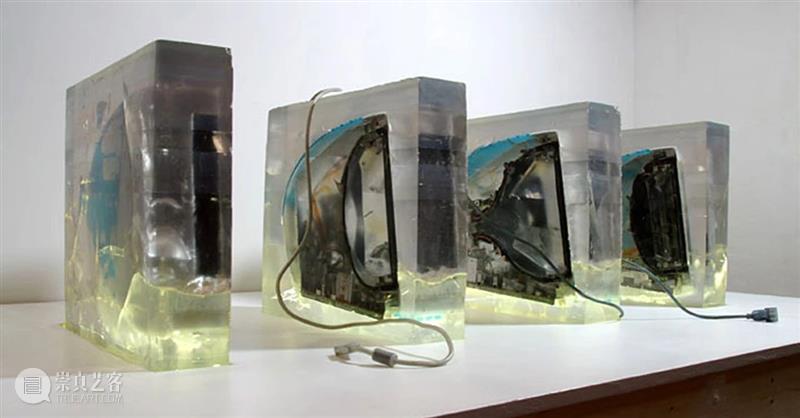 △ 切 Cut
《禁止复制》(Don't Copy)系列中,李继伟使用透明材料创作占用大量物理空间(禁止复制中,他制造象征克隆人的X-光片透明人型。系列II中,他运用通透的PC材料排列成由无数个横切面组成的巨鲨)。
In the series titled Don't Copy, Li Jiwei uses transparent material to create large-scale objects: in Don't Copy, he re-created the shape of a human figure using transparent plastic material and X-ray film, to metaphorically problematize the issue of human cloning; in Don't Copy II he arranged transparent acrylic panels into the shape of a giant shark composed by countless sections.


△ 禁止复制 Don't Copy
X光片 X-ray
400 × 200 × 250 cm
1997
08年奥运期间,他为德国驻华使馆“拽上”一件蓝白相间的巨型运动衣;同年为奥运会水立方创作《艺术上行走》。李继伟把后工业时代兴起的亚克力,Polycarbonate (PC)等透明材料,奇异地运用到他的艺术创作之中,自如地把握材质软硬的可塑性,充分展现了材料科学与色彩“性感”的魅力;他寻找视觉的动感,探求三维空间中的变化关系,在规范中建立新的可能性。
During the 2008 Olympics, Li Jiwei installed a giant blue and white sportswear on the façade of the German Embassy in China; in the same year, he created the work Walking on Art for the Olympic Water Cube (Shui Li Fang). He applied acrylic, polycarbonate (PC) and other transparent materials typical of the post-industrial era into his artistic creations, to reflect the plasticity of soft and hard materials, and to demonstrate the attractive charm of materials and colors. While pursuing visual dynamism, the artist explores the ever-changing relationship between the elements within a three-dimensional space, creating a space for new expressive possibilities.


制作大型装置和雕塑的同时,李继伟从未停止绘画。种种超意识上的抽象表达背后,绘画对他而言意味着什么?南华早报一期报导上,记者提到在李继伟的绘画上见到很深的中国印记 —— 那是信仰、文化、哲学的根植,或是持续进化的DNA的记忆回溯?
While constantly exploring the expressive possibilities of large-scale installations and industrial design, Li Jiwei has never lost his focus on painting. Behind all the variations in abstract expressions, what does painting mean to him? In a report published by the Southern China Morning Post the journalist mentioned that Li Jiwei’s paintings are characterized by references to Chinese believes, culture, and philosophy. Or maybe the Chinese cultural connotation in his works represents the memory of a DNA that continues to evolve?

△ DX19-20 No.023
布面丙烯 Acrylic on canvas
120 × 120 cm
2019-2020

P = PVG ART 芳草地画廊
L = LI JIWEI 李继伟
P: 您在叶浅予唯一的国画系试验班的学习经历如何影响您的多媒介创作?
How did your learning experience in Ye Qianyu's experimental class at the Chinese Painting Department affect your multi-media creation?
L: 对我来说国画系的教育不仅传授了传统技法,对于中国水墨写意境界的理解也是至关重要的。从东方的传统笔墨到西方的立体造型,叶先生主张东西方美术的博学,这种教学使我对东西方文化有了更宽泛的认识。我以为艺术语言不应局限于一个形式、单个文化和国度。多媒介是在艺术中各种不同形式的表现方法,更重要的是通过某种艺术形式表达个人思想与观念。
The education from the Department of Chinese Painting provided me with a knowledge of traditional painting techniques, while enabling me to grasp the atmosphere and the state of Chinese ink painting at the time. Under the guidance of Professor Ye, my education was characterized by the combination of eastern traditional brushwork practice and western three-dimensional modeling which enabled me to strengthen the knowledge and understanding of both cultures. I think that artistic language should not be limited to a single culture or country. Therefore, for me, especially the multi-media approach is an expressive method suitable for different forms of art and it is key to express personal thoughts and concepts.


P: 长期在奥地利和德国学习工作生活的经历如何影响您的艺术实践和思考?
How did the long-term experience of studying and working in Austria and Germany influence your practice and theory?
L: 在维也纳美术学院学习使我理解了抽象绘画的意识与含义”。而在奥地利生活的经历我深刻的体会到“音乐”作为几乎最抽象的艺术语言,它对于其它种类艺术及奥地利人的生活有着渗透性的影响。当人们走在维也纳街道上,能在空气中闻到艺术与文化。精神活动的抽象意识超越一切物质的存在,这不好用语言去表达的……
The experience of studying at the Academy of Fine Art in Vienna strengthened my understanding and knowledge of abstract painting. Overall speaking, during my stay in Austria, I deeply realized that music, as the most abstract artistic language, has a strong influence on art and on the lifestyle of Austrian people. This influence is all embracing: when you walk down the streets in Vienna you can smell art and culture in the air. The abstract awareness of the spiritual activity transcends all material existence: it is difficult to express this concept by words……
心理学家弗洛伊德曾说: 意识是一种特殊的心里行为,它是感官将其他来源的材料经过一番加工而形成的产物。他还说“无知就是无知,谁也没有权利相信它能衍生出任何东西……”
Sigmund Freud once observed that consciousness is a special mental behavior developed by processing information from other sources through the senses. He also said, " Ignorance is ignorance; no right to believe anything is derived from it.“


90年代的德国是重视哲学与逻辑的工业制造大国,而柏林是一个没有独立经济基础、残缺的城市,市中心就是一片世界最大的工地,也因此极度开放和包容。后现代主义艺术非常活跃,建筑设计、装置、绘画、还有Hip-Hop、金属音乐等。
Germany in the 1990s was a big industrial manufacturing country focused on philosophy and logic, while Berlin was a fragmentary city with no basis for economic independency. The city center used to be the world's largest construction site and it was extremely open and inclusive. The Postmodern art scene was very vibrant and all-embracing, including architectural design, installation, painting, Hip-Hop, metal music, etc.
黑格尔曾经说过“一个深广的心灵总是把兴趣的领域推广到无数事物上去“。在柏林我真正开始对于大型艺术装置的实践与创作,尝试西方意识、东方境界的解构和再构建,同时对艺术与建筑空间的关系及材料科学产生了极大兴趣,想试试自己能做些什么。
Hegel once mentioned that a profound and broad mind always extends the field of interest to countless things. In Berlin, I really started to practice and create large-scale installations, deconstructing and re-interpreting Western and Eastern cultural sensitivity. I developed an interest in exploring the relationship between art, architectural space and material science. I wanted to try to engage in some artistic experimentation.

△ 领域 Sphere
混合材料 Mixed media
700 × 500 × 160 cm 1996
柏林鬼山 Ghost Mountain Berlin
P: 您创作雕塑和装置的动机是什么?
What is your motivation for creating sculptures and installations?
L: 追求没有标准的标准。我喜欢试验艺术,因为它充满了全新的挑战。探索自我,把不同文化、不同领域横竖纵向交错融合运用,颠覆程式化的模式。再创造的过程带来不同感受的刺激,同时也存在各种风险。我尝试将中国画变成在平面空间中的一笔写意,用当代材料科学与技术,在立体空间中创造一个抽象境界…..
To pursue a standard without standards. I like experimental art as it is full of unexpected challenges. I explore myself, juxtaposing and combining different cultural elements and fields of knowledge to subvert the standardized model. The process of re-creation and re-elaboration stimulates a wide range of feelings, but somehow it also brings risks. I try to turn Chinese traditional one stroke of a brush on ink painting from a two-dimensional form into an abstract dimension in a three-dimensional space using contemporary material from science and technology.

△ 书山 Book Mountain 安装过程 Installing Process


玻璃钢,宣纸 Polyester and rice paper
2009法兰克福书展中国主宾主题馆
Frankfurt Book Fair 2009 China Guest of Honor
P: 您曾使用透明材料和切割手法进行创作。您为何重视透视与解构?它们如何同当下联系在一起?
You have practiced on transparent materials and cutting techniques. Why do you focus on perspective and deconstruction and how do they relate to the present?
L: 我喜欢透明材料,它具有无限的空间视野。其丰富色彩极具当代感和性感的吸引力。用最简单的方式区分透视和解构的话,前者是在观察和寻找事物内在根源;后者则是过程,刨析事物是为了重新创造。

△ 概念椅 Concept Chair
亚克力 Acrylic
2006-2007
解构主义非常关注各种艺术派别,如立体、表现、极简、现代与后现代主义等,目的之一是让当代主义脱离建筑实用主义的绝对束缚;解构主义有着自我批判的态度,同时试图通过材料真实性及解构的自我表达塑造纯粹的形式。
Deconstructivism is influenced by different art movements including cubism, abstract expressionism, minimalism, modernism and post-modernism. One of the purposes of Postmodernism is to free contemporary art and architecture from the limitations of functionalism and pragmatism. Deconstructivism is characterized by a critical approach: at the same time, it attempts to shape pure forms through material authenticity and deconstructive self-expression.

△ 直线(概念桌) Straight Line
亚克力 Acrylic
298 × 100 × 102 cm
2006-2007
P: 绘画这一媒介自始至终贯穿您的艺术实践。抽象绘画在今天对您来说意味着什么?
The medium of painting characterized your entire artistic practice from the initial stage. What does abstract painting mean to you today?
L: 抽象绘画在今天对于我来说,完全涵盖了当代社会信息、智能影像、AI城市 、网络世界及一切的存在,可见的、不可见的,世界完全演变在抽象的含义中…..

△ DX19-20 No.018
布面丙烯 Acrylic on canvas
60 × 50 cm
2019-2020

P: 人与大自然的关系是您长期关心的议题。经历疫情,您如何看待人类当下面临的危机?
The relationship between human and the eco-system has been your long-term concern. What’s your point of view on the current crisis faced by human beings in the post-pandemic era?
L: 科学的极速发展,给人类带来优越、奢侈的生活,却也挑战了人类道德的底线和人与自然并存的规律。我创作出遗传学和生物学命题的作品,通过艺术表现来关注生物世界的存在,并提出问题,但没有更多的解释。

△ 禁止复制 II DON‘T COPY II
PC材料,灯光 PC and lighting
中国国家博物馆,2015

李继伟 Li Jiwei
Studies of Abstract Painting, Master student of Prof. Markus Prachensky, Award for Excellent Studies, Award “Goldener Fügerpreis”, Scholarship, Master Degree

Opening Hours: Every day 10:00-22:00
【媒体垂询 I Media Contact】
www.parkviewgreenart.com


 {{newsData.good_count}}

 {{newsData.transfer_count}}


 {{item.good_count}}k
已展示全部
{{item.publisher_name}} 发布了 文章
{{item.title}}
更多功能等你开启...


 分享
分享