
【OCAT上海馆 | 作品介绍】久保田成子,《杜尚式:自行车轮(一)》,1983-1990
当前展览“重新聚焦媒介:东亚录像艺术的兴起” 共计展出25件作品。“作品介绍”系列将在展期内,以导览路线为序依次为大家推送每一件作品的介绍。展览首次汇集来自日本、韩国和中国,开创了录像艺术实验之先河的重量级艺术家,旨在重新审视艺术家在东亚录像艺术兴起之时对于这一媒介的处理方式,并以期为跨国性当代艺术媒介的录像艺术在全球范围内的历史梳理做出贡献。
久保田成子
1937-2015
No.8
杜尚式:自行车轮(一)
Duchampiana: Bicycle Wheel One
1983-1990
单通道录像雕塑(3 英寸液晶显示器、自行车轮、木凳)
录像文件:27 分 17 秒(彩色,无声),循环播放
雕塑:58(高)×25(宽)×15 (深)英寸
Single-channel video sculpture (three-inch liquid crystal monitor, bicycle wheel, wooden stool)
Video file: 27’17’’ (color, silent), looping
Sculpture: 58 (h) × 25 (w) × 15 (d) in
作品由久保田成子录像艺术基金会提供
Courtesy of Shigeko Kubota Video Art Foundation
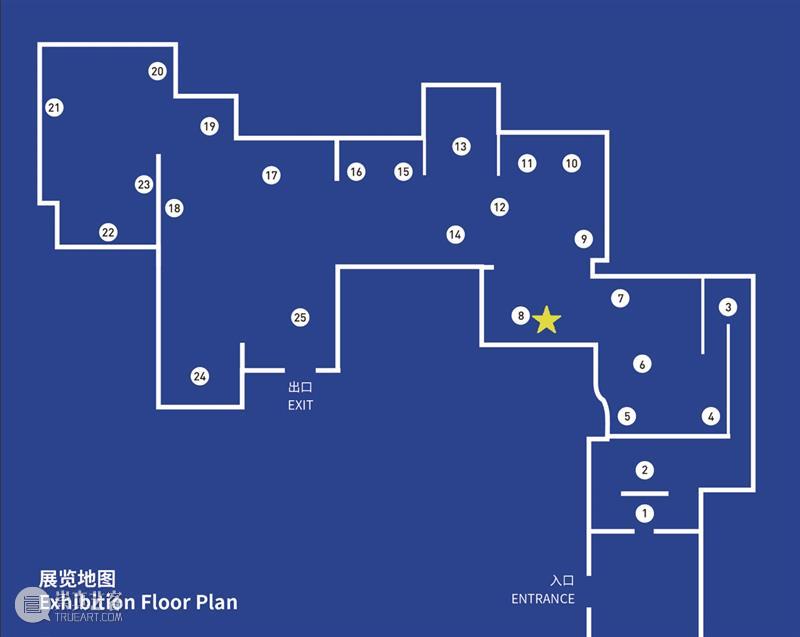
星标为《杜尚式:自行车轮(一)》(1983-1990)在本次展览现场所处位置
The star refers to the location of Duchampiana: Bicycle Wheel One (1983-1990) in this exhibition
自上世纪70年代中期起,久保田成子的录像雕塑作品就开始对录像媒介的独特性展开实验。久保田成子在1968年马塞尔·杜尚(Marcel Duchamp)去世的那一年见到过杜尚,随后她以录像、录像雕塑和装置的形式制作了几件作品,以向杜尚的作品致敬。《杜尚式:自行车轮(一)》(Duchampiana: Bicycle Wheel One,1990)可以说是杜尚第一件被公认为现成品作品的《自行车轮》(Bicycle Wheel,1913)的录像版本,它以原作作为基础和观念命题,与录像媒介相结合。久保田成子在静止的凳子上的自行车轮子上,引入机械化运动,并将监视屏连接到自行车车轮辐条上,通过其中的录像画面扩展了对运动的描绘。这个无法在电影里实现的结构,将载有自然及合成色彩的风景和单色块的3英寸监视屏螺旋式旋转起来。这些图像相互推拉角力,以雕塑的形式实现对一段旅程的表达;而当监视屏转变成一片紫色的单色区域时,又将雕塑视作一个立足于此时此地的更客观的客体。时间在雕塑内部摇摆不定,这一方面令人联想到剪辑的录像景观中所捕捉的合成时间,另一方面又强调了物体在当下的直观性,特别是当监视屏转变成单色时。在机械驱动下旋转的自行车轮成为一个冥想的符号,这是一个禅宗哲学中幽默和敬畏共存的令人安心的连续动作。监视屏的环形轨道以不快也不慢、适中的速度进行,在眼睛可以看到的时候——尽管不自然——将录像的图像旋转和倒置。观众将不可避免地放弃将注意力集中在旋转对屏幕上,转而让眼睛从微观的屏幕切换到宏观的雕塑整体。正如艺术家曾说:“录像是有机的,而电影不是”* ,通过利用录像的拍摄、即时回放、编辑、对时间的扭变和便携性等特质,久保田成子使我们与录像媒介之间关系被赋予对话与响应的可能性。(文/金曼)
—————————
* 引自Video Data Bank, “久保田成子:一次访谈”,1982,视频,22分钟,于2019年11月17日检索https://www.kanopy.com/product/shigeko-kubota-interview
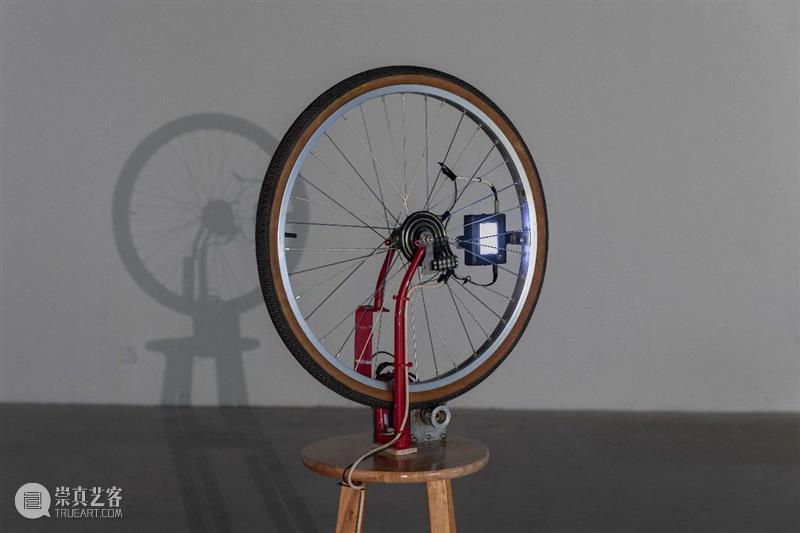
久保田成子,《杜尚式:自行车轮(一)》,1983-1990,单通道录像雕塑。“重新聚焦媒介:东亚录像艺术的兴起”展览现场,2020-2021,OCAT上海馆
Shigeko Kubota, Duchampiana: Bicycle Wheel One, 1983-1990, single-channel video sculpture. Installation view of Refocusing on the Medium: The Rise of East Asia Video Art, 2020-2021, OCAT Shanghai
Kubota’s video sculptures from the mid 1970s experiment with the unique capabilities of the video medium. Kubota met Marcel Duchamp in the year of his death 1968 and made several works in video, video sculpture and installation paying homage to his works. Duchampiana: Bicycle Wheel One (1990) is a video version of Duchamp’s first recognised readymade, Bicycle Wheel (1913) as a foundation and conceptual proposition to augment with the medium of video. Kubota introduces mechanised movement to her bicycle wheel on a motionless stool and extends the portrayal of movement through the addition of video imagery within monitor attached to the spokes of the spinning wheel. This configuration, impossible to achieve in film, spirally rotates the three-inch monitor filled with natural and synthetically coloured landscape and monochromes. The imagery pushes and pulls between considering the sculpture as an expression of a journey or, as the monitor transforms to a monochrome field of purple, a more objective reality grounded in the present moment and place. The treatment of time oscillates within the sculpture, on the one hand evoking synthetic time captured in the edited video landscape while on the other hand the immediacy of the object in the present moment particularly accentuated when the monitors are monochrome. The mechanically driven turning bicycle wheel is a meditative icon, a reassuring motion of continuity holding both the humour and reverence Zen Buddhism allows to coexist. The monitor’s circular track proceeds at a moderate speed, neither fast nor slow, turning the video image around and upside down where it is possible, though unnatural, for the eye to follow. The ability to remain focused on the turning screen inevitably waivers to allow the eye to switch from the micro screen to a macro wholistic view of the sculpture. The artist said that ‘video is organic and film is not’* implying the relationship with the video medium through specific unique qualities such as recording processes, instant playback, editing possibilities, distortion of time, and portability, made the relationship with the video medium one that was a responsive and in dialogue. (Text / Kim Machan)
—————————
*Video Data Bank, “Shigeko Kubota: An Interview”, 1982, video, 22 mins, retrieved November 17, 2019, https://www.kanopy.com/product/shigeko-kubota-interview.
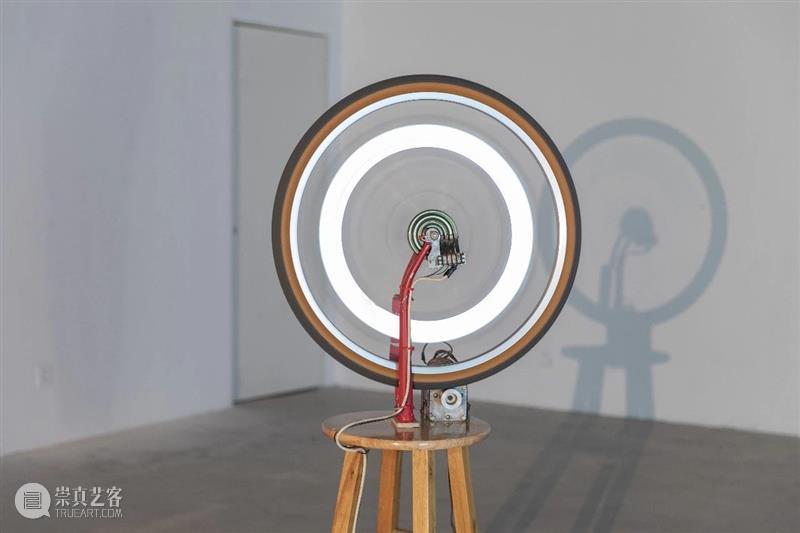
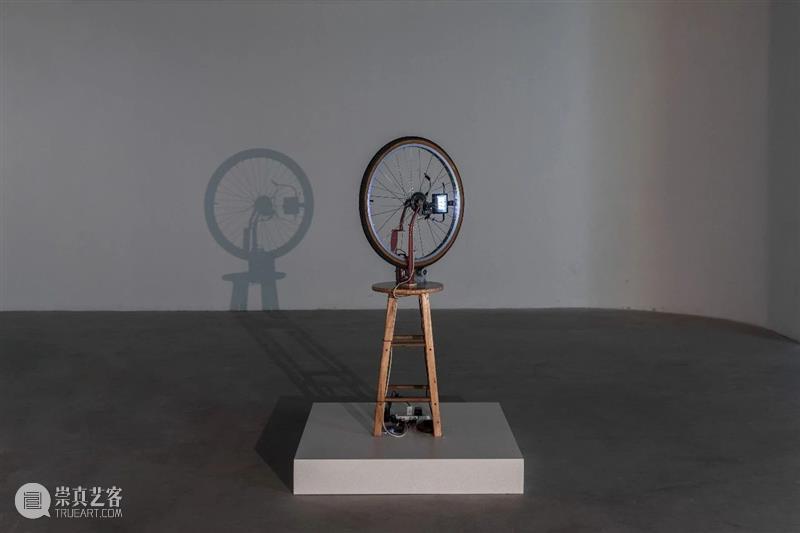
久保田成子,《杜尚式:自行车轮(一)》,1983-1990,单通道录像雕塑。“重新聚焦媒介:东亚录像艺术的兴起”展览现场,2020-2021,OCAT上海馆
Shigeko Kubota, Duchampiana: Bicycle Wheel One, 1983-1990, single-channel video sculpture. Installation view of Refocusing on the Medium: The Rise of East Asia Video Art, 2020-2021, OCAT Shanghai
图片版权 ©OCAT上海馆
Image copyright ©OCAT Shanghai
艺术家简介
About the Artist
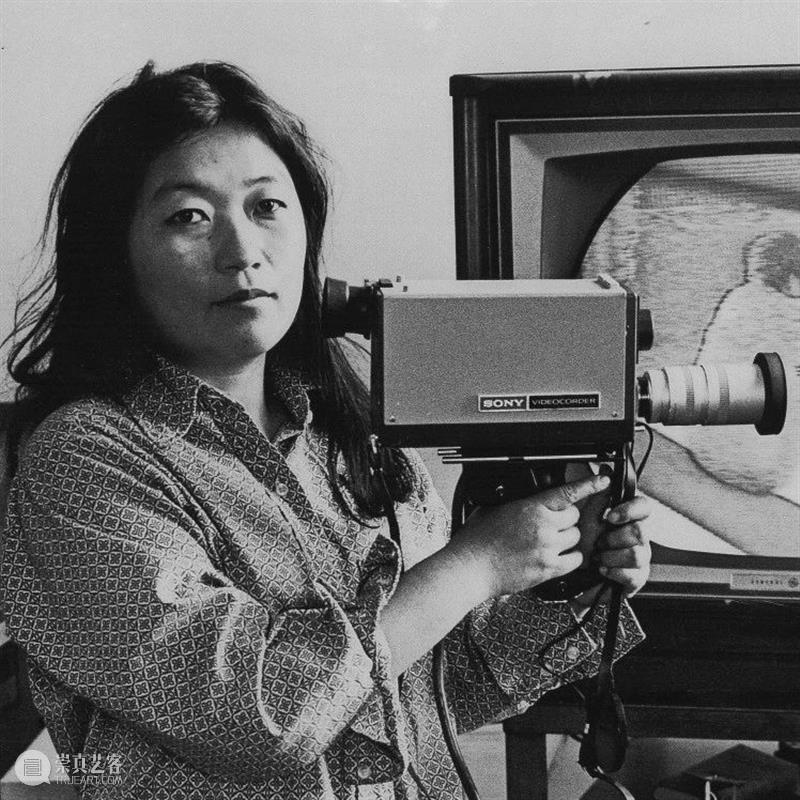
图:久保田成子在工作室 ©Tom Haar,1972
图片由Tom Haar拍摄,由久保田成子录像艺术基金会提供
Image: Shigeko Kubota in her studio
Photo by Tom Haar ©Shigeko Kubota Video Art Foundation
久保田成子1937年生于日本新泻县,她于1964年移居至纽约,并迅速成为上世纪60年代纽约激浪派的重要人物。她也是在1967年最早一批使用便携式录像机索尼Portpak进行创作的艺术家之一。久保田成子的创作深受马塞尔·杜尚(Marcel Duchamp)和约翰·凯奇(John Cage)的影响。她所创作的录像雕塑,多媒体装置和单通道影像作品都呈现出一种独特的感性。在久保田成子的创作生涯中,个人性和技术性之间寻得了一种抒情的结合,她通常会在自然、艺术和日常生活的图像中加入电子处理技术。久保田成子在九十年代曾受到过两次调研性的展览——分别是1991年在美国移动影像博物馆和1996年在惠特尼美术馆。
Born in 1937 in Niigata, Japan, in 1964 Shigeko Kubota moved to New York, and immediately became an active participant in the international Fluxus art movement in the 1960s. She was one of the first artists to adopt the portable video camera Sony Portapak in 1967. Kubota was strongly influenced by the art and theories of Marcel Duchamp and John Cage. She brought a singular sensibility to her extensive body of video sculptures, multi-media installations, and single-channel videos. Throughout her career, Kubota forged a lyrical union of the personal and the technological, often merging vibrant electronic processing techniques with images and objects of nature, art and everyday life. Kubota’s work received two major surveys in the ’90s--one at the American Museum of the Moving Image (1991), the other at the Whitney Museum of American Art (1996).

当前展览
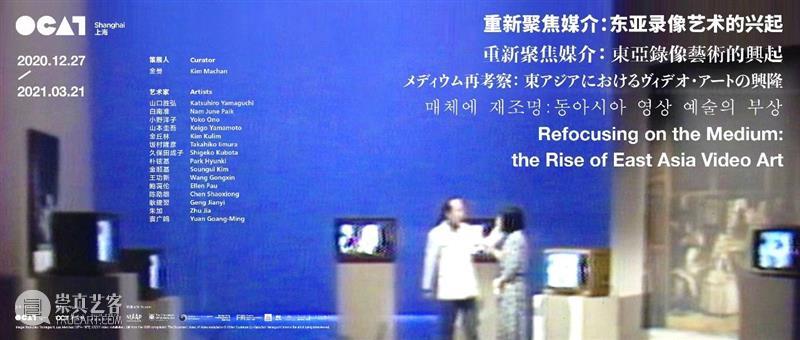
重新聚焦媒介:东亚录像艺术的兴起
展期:2020年12月27日-2021年3月21日
C空间计划 | 廖斐 | 这一切是随机发生的吗?
展期:2021年1月23日-3月28日

征稿启事
扩频Amplifier:OCAT上海馆媒体艺术专号
截稿日期:2021年3月14日
关于OCAT上海馆
参观时间 | Admission Hour
10:00-18:00 周二至周日(周一闭馆)
最后入场时间:17:30
10:00-18:00 from Tuesday to Sunday (Closed on Mondays)
Last Entry 17:30
联系我们 | Contact us
Tel: 021-66085180
Email: ocatshanghai@ocat.org.cn
Weibo: @OCAT上海馆
Instagram: @ocat__shanghai
地址 | Address:
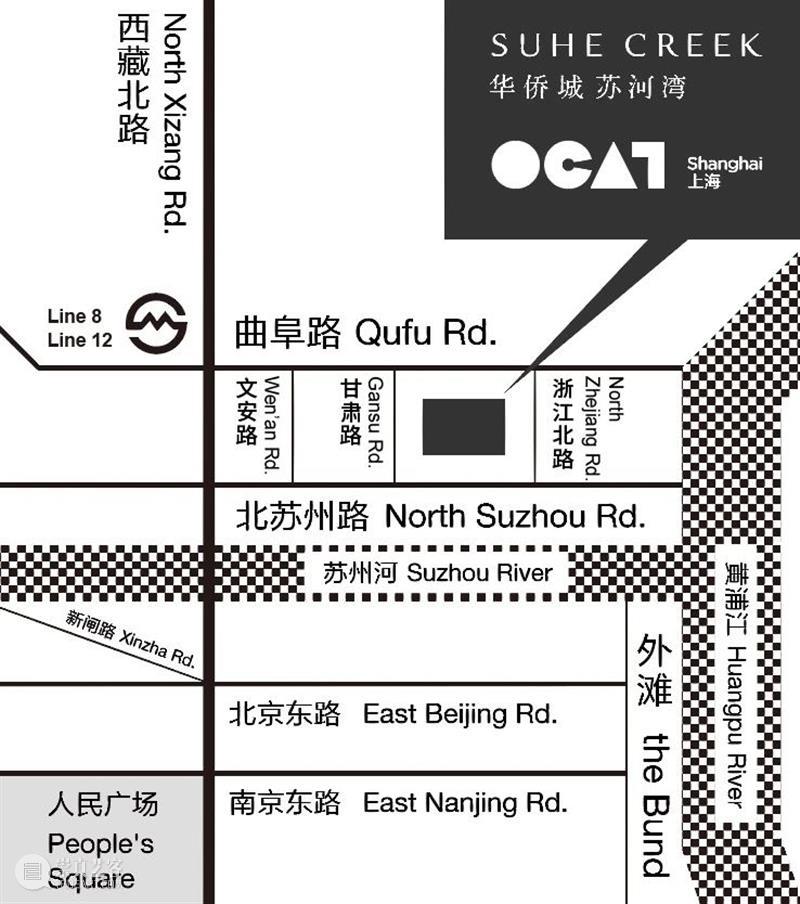
上海市静安区曲阜路9弄下沉庭院,负一层(轨道交通8号线、12号线曲阜路站)
-1F Sunken Garden, Lane 9, Qufu Road, Shanghai (MTR Line 8 & 12 Qufu Road Station)

 {{newsData.good_count}}

 {{newsData.transfer_count}}


 {{item.good_count}}k
已展示全部
{{item.publisher_name}} 发布了 文章
{{item.title}}
更多功能等你开启...


 分享
分享