
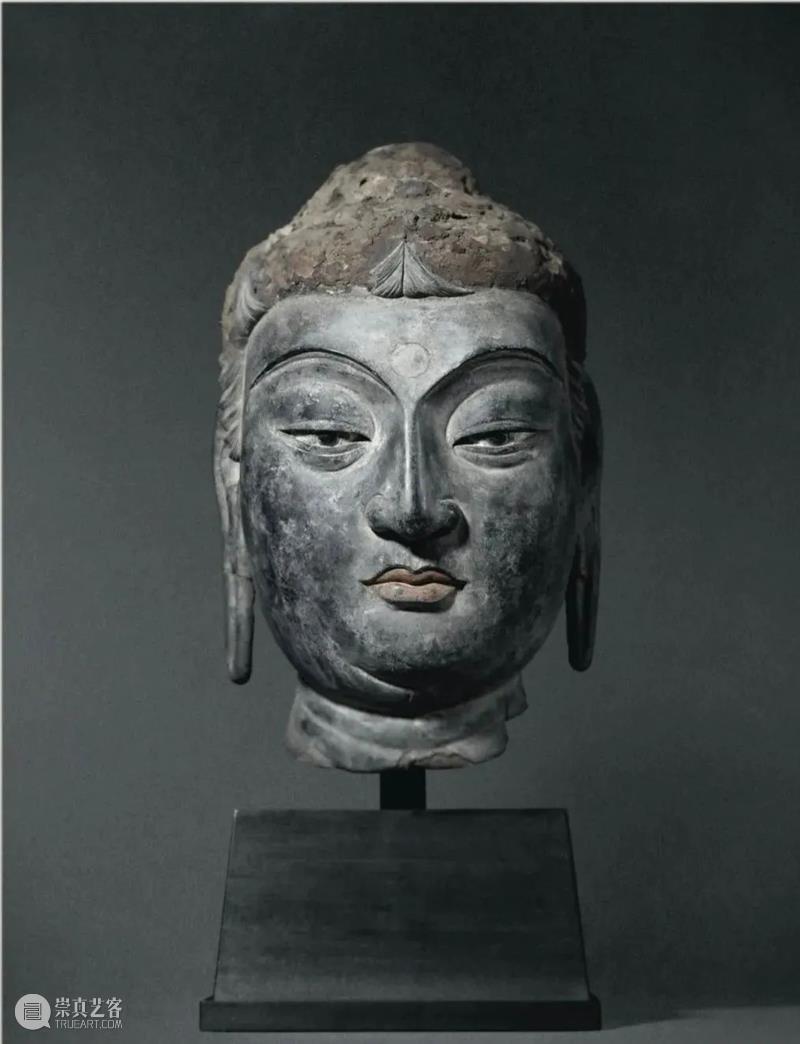
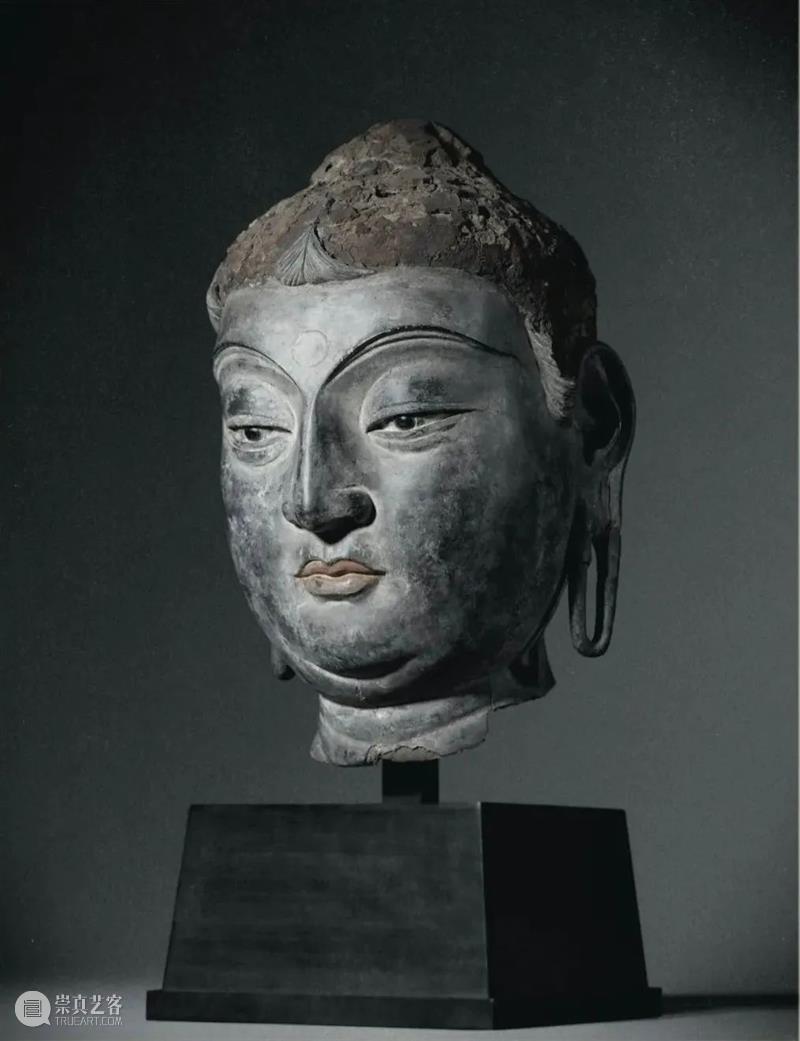
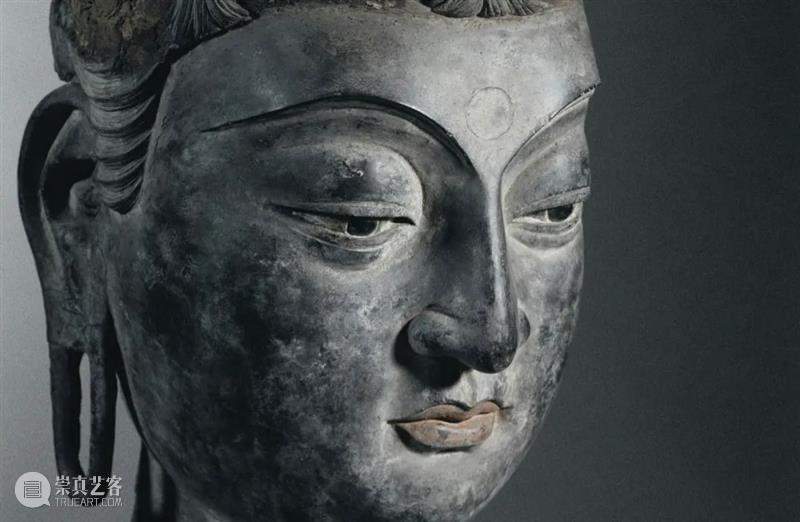
天价成交的造像:唐 夹纻干漆佛头像
2013年10月8日 • 香港
苏富比:艺海观涛——坂本五郎珍藏中国艺术
Chinese Art Through The Eye Of Sakamoto Gorō
https://www.sothebys.com/zh/auctions/ecatalogue/2013/chinese-art-through-the-eye-of-sakamoto-goro-hk0490/lot.120.html
Lot 20
唐 夹纻干漆佛头像
H 49.5 cm
估价:
20,000,000 - 30,000,000 HKD
成交价:
40,440,000 HKD
来源:
购于五十至六十年代
Provenance:
Acquired between the 1950s and 60s.
展览:
《开馆特别出品「精品选集」》,九州岛国立博物馆,福冈,2005年,编号30
Exhibited:
Kaikan tokubetsu shuppin seihin senshu [A special inaugural exhibition], Kyushu National Museum,Fukuoka, 2005, cat. no. 30.
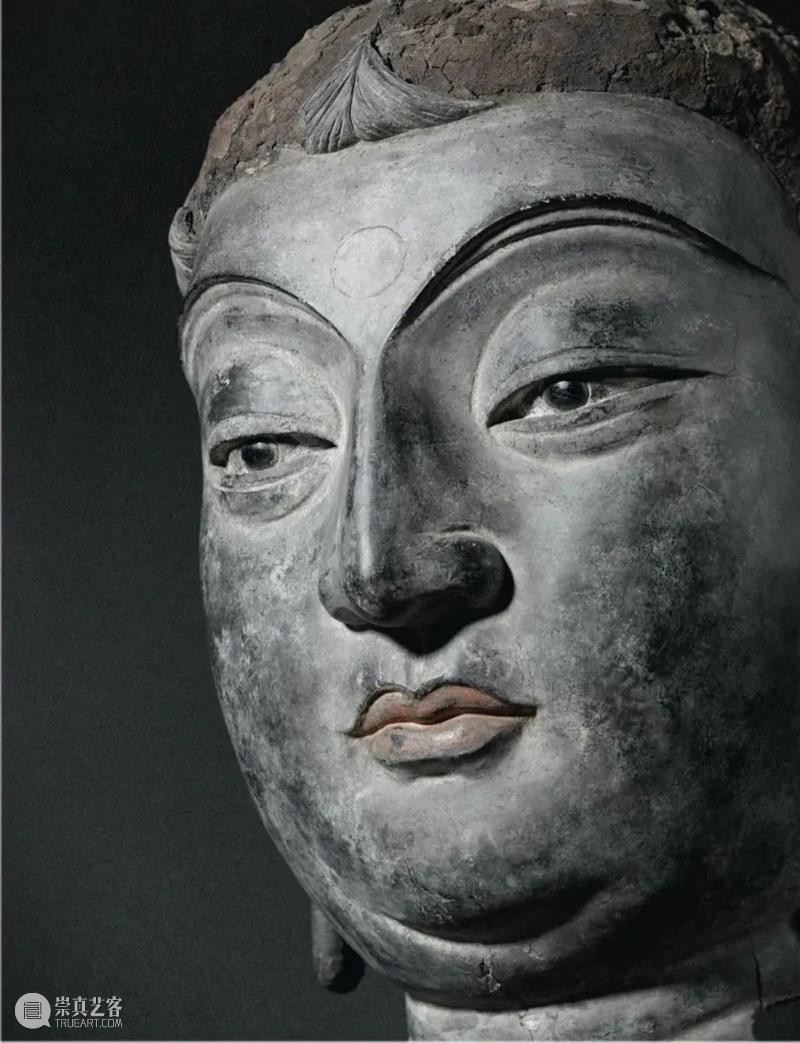
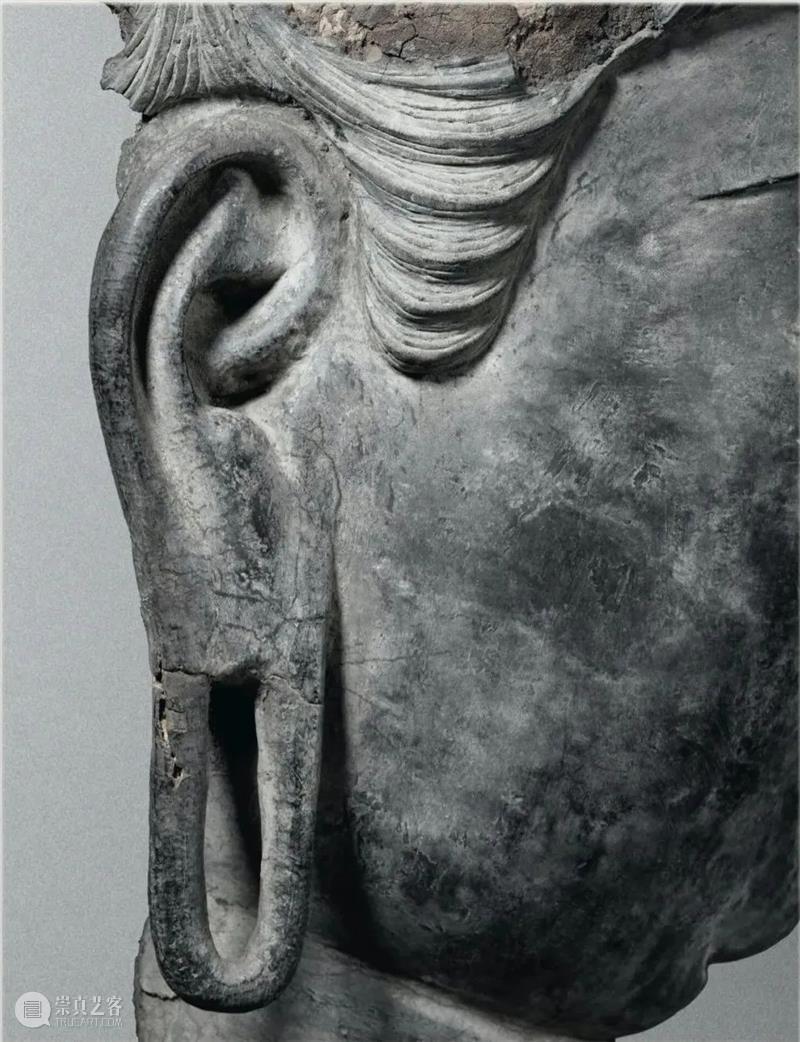
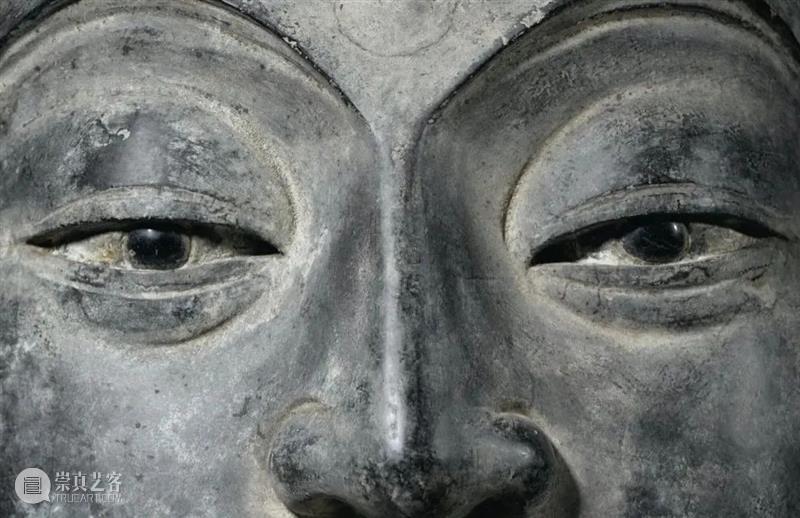
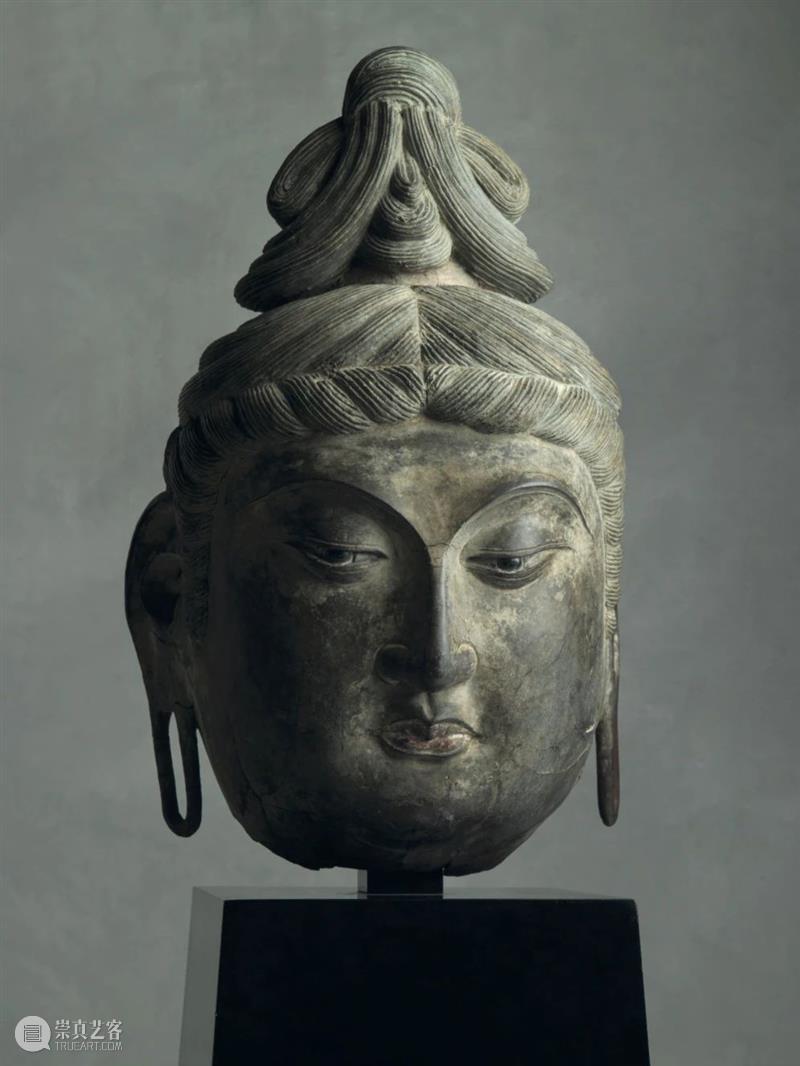
the sensuous full face of the enlightened being withslender bow-shaped eyes and hooded eyelids casting a serene and meditative aurawith his omniscient black glass pupils gazing intently ahead, all below evenlyarched eyebrows tapering at the ends issuing from the broad straight nose andsmall bud mouth with full, pale red lips above a double chin and a thickrounded neck, the forehead centred with a faint circular indentation that onceheld a jewelled urna, all below the hair and domed ushnisha withtraces of the neatly coifed hair remaining on the forehead and on the sidesaround the pendulous earlobes with long slits elongated by the heavy earringsworn in his princely former life, the top of the head now left with an unevenrust-coloured surface juxtaposed by the smooth slate-grey lacquer patina of theface and remains of the the hair naturally resembling weathered bronze, theback of the head left open revealing the layers of linen on the interior, woodstand
漆佛钟灵
文/康蕊君
坂本氏藏佛首庄严宏伟,佛相静美,凝神若思,触动人心。唐朝佛教造像,能与之媲美者,古今无寻。艺匠巧以夹纻干漆妙制佛首,脸容祥和谐雅,臻善至美,其钟灵秀逸,他法难及。佛首硕大,精美绝伦,处处显示其奇玮独特。若论感染人心,诚宗教造像中之菁华逸作。可为凡间俊秀,却又活现我佛慈悲,蕴涵十德(仁、义、礼、智、信、忠、孝、节、勇、和),形神兼备。
以此繁复漆艺制成之唐代造像,绝无仅有,传世或止七尊,多有缺残。夹纻漆塑制作艰巨,大费周章,制作数量受限,加上干漆纤巧,保存非易,如今事隔多个世纪,硕果仅存,应属意料之事。起始以木柱为蕊,泥塑作模,贴蘸漆麻布以为胎。复施重漆,巧工精雕,敷彩添色,最后割开背面取出木蕊泥坯,只余薄麻漆层,脱胎成像。较之石雕,夹纻显然轻巧,可制于城镇内之专门作坊,再运送至各地,也适用于巡游仪式中作行像。夹纻造形灵活,成就匠心独运,刻划入微,妙制佛首气韵生动逼真,棱角分明利落,曲弧婉柔圆润。双唇饱满,两颊娇嫩,眉若刀裁,鼻如悬胆,亲切中见肃严,巧夺天工,栩栩如生,历经千载,犹如往昔,彷佛慈佛临凡,普渡群生。
有一从未发表过之私人收藏菩萨头像,同样硕大壮观,若论尺寸(约50公分),与此佛首可谓伯仲之间,或同出一艺坊,制造时间相若,甚或与本品同属一组。菩萨头像造形轮廓与此作相近,脸相庄严,纤毫毕现,髻发大致尚存。
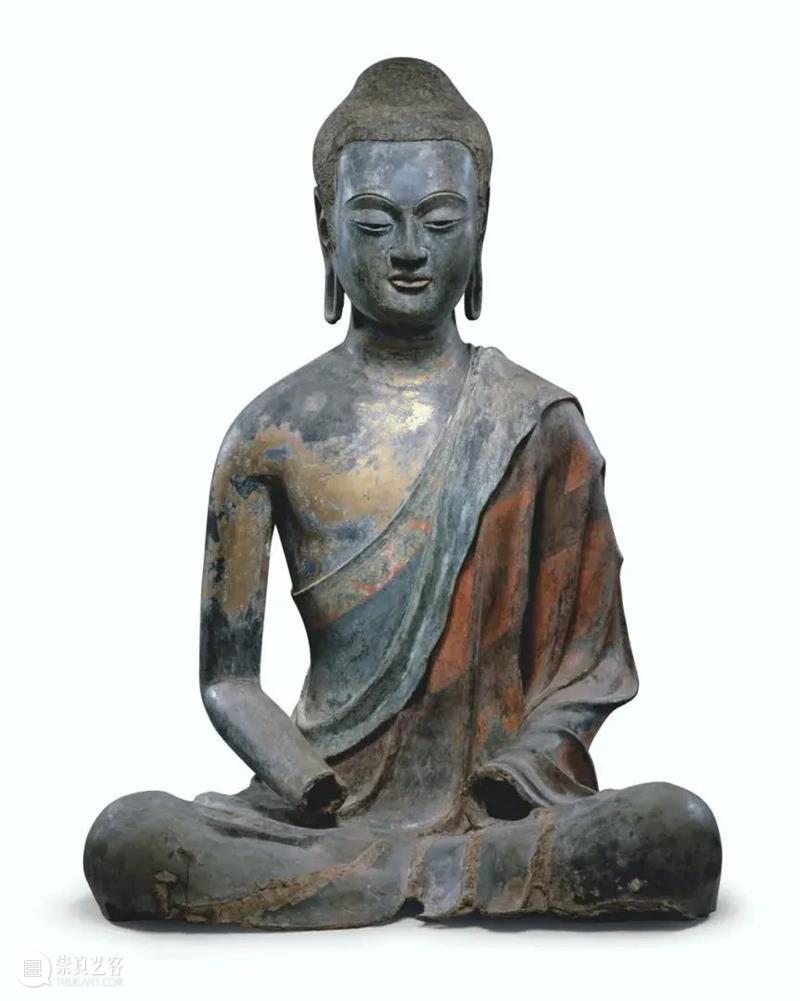
唐約650年 夾紵乾漆坐佛 96.5公分
© 紐約大都會藝術博物館藏品
传世唐代夹纻塑像,另有六例,各具风华,但与本品相较,论气势规模,无有及其浩,论神情气韵,无有及其妙。纽约大都会艺术博物馆著名夹纻坐佛(96.5公分),已知原出河北正定大佛寺,应制于唐高宗永徽元年(650)前后,色彩保存甚佳,图例见于《世界美术大全集:东洋编》,卷4,东京,1997年,图版132。大都会藏佛像神情与本品相似,髻发品相又甚接近,或制于同一作坊,然尺寸稍小,较形粗略,眉目刻划,未如细致。
唐 夾紵乾漆坐佛 72.5公分
© 華盛頓弗利爾美術館藏品:PURCHASE, F1944.46
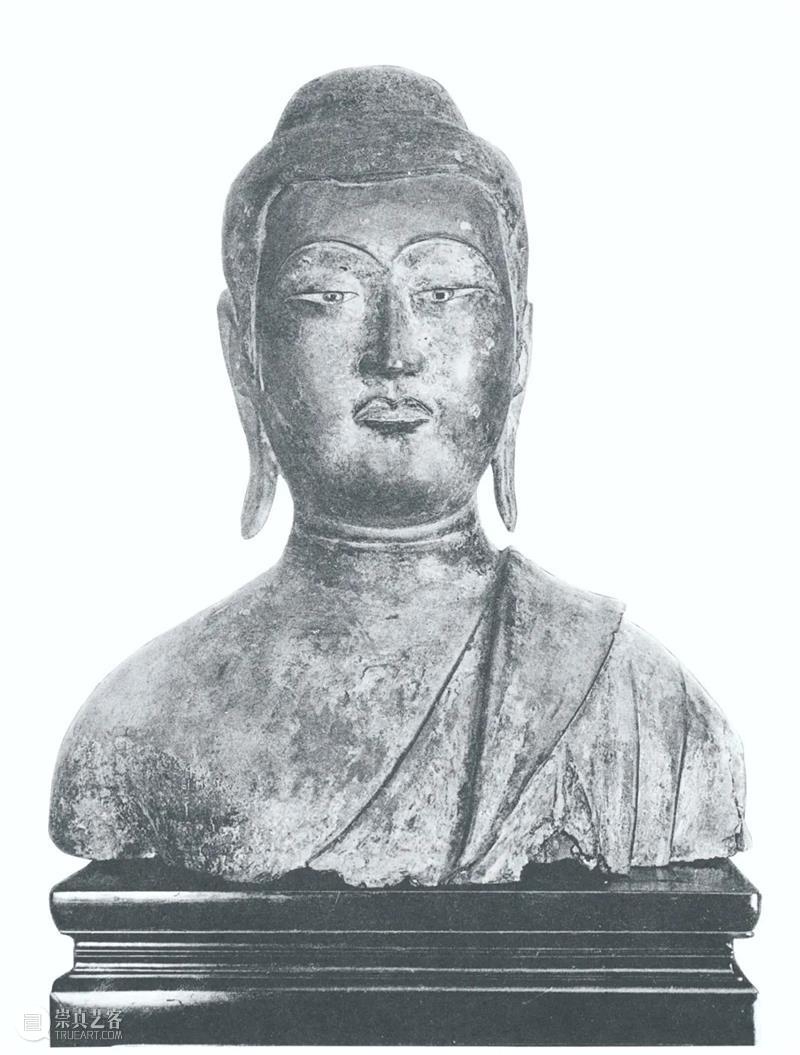
华盛顿弗利尔美术馆存相类坐佛,体量较小(72.5公分),与大都会藏佛像同见于松原三郎,《中国仏敎雕刻史论》,东京,1995年,卷3,图版810。山中商会旧存半身佛像(余高约51公分),惟现时下落未明,刊于 Osvald Sirén,《Chinese Sculpture from the Fifth to the Fourteenth Century》,伦敦,1925年,图版549。该书作者认为半身像与大都会坐佛同属一系。另有半身佛像(余高45.7公分),现藏西雅图艺术博物馆(馆藏编号51.71),原属 Eugene Fuller 纪念收藏,其细腻卷发品相较佳,大体尚存。上述诸佛塑像,造型相近,似有所关连。相反克里夫兰艺术博物馆藏菩萨坐像(44公分,馆藏编号1983.86)及曼舞天女(40公分,馆藏编号1953.356),所展现之风格,却折然不同。李雪曼在其文章〈A Chinese Lacquer Sculpture〉中,讨论克里夫兰艺术博物馆藏天女时,提及部分上述唐朝夹纻干漆塑像,详见《Bulletin of the Cleveland Museum of Art》,卷43,第1期, 1956年1月,页6-9。李雪曼在文中又举了一些年代较晚之例,如 John D. RockefellerJr. 藏罗汉像,品相良好,几近完整无缺,却未必为唐时漆作。有关该罗汉像之著录似乎仅见于李氏一文。Siren 曾于著作刊录巴尔的摩华特斯美术馆藏坐佛之图(馆藏编号25.9),该像木胎,表面覆以布料漆层,有说乃上述夹纻脱胎塑像之雏本。
唐朝漆艺罕稀,主要见于铜镜背面以便贴镶嵌饰,或施于素纹木作或瓷品表面。即使李唐之时,夹纻干漆制作似乎未有久持,后世虽数度再起,惜技艺不逮,难复唐时辉煌。然干漆之技,早年流传至日本,发扬光大,成为该地重要工艺,历经多个世纪,持续不衰。据西川杏太郎,〈Dry Lacquer Statues of Japan〉,N.S. Brommelle及 Perry Smith 编,《Urushi.Proceedings of the Urushi Study Group, June 10-27, 1985, Tokyo》,圣莫尼卡,1988年,页127,记录指七世纪中叶,日本制四大天王干漆像,以供奉于奈良大安寺。八至九世纪,夹纻之艺更是风靡一时。奈良一带,至今仍存不少干漆艺作,多为首府城内或周边重要佛寺而制,而李雪曼更特别举东大寺及兴福寺为例,上述出处。较此以前,日本已见有木雕造像上局部施漆,以便塑形,例子包括法隆寺百济观音。相关干漆造像,可参考立像二躯,纪年公元734,图见于西川杏太郎,上述出处,页128,图2及3。在日本,获评为「国宝」或「重要文化财」之干漆塑像,计有四十八尊之多。
Divine Features in Lacquer
Regina Krahl
A Buddha image more captivating, majestic and at the sametime sensitive – or simply more beautiful – than the Sakamoto Buddha head canhardly have existed in the Tang dynasty (618-907). There is no other techniqueor material that can evoke the harmony and perfection of a divine face likethis ‘dry lacquer’ technique. This head of the Buddha is unique in everyrespect, including its size and can be ranked among the world’s most movingreligious images. The Buddha’s compassion, and the ten Buddhist virtues ofintegrity, generosity, wisdom, strength of character, patience, renunciation,truthfulness, determination, loving kindness, and serenity are all encapsulatedin this portrait. Yet at the same time this sculpture has a worldly beautyquite independent of any religious connotation.
The extant number of Tang dynasty images made in thiscomplex and sophisticated technique is extremely rare, probably not exceedingseven sculptures, mostly preserved in a fragmentary state. This is hardlysurprising given the demanding production process on the one hand, which musthave severely limited the number of figures ever completed, and the delicacy ofthese works on the other hand, which mostly likely reduced their number quitedramatically over the centuries.
The production began with a stick-like wooden model overwhich a figure was sculpted from clay. Onto this clay base patches oflacquer-imbued hemp were pasted that later would provide the core of thefigure. These were then covered with further lacquer layers, which would besculpted in greater detail and carved to acquire their final appearance. Thesurface was eventually painted in polychrome pigments. When finished, thefigures were cut open at the back and the original construction of wood andclay removed to hollow them out and to leave only the thin skin of hemp andlacquer. The advantages of such light figures compared with ones carved fromstone are obvious, as they could be completed in specialized metropolitanworkshops, easily transported, and carried around in processions. The techniqueallowed for very precise sculpting and in the modelling of the present head thesculptors displayed particular sensitivity and an uncanny understanding of theexpressive quality of simple, sharp lines and soft, rounded curves. Bycounterbalancing the sweet expression of the full lips and fleshy chin with theseriousness of the crisply cut eyebrows and pointed nose, they made the facecome alive and have given this deity a presence that is as fresh today as itwas more than a thousand years ago.
The closest companion to the present head and the onlyother example executed on a similarly impressive scale (c. 50 cm) is theequally magnificent head of a bodhisattva in an unpublished privatecollection, which may well have been made in the same workshop at the sametime, and perhaps once belonged to the same sculpture group as the presenthead. It is very similarly modelled, the serene face represented with finedetail and the hair largely remaining.
The six other Tang dry-lacquer sculptures that arerecorded are all exquisite sculptures in their own right, but quite differentin scale and less distinctive in their expression. The famous seated Buddhafigure in the Metropolitan Museum of Art, New York (96.5 cm), illustrated, forexample, in Sekai bijutsu taisenshū/New History of World Art: Tōyōhen [Eastern series], vol. 4, Tokyo, 1997, pl. 132, which still has alarge amount of the original pigment remaining, is known to come from the DaifuTemple in Zhengding, Hebei province and attributed to c. AD 650.This figure may well have been made in the same workshop as the present head,since the face has similar features and the hair is now remaining in a similarstate; yet being smaller, it is executed with much less detail particularly tothe eyes and eyebrows. A similar, somewhat smaller seated Buddha figure in theFreer Gallery of Art, Washington, D.C. (72.5 cm) has been published togetherwith the Metropolitan Museum Buddha in Matsubara Saburō, Chūgoku bukkyōchōkoku shiron/The Path of Chinese Buddhist Sculpture, Tokyo, 1995, vol.III, pl. 810 (figure not available online). A Buddha bust (c. 51 cm remaining),formerly with Yamanaka & Co, but its present whereabouts unknown ,is published in Osvald Sirén, Chinese Sculpture from the Fifth to theFourteenth Century, London, 1925, pl. 549, believed by the author to belongto the same series as the Metropolitan Museum figure. Another Buddha bust (45.7cm remaining), with most of its finely combed hair remaining, from the EugeneFuller Memorial Collection is in the Seattle Art Museum (no. 51.71)(figure notavailable online). While all these Buddha figures seem related, a seatedbodhisattva figure (44 cm)(figure not available online) and a dancing apsara(40 cm), both in the Cleveland Museum of Art (nos. 1983.86 and 1953.356) arevery different in style. Dry-lacquer sculptures are discussed in connectionwith the Cleveland apsara figure in Sherman E. Lee, ‘A Chinese LacquerSculpture’, Bulletin of the Cleveland Museum of Art, vol. 43, no.1, January 1956, pp. 6-9, where some of the above figures as well as some laterones are mentioned, including an almost complete luohan figurein the collection of John D. Rockefeller Jr., which does not seem to bepublished elsewhere and may or may not date from the Tang. Siren illustrates inaddition a seated Buddha figure from the Walters Art Gallery, Baltimore, (no.25.9), which has been suggested to represent a prototype for the above figures.It also has a lacquer-and-cloth surface, but applied onto a wooden core thathas been left in place.
Lacquer was extremely rarely used in the Tang dynasty,mainly on the back of mirrors as a base for some inlay, or to coat plain woodenor ceramic objects. The dry-lacquer technique does not appear to have beenpractised for long during the Tang dynasty and was only occasionally revived inlater dynasties, but never again achieved the level of craftsmanship andartistry that it had in the Tang. It was early on adopted, however, in Japanand there continued to remain important for centuries. According to KyotaroNishikawa, ‘Dry Lacquer Statues of Japan’, in N.S. Brommelle and Perry Smith,eds, Urushi. Proceedings of the Urushi Study Group, June 10-27, 1985,Tokyo, Santa Monica, 1988, p. 127, Japanese dry lacquer statues of the fourDeva kings are recorded to have been made for the Daian-ji in Nara in themid-7th century, and the technique was much used between the 8th and 9thcenturies. Many works are remaining in the Nara area, mostly made for importanttemples in and near the capital, with Lee, op.cit. singlingout the Todai-ji and Kofuku-ji. In Japan the technique was also already usedearlier as partial surface modelling for wooden statues, such as the KudaraKannon in Horyu-ji. Two standing dry-lacquer figures dated in accordance withAD 734 are illustrated in Nishikawa, op.cit., p. 128, figs. 2 and3. Forty-eight such sculptures extant in Japan are designated as NationalTreasures or Important Cultural Properties.
信息来源:苏富比官网
相关链接
天价成交的造像:唐 夹纻干漆观世音菩萨头像
| 精品推荐 |
▼
各代佛教造像的发展历程
南山供秀与行谈艺术沙龙
倾力打造
由
般般老师
围绕敦煌石窟全心投入整理的弘篇大作
敦煌石窟艺术详解
是一套较全面的佛教艺术课程
内容以全图像深入解读
从佛教的发展背景
图像产生原因
到大量早期人物和代表观念
以及壁画背后的艺术风格追溯等
第一讲免费
长按下图识别二维码进入专辑点击目录点试看即可观看
《中国敦煌壁画全集》
绝版再现!
一幅幅高清彩图、
完美复刻了一座千佛神奇的宝藏,
一段段饱含深情的文字,
忠实而热情地记录了一个伟大而浪漫的人文奇迹!

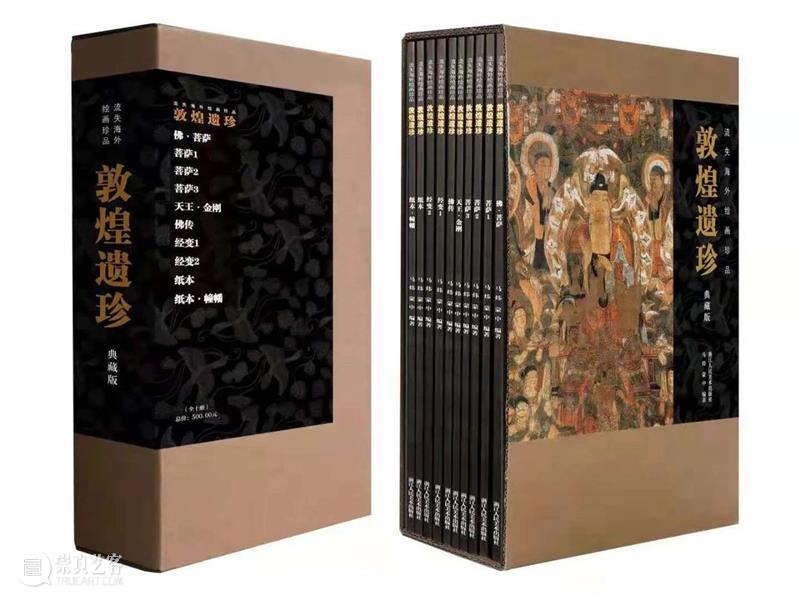
《敦煌遗珍》
流失海外绘画珍品
不仅收录了大英博物馆所藏敦煌艺术中的珍品
并特邀马炜老师、蒙中老师撰写了解说文字
对作品中的形象、风格做了详细的讲解
为读者提供进阶的阅读体验
同时,也特别选取画中人物进行了
局部放大,材质、笔触均清晰可见,以原色精印的方式呈现
利于读者临摹教学、鉴赏研究

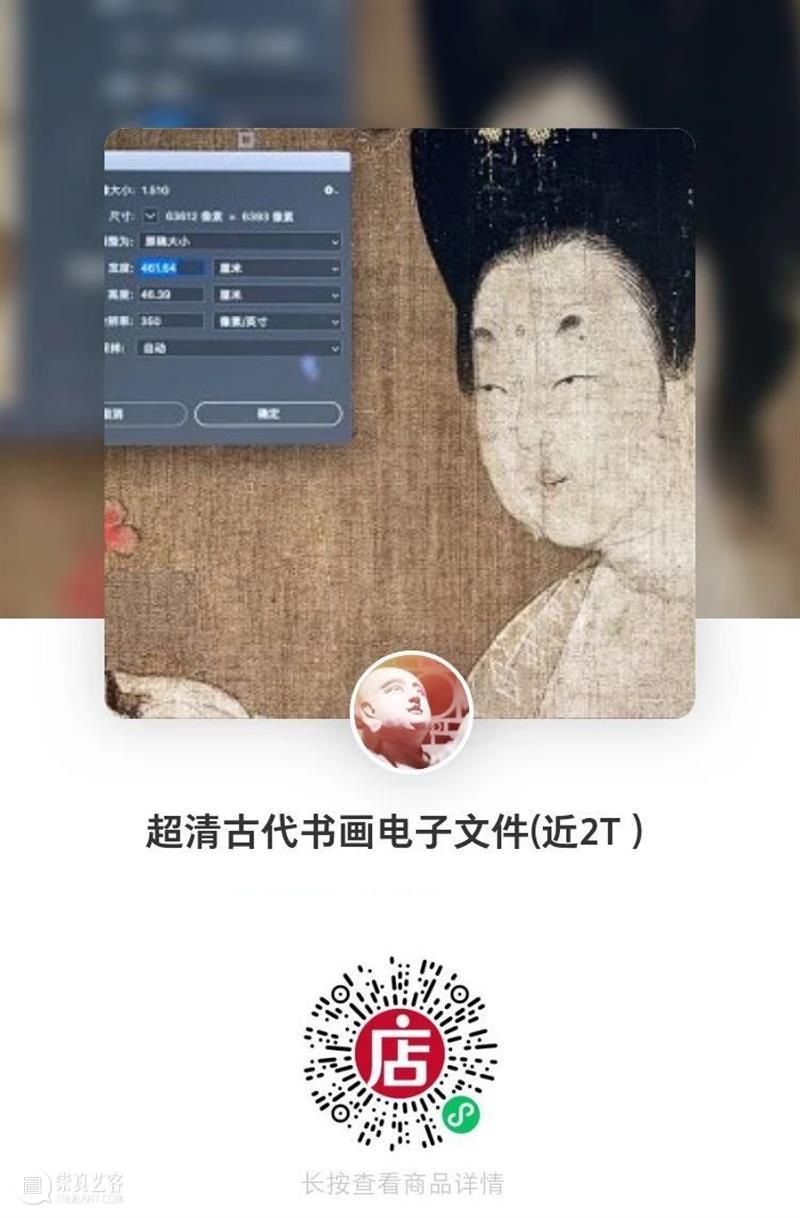
本平台收集甄选了近
2T
高清版古代书画资料
会在本平台陆续刊发一些
并在每篇后提供当篇的免费下载链接
您也可以
一次性将这些资料打包收入囊中
本平台收集整理了
百余部
晚清民国时的摄影图片及相关资料
会在本平台陆续刊发一些
并在每篇后提供当篇的免费下载链接
您也可以
一次性将这些资料打包收入囊中

—————————— END ——————————
转发分享是对本平台的最大支持与鼓励!
感谢关注
【 南山供秀 】
关注你所关注的,分享你所需要的
▼ 点击「阅读原文」查看更多

 {{newsData.good_count}}

 {{newsData.transfer_count}}


 {{item.good_count}}k
已展示全部
{{item.publisher_name}} 发布了 文章
{{item.title}}
更多功能等你开启...


 分享
分享