
艺术粮仓 | 田卫 Tian Wei
内求至上
——由田卫作品开启的思考
田卫从山水出发,经由构成性的几何实验,在几何的间隙中留出的“线网”启迪下,将其从结构画面的功能性语言元素独立,由复而一;在层层积叠的水痕墨迹中加入时间的含量,经曲转直;以心性为导、渊雅为质、寒光为象的气度,在此相通净化中不断注入生命的痕迹,尽而提纯为艺术创作中独特的视觉核心与观念灵光。如果问这个过程中田卫给人的最深印象是什么,是语言学层面的水与墨的层层累积抑或复叠的绘画行动?是来自其图像学层面的光的生成分析与宗教含义?还是抽象画派坐标体系中的艺术定位?可能这些都很重要,但最深印象也许可以称之为一种艺术创作上“内求”的学术品性。
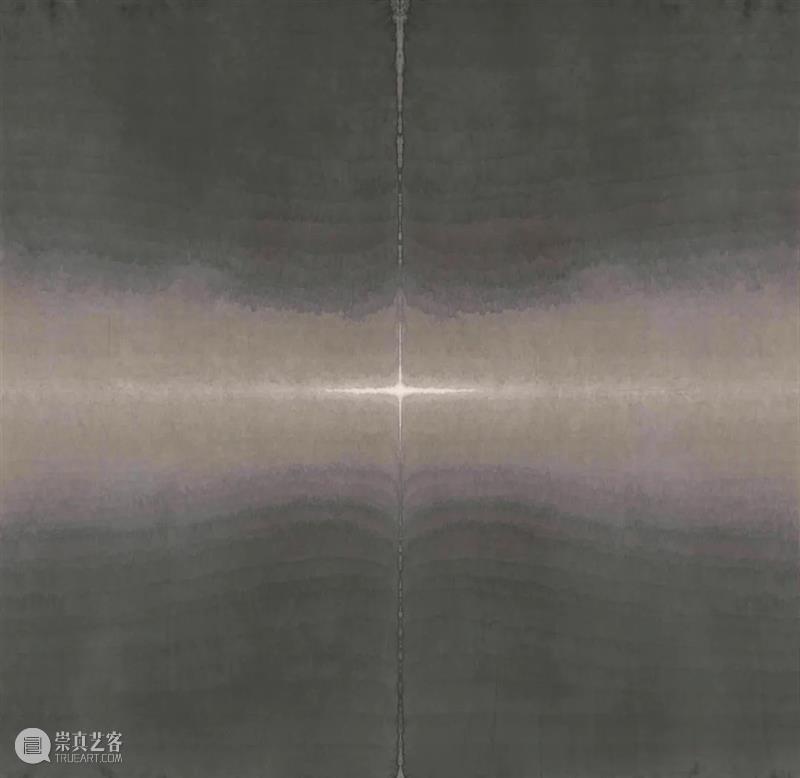
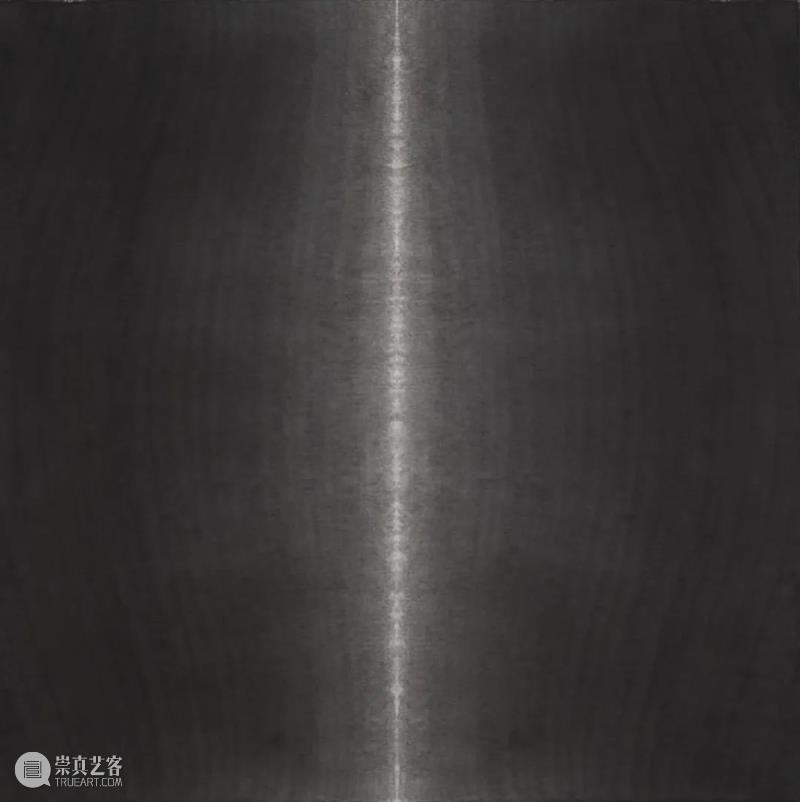
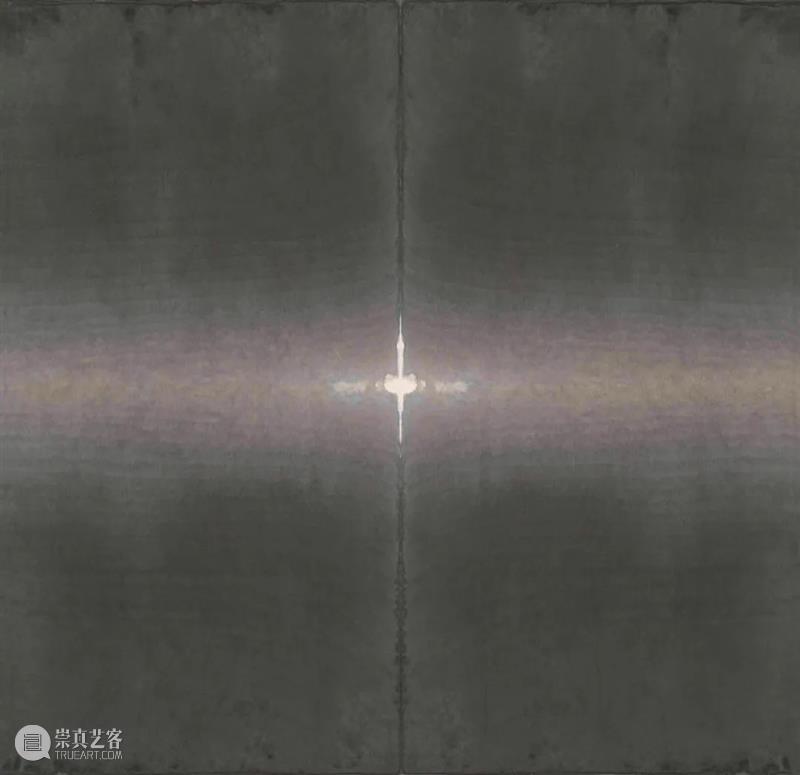
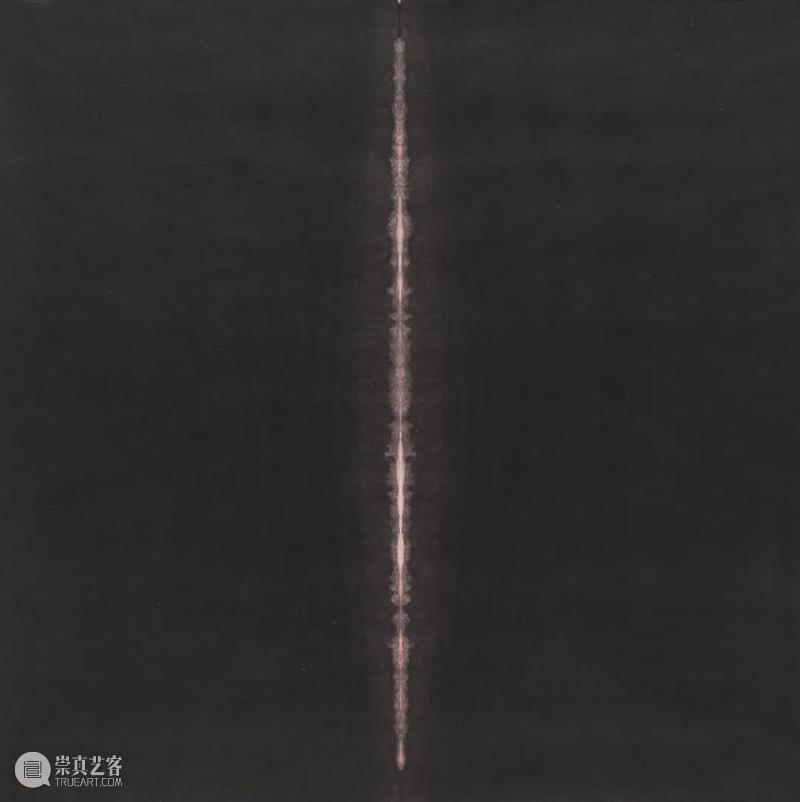
1559-2015-顷之之七-97×97cm-宣纸水墨,矿物质色
所谓“内求”,意指“向内求索”,它不盲目在艺术圈里“跟风”或被惯性习见所遮蔽限定,而能沉入个体精神与生命的内在世界中,以人的自我实现以及艺术上的自主性探索为导向,在这一状态中去建构艺术家实实在在的“个体语境”。这种“内求”的方式因人而异,但评判方式却很简单:假设借助艺术批评的力量,将艺术家的作品压缩挤干,倘若在作品“壳”内挤出的不仅仅是空气和水分,而是某种带有自我真切感觉或理性地去处理艺术课题的“存在物”,那就不是“外袭”(因袭)的。当然这种“有料”的解释方式是一种简化的提法,为说明问题之便。“内求”是针对“外袭”而言,外袭很简单,是一种在既有的当代艺术语言或方法体系中,满足于停留在这一“外壳”的机械层面,而没有触及艺术创造的应有生机。我曾在2012年“中国抽象艺术巡回展(北京站)”的研讨会上针对抽象艺术的评鉴提出了“造壳”、“填质”与“灌魂”之说。抽象是如此,其他形态的作品亦可类比。可以说,“外袭”只能触及到“造壳”的层面,而依“内求”的深入程度不同,可达“填质”与“灌魂”所能触及的问题。
就中国艺术的情况而言,自’85开始,艺术界实现了新的艺术形态在中国“文化体”中的合法化,冲击和打破了旧有保守艺术对艺术创作权的垄断局面。可以说,新的理念得以确立,然而总体上,艺术家的创作重“宏观理念”而轻“个体语境”,这是与转型期的“粗放式”艺术状态相对应的。而目前,中国艺术家真正从“我们”到“我”的个体突破,其实现条件比上代艺术家更得利,或者说“告别集体肖像”的时代已经来临。但,也容易出现另一种可能,就是艺术创造的“停滞”现象或“空壳倾向”,造成“个体侏儒”的可能。因为在艺术史风格、方法和观念几近稳定的形势下,艺术作品之“外壳”已难有原创和创新意义上的本体突破,艺术家“借壳上世”的现象便容易在填入简单文化质料的“速成”策略中形成新时代的模仿主义和样式化倾向。这种取向是危险的,容易发生假借批判之名而行“借壳上世”之实的新的“疲软”和“僵化”局面。
无论是水墨还是其他形态的艺术,都面临如何充盈而富有活力的问题。就水墨而言,自1990年代以来兴起的“实验水墨”,一方面冲击了“写实”对水墨的方法论垄断,继而借助拼贴、抽象、观念等方法武器实现了一次“文化反叛”,让水墨得以在独立状态中获取新的实验和可能。从那时起,谈论水墨问题很难绕开当代艺术的范式。但“实验水墨”的问题,至少有两个方面让人担心:其一,在对抗“僵化传统”的当时,未必能够树立正确的“传统观”,即当年所反对的“传统”之外是否所有的传统都该作为对立面排除?这种二元对立造成了“实验水墨”从文化上过于倾向“西方新的方法论”作用于“东方的水墨媒介”,而在“实验”之外难以找到价值归属和文化身份的立基点;其二,在经“实验”得以树立“水墨新壳”的艺术合法化之后,当那些曾经作为“前卫”或“当代”的方法论成功引入“水墨”而生成新的艺术语言或新的艺术“外壳”后,“壳”再靠什么去实现内在生命的活力?在发生之后如何发展,这对今天的艺术家来说尤其构成问题,因为如果不是创建者,就不能仅仅停留在“因袭”,而即使是曾经艺术新壳的创建者,恐怕自己也面临艺术生命的新问题。
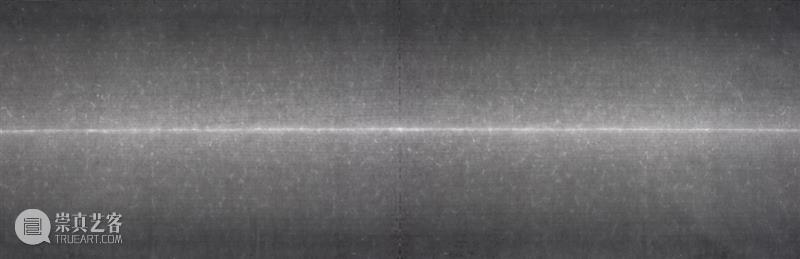
1401-2014-寻-298×97cm-宣纸水墨,矿物质色,水彩
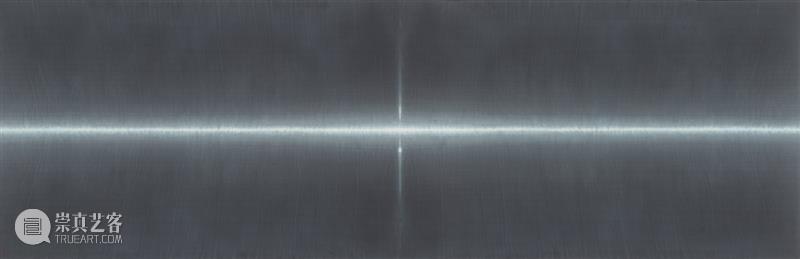
1421-2014-曙-178×96cm×7-宣纸水墨,矿物质色
对于新世纪的艺术,我们很难把水墨与当代艺术分开,或者把传统与当代相分离,因为它们本身就统一于中国“文化体”之内,成为既成“知识”有机体中的不同“成分”。对于艺术批评而言,很难用“整一”的方式去解决当前的问题,或掀起艺术运动,而是需要在艺术批评的理论梳理中,帮助艺术家辨析问题,再经由艺术家的实践,去形成再讨论。激进的时代已成过去,在缓进渐变中,批评和创作需要更多的互动。
回到田卫艺术的个体语境,他的创作演化脉络是清晰的。早年贾又福先生工作室的学习,让他从山水画中领悟了墨分五色的含义,以及水、墨交融的变化效果,更为重要的是“贾氏山水”对于光的领悟和表现成为他抽象作品中“光”与“线”的表现源泉,也使得他的抽象形态的作品得以分享中国画笔墨的元气而获得那种“纯正”的气息。杜大凯工作室的访问学者经历,让田卫找到了通向“水墨构成”的世界之门,使得2007年由辽代善化寺写生而开启的“抽象”得以走向深入和理性,从而让已有的笔墨纯正成为支撑抽象构成的韵味保证。在他那些以抽象构成思维去进行的董源、可染先生的山水“临摹”中,那些单纯的以块面分割为兴致的几何构成,还有那些延伸到对佛塔精彩的平面转化,都在块面的结合部“空出”了墨块“强烈对比”出的“轮廓线”,这种方法与贾氏山水中由笔墨与留空的“对比”而生成视觉“云法”和“亮度”的法则同样具有渊源。这被田卫经由2007年飞机上俯视大地河流而获得灵感的作品所改变,将之前作品中作为“轮廓线”的“复线”提纯为“单线”,并随着后续创作的深入而在语言上继续强化为他自己绘画体系中的“线法”和“光法”。2009年,他的対叠式佛塔系列凭借如来八塔达到了顶峰,这也促使了他从对外在“景象”的满足转向对内在精神语言的关键性转换。大约在2010年,他经由对自然和建筑中景象的构成实验进入了对精神世界的抽象的新阶段,这也让田卫在分享了贾又福和杜大凯两位先生的元气后进入了自己的创造性的“个体语境”中。此时的“线”由复而一,由弯渐直,由粗而细,由横渐竖,“线”的精神力量愈发强烈给人以敬畏之感。这种在舒缓的时间中反复叠积的绘画行动如同“自我镜像”一般将自己映射于水墨年轮的不断生发中,从而历经一种在寻找中迷失、幻中见幻、自觉而觉他的“自在之在”,这种单纯的“心性”使人超脱日常俗务的目的论,而抵达无目的的“可居可游”的“行云流水”间。在此过程中多达上百遍的“行动”不是为了“形式的增值”,而是求得以模糊之感性触摸世界之本源。不同于“抽象表现主义”(Abstract Expressionism)突出的情感化倾向和“极少主义”(Minimalism)对表现性降到低点从而获得对客观“物性”实在的维护,田卫提供了一种内敛式的感性审美经验和过程体验。也许与“实验水墨”有关,但田卫的渐变脉络更多是在中国文化的更多含量中进行的,更为重要的是与他作为艺术家个体的独立性“感性经验”有关。田卫给我们提供了一个充满生机的“内求至上”的“个体语境”,这是一个有生命的艺术世界。
王萌
2014年8月8日于北京
Inward Exploration First
---the Thinking Activated by the Works of Tian Wei
Wang Meng
On the basis of mountains and rivers, Tian Wei isolates it from the functional language elements of the structural picture through the constitutive geometrjcal experiment under the inspiration of "line network''reserved by the geometrical gaps, with the complicated pattern transformed into unified one; profoundness of times is added to the accumulated layers of ink and wash marks, turning into straightforwardness from obscurity; the grandeur, guided by disposition andreflected by cold light with a profound elegant nature, is constantly filled with marks of life in the process of communication and purjfjcation, and then is sublimated into the unique vision core and conceptual inspiration in the artistic creation. lf you ask what is the most impressive aspect of Tian Wei in this process. ls it the overlapping accumulation of ink and wash in the viewpoint of linguistics or the painting action of overlay? ls it the formation analysis and religious meaning of light from the viewpoint of image? 0r is it the artistic positioning of the coordinate system of the abstract painting school? Perhaps all of these are very important, but the most impressive aspect may be called "inward exploration", which is a kind of academic character in art creation.
1430-2014-向时-97×97cm-宣纸水墨,矿物质色
The so-called "inward exploration" means that one won't "follow suit" blindly in the art world or be covered and limited by the habitual cliche, but can sink into the individual spirit and the inner world of life so as to construct a real "individual linguistic context" in this state guided by self-fulfillment of the human kind and his independent exploration into the art cirde. The forms of the abovementioned "inward exploration" vary with each individual, but the judging way of it is quite simple. Suppose we compress the artist's works with the power of art criticism, if we get from the "shell" of the works not only air and moisture, but also some kind of ''existing matter" with vivid self-feeling or rationality for dealing with the artistic subject, it is not ''imitating others (copying)". Certainly, this kind of explanation for "existing matter" is a simple and convenient reference. "lnward exploration" is opposed to "imitation", which is very simple as it is satisfied with staying at the mechanical level of "outer cover" in an existing contemporary artistic language or method system, without touching the vitality the art creation is expected to have. l once put forward the concepts of "building the shell" "material filling'' and ''soul infusion" aimed at the assessment of the abstract art at the seminar of "Exhibition Tour of China's Abstract Art(Beljing stop)'' in 2012. Such is the abstract art, and the works of other forms can also be analyzed by analogy, We can say that "imitation" can only reach the level of "building the shell'', but "inward exploration'' can reach the issues in the scope of ''material filling". and "soul infusion'' depending on the degree of depth.
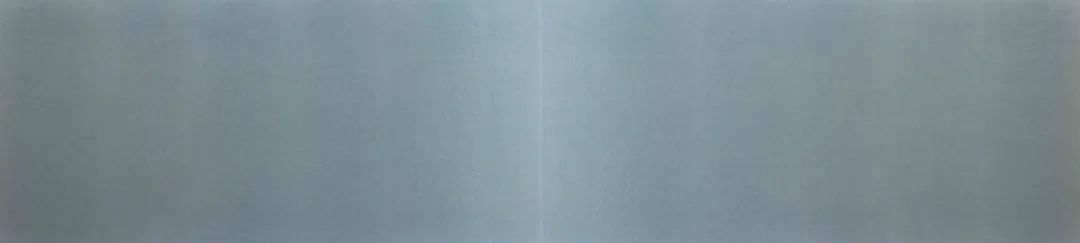
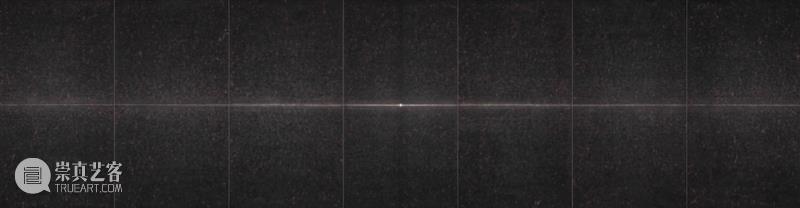
1717-2017-雨过-237×95cm×11-宣纸水墨,矿物质色,水彩
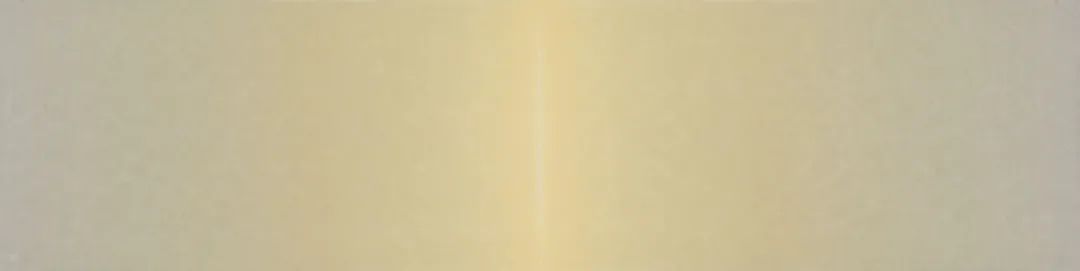
1909-2019-栖霞山之八-136×33cm-宣纸水墨,矿物质色,水彩
As far as the art in China is concerned, the art circle has seen the legalization of the new artistic form in the "culture body'' of China since1985, thus assaulting and breaking the monopoly for the artistic creation right held by the old conservative art. We can say that the new ideas were established, but generally, the creation of artists attaches more importance to the ''macro-idea'' than to "individual linguistic context" in correspondence with the ''extensive type'' artistic state in the transformation period. And at present, if the Chinese artists want to reaIize the individual break through from "we" to "I'', they have more favorable conditions than the previous generation, or we can say the era of "saying goodbye to the collective portrait" has already come. However, another possibility is apt to appear, nameIy the phenomenon of "stagnancy" or "empty shell indination" in artiStiC creation, which would result in the possibility of ''individual dwarf". This is because the "outer cover" of the artistic works is difficult to be original or have noumenal breakthrough with innovative meaning, and the phenomenon of the artists "backdoor listing'' is easy to form the imitation doctrine and conventjonalization inclination in the new era in the strategy of "quick results'' by filling simple cultural materials. This kind of orientation is dangerous, which easily leads to new "weak'' and ''rigid" situation by the real "backdoor listing" in the name of criticism.
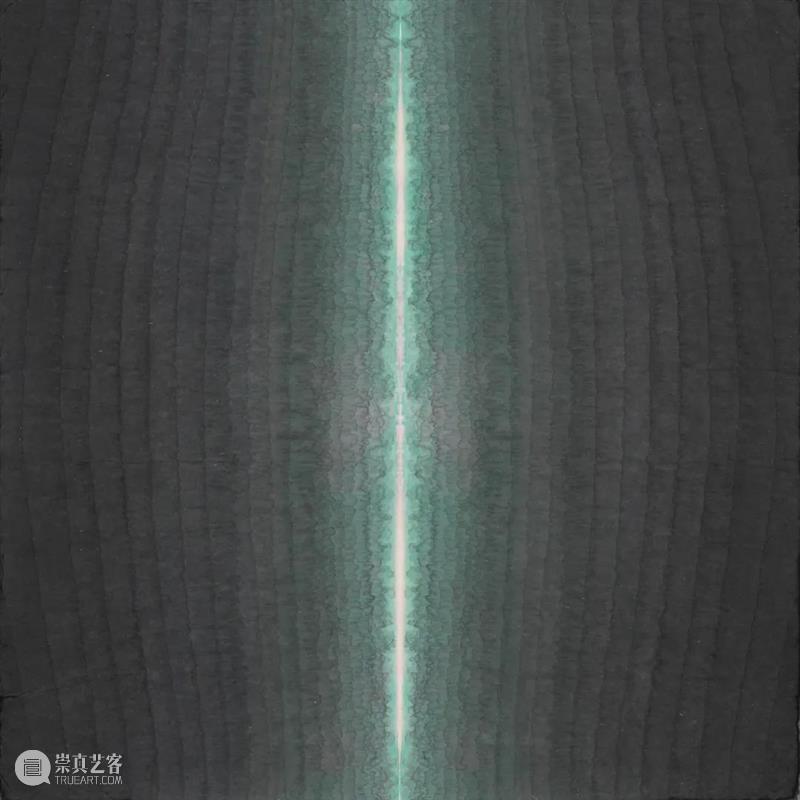
1543-2015-逾时之九-68×69cm-宣纸水墨,矿物质色,水彩
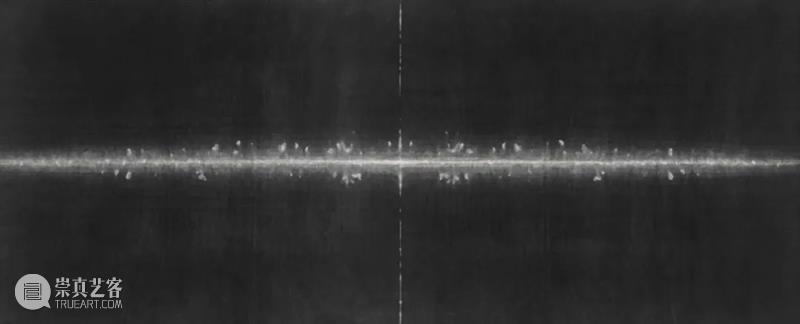
1303-2013-琰浮-358×139cm-宣纸水墨,矿物质色
No matter it is the ink and wash painting or arts of other forms, they a1l face the same probIem: how to make it rich and dynamic. As far as the in painting is concerned, the "experimental ink painting'', which arose since1990, has impacted the methodological monopoly of ''realistic painting" on the ink painting on the one hand, and on the other hand has realized a ''cultural revolt" depending on such methodological weapons as piecing together, abstraction and concepts, which let the ink painting obtains new experiments and possibilities in the independent state, Since then, people are difficult in getting around the normal form of contemporary arts when talking about the ink and wash painting. But, as for the "experimental ink painting", at least two aspects are worrying. First, it may not be able to set up a correct "view of tradition" whilst opposing to the "rigid tradition'', nameIy whether all traditions should be eliminated as opposition? Such binary opposition has resulted in the fact that the "experimental ink painting'' is overly inclined to the action on the "oriental ink and wash media'' exerted by ''new Western methodo1ogy'' in culture, but it is difficult for people to find the foundation for its values and cultural identity. Second, after the art of "new shell of the ink painting" established through "experiments'' is legalized. what the "shell'' will depend on to realize the vigor of its inherent life after those methodologies, once regarded as the''vanguard" or"contemporary" , have formed into new artistic language or new artistic "shell" with successful introduction of "ink and wash" . How to develop after formation is especially a problem for the present artists in that if you are not the founder, you can't only stay in the level of "imitation", but even if you are the founder of the new artistic shell, l'm afraid you also face new problems in terms of artistic life.
As for the art in the new century, it is very difficult for us to separate ink and wash from the contemporary art or separate the tradition from the contemporary times because they are unified into the ''culture body" of China, and becoming the different ''compositions'' of the existing organism of "knowledge". ln terms of art criticism, it is very difficult to solve the present problems by a "unified" way orlaunch an artistic movement, and what we need to do is to help the artists differentiate and analyze the issues in combing the theories of art critidsm; and in turn, the artists practice leads to re-discussion. Radical era has already gone, and in the slow gradual change, more interaction is needed in criticism and creation.
1545-2015-晨之五-68×69cm-宣纸水墨,矿物质色,水彩
Let's get back to the individual linguistic context of the art of Tian Wei. The evolvement train in his creation is clear. He comprehended the connotation of ''Chinese ink divided into five colors" and the variation effect of integration of water and ink, from the Iandscape paintings in his study in the studio of Mr.Jia Youfu in his early years; and more importantly, the comprehension and representation of light in Jia's landscape paintings has become the sources of "light" and "lines'' in his abstract works and also let his works of abstract forms share the vitality of the traditional Chinese painting, thus acquiring that kind of "pure'' spirit. The experience in the studio of Du Dakai as a visiting scholar let Tian Wei find the door to the world of "formation of the ink painting" and also led the "abstraction", which starting from the Iife drawing in Shanhua Temple built in Liao Dynasty in2007, to a deeper level and rationality, thus the existing purity in his paintings becomes the guarantee for lingering charm which supports the formation of abstraction. ln his copies of thelandscape paintings of Mr. Dong Yuan and Mr. Li Keran with the thinking of the formation of abstraction, there are ''contour lines'' stemming from the ''strong contrast'' due to the "reserved'' ink spots in the combination parts of spots and main contents no matter they are pure geometrical structures featuring plane segmentation or the wonderful planar transformation of pagodas; and this kind of method shares the same origin with the visual "cloud method" and "luminance" rule produced by the ink and blank gaps in Jia's landscape paintings. This is changed by the work of Tian Wei finished with the inspiration when he overlooked the rivers on the land on the plane in2007, which sublimates the ''multiple lines" working as the "contour line'' in his previous paintings into "single line", and in his follow up works, he continued to intensify it into the "line method" and ''luminance method'' in his own painting system in terms of artistic language. In2009, his stacking pagoda series reached the summit depending on the work of Eight RuIai Pagodas, which impels him to have a key conversion from the satisfaction of external "scene" to the inherent spiritual language. Probably in2010, he entered a new stage of abstracting the inner spiritual world through the composition experiments of the nature and scenes in the buiIding, which let Tian Wei enter his own creative"individual linguistic context" after sharing the vitality of both Mr. Jia Youfu and Mr. Du Dakai. At this time, the "lines" change to single from multiple, straight from curved, thin from thick and vertical from transversal, and the spiritual strength of "Iines" is becoming increasingly awesome. This kind of painting in which repeated stacking happens in the leisurely time would reflect himself in the constant generation of the annual ring of ink and wash just as "self- mirror image'', thus he would go through a process of getting lost in searching, seeing unreal scenes in the phantom and feellng the existence of others in self-consciousness. Such a simple disposition lets people become detached from the teleology of daiIy trifles and reach the state of ''sailing clouds and flowing water" which is characteristic of purposeless ''dwelling or movement". ln this process, the one hundred times of ''action" is not aimed to "appreciating the form" but to seek to touch the origin of the world by the fuzzy feeling. Different from the emotionaI inclination highlighted by "Abstract Expressionism" or "Minimalism" which decreases the expressiveness to a lower point to obtain the actuaI safeguarding of "physical properties'', what Tian Wei has offered is a kind of restrained perceptual aesthetic experience and process experience. Perhaps it has something to do with the "experimental ink painting", but Tian Wei's gradual change is most finished under the infIuence of the Chinese culture. And more importantly, it is connected with the independent "perceptual experience" as an individual artist. Tian Wei has provided us an "individual linguistic context" featured by" inward exp1oration first'' which is full of vigor, and it is an artistic world with life.
田卫
出生于1973年,现工作生活于北京
2018-今 中央美术学院综合绘画语言高研班客座教师,
文化部中国画创作研究院院聘画家
个展:
2020.12 灵山·田卫个展(杭州人可艺术中心)
2020.09 灵山·田卫个展(苏州寒山美术馆)
2019.11 光与气·田卫作品展(杭州人可艺术中心)
2018.05 田卫个展(上海秋水空间)
2018.04 南田玉色·南溪与田卫的新现代主义水墨绘画双个展(杭州人可艺术中心)
2017.06 动静之间·田卫个展(北京798艺术区东京画廊)
2016.11 胡勤武、田卫双个展(杭州梵耘艺术空间)
2015.04 境象灵光·桑火尧、田卫双个展(上海玉衡艺术中心)
2014.11 心念的灵光·田卫水墨作品展(上海朱屺瞻艺术馆)
2014.09 心念的灵光·田卫水墨作品展(北京今日美术馆)
群展:
2021.04 周而复始·综合材料绘画邀请展(北京中央美术学院美术馆)
2021.01 海花岛国际艺术邀请展(海南海花岛博物馆)
2020.12 济南国际双年展(济南市美术馆)
2020.06 后疫时代·西方经典东方当代(杭州人可艺术中心)
2020.05 还会与你相见东京画廊+BTAP70周年特展(北京798艺术区东京画廊)
2020.04 象外之象·新朦胧主义专题展(湖州美术馆)
2019.10 书斋·中国·中国书房当代艺术展(瑞典斯德哥尔摩中国文化中心)
2019.09 2019多瑙河对话当代艺术节中国国家馆(塞尔维亚诺维萨德马穆齐奇捐赠收藏美术馆)
2019.06 整体与观看(北京798艺术区东京画廊)
2019.04 水墨精神·从传统思想和智慧中生成新创造(济宁市美术馆)
2019.04 时光的水·聚集灵晕的墨化艺术(台湾台中大象艺术空间)
2019.03 新艺术史·2000-2018中国当代艺术(银川当代美术馆)
Tian Wei
Born in 1973,Work and live in Beijing
Guest teacher of the comprehensive painting language high research class of the Central Academy of Fine Arts
Affiliated Painter of Research and Creation Countil of Chinese painting of Ministry of Culture and Tourism of The People's Republic of China
Solo Exhibition
2020.12 Soul Mountain, Tianwei solo Exhibition (Renke Art Gallery, Hangzhou)
2020.09 Soul Mountain, Tianwei solo Exhibition (Han Shan Art Museum)
2019.11 Light and Breath, Tianwei solo Exhibition (Renke Art Gallery, Hangzhou)
2018.05 Tian Wei Solo Exhibition ( Awart Space, Shanghai)
2018.04 Nan Qi and Tian Wei's New Modernist Ink Painting,Double Solo Exhibition (Renke Art Gallery, Hangzhou)
2017.06 Between Motion and Stagnation,Tianwei solo Exhibition (Tokyo Gallery+BTAP, Beijing)
2016.11 Hqinwu&Tianwei Double Solo Exhibition (Van Art Space, Hangzhou)
2015.04 Cosmic Sprit, Spritual light, Sang Huoyao&Tian Wei Double Solo Exhibition (Alioth Art Center, Shanghai)
2014.11 Spiritual light, Tian Wei Ink Painting Exhibition (Zhu Qizhan Art Museum, Shanghai)
2014.09 Spiritual light, Tian Wei Ink Painting Exhibition (Today Art Museum, Beijing)
Group Exhibition
2021.04 Round&Develop, Academic Invitation Exhibition of Comprehensive Material Painting (Central Academy of Fine Arts Art Museum, Beijing)
2021.01 Ocean Flower Island International Art Exhibition (Ocean Flower Island Museum,Hainan)
2020.12 Jinan International Biennale (Jinan Art Museum)
2020.06 Post-Epidemic Era,Western Classics Eastern Contemporary (Renke Art Gallery, Hangzhou)
2020.05 We Will Meet Again,70th Anniversary Special Exhibition Tokyo Gallery+BTAP(Tokyo Gallery+BTAP, Beijing)
2020.04 Image's Transcendence, a Special Exhibition of New-Moroism(Huzhou Art Museum,Huzhou)
2019.10 Study-China (China Cultural Center in Stockholm, Stockholm, Sweden)
2019.09 Danube Dialogues 2019-Contemporary Art Festival, China Pavilion (Gallery of Fine ArtsGift Collection of Rajko Mamuzic, Novi Sad, Serbia)
2019.06 Gestalt and Gaze (Tokyo Gallery+BTAP, Beijing)
2019.04 Spirit of Ink Art-New Creation from Thoughts and Wisdom (Jining Art Museum, Jining)
2019.04 The water of Silent Time (Da Xiang Art Space,Taichung,Taiwan)
2019.03 New Art History-2000-2018 Chinese Contemporary Art (MOCA Yinchuan, Yinchuan)
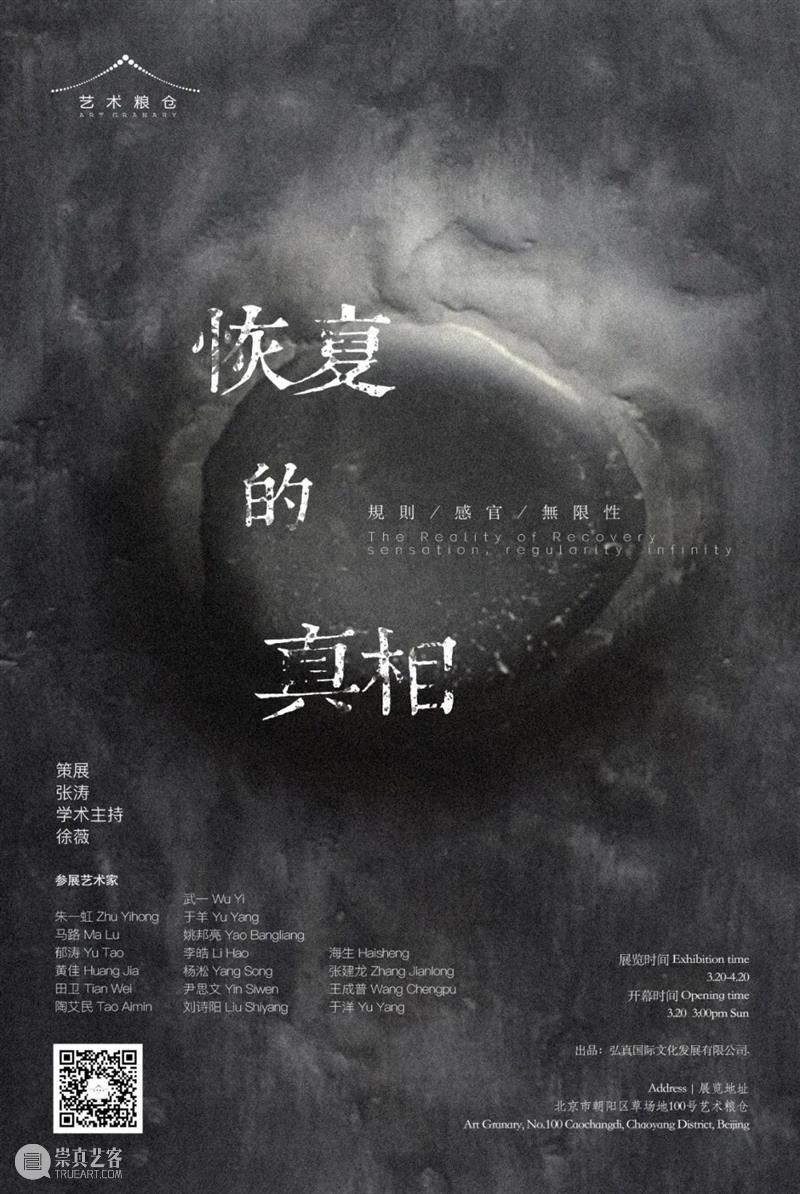
【恢复的真相:规则、感官与无限性】
【The Reality of Recovery :sensation, regularity and infinity】
策展:张涛
学术主持:徐薇
Curator: Zhang Tao
Academic Chair: Xu Wei
展览时间 | Exhibition time
3.20-4.20
开幕时间 | Opening time
3.20 3:00pm Sun.
Address | 展览地址
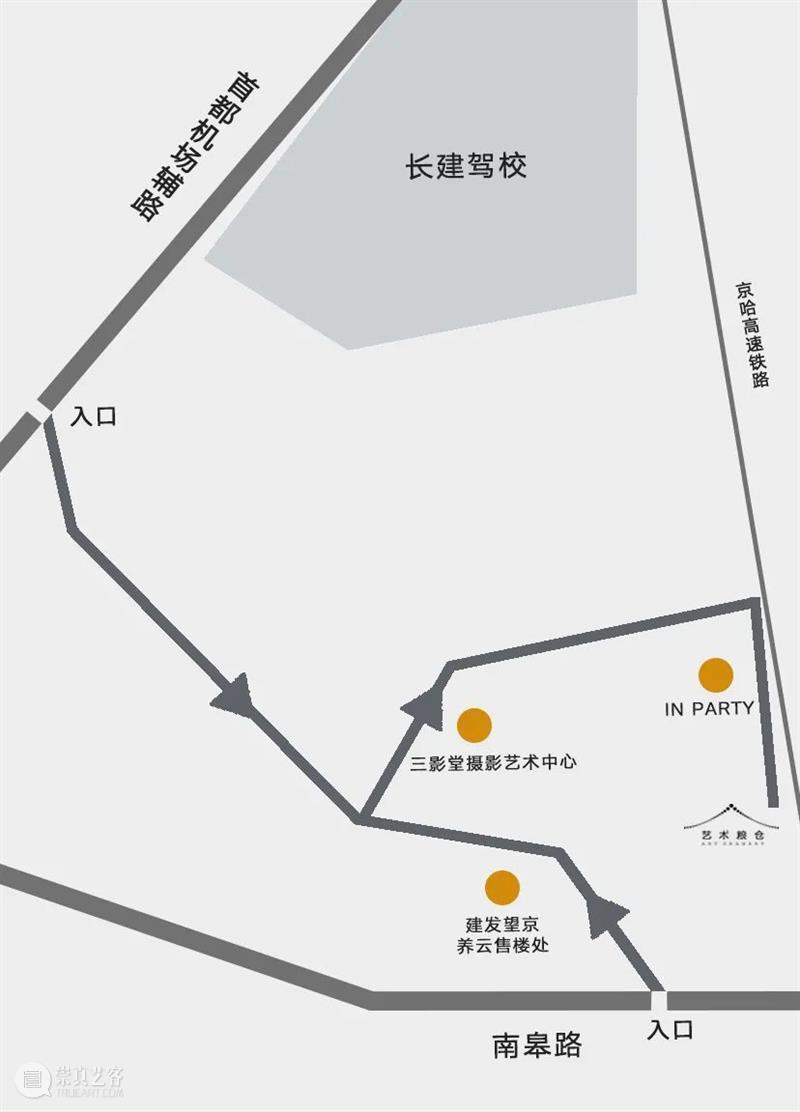
北京市朝阳区草场地100号艺术粮仓
Art Granary, No.100 Caochangdi, Chaoyang District, Beijing
艺术粮仓 Art Granary
艺术粮仓一直致力于将中国文化艺术—水墨艺术融入当代语境,以严谨的学术态度,联合策展人、评论家共同策划呈现中国当代水墨系列展览及大量学术研讨活动。作为国内前沿的艺术机构,艺术粮仓通过与艺术家的深度合作,系统的呈现了中国当代水墨的当代性、国际性、未来性,力求让世界更好地认识到中国当代艺术的东方气质和艺术价值。同时在多年的艺术运营推广和资源方面积累了丰富的经验,参与策划并执行了诸多公共艺术项目,打磨了一个较为成熟的艺术项目团队。欢迎国际艺术家和艺术机构到中国来展览,与艺术粮仓展开深度密切的合作,期待您的复函!
Art Granary has been committed to integrating Chinese culture and art-ink art into the contemporary context. With a rigorous academic attitude, Art Granary jointly plans and presents a series of exhibitions and numerous academic seminars on Chinese contemporary ink and wash with curators and critics. As a cutting-edge art institution in China, Art Granary systematically presents the contemporary, international and future nature of Chinese contemporary ink and wash through in-depth cooperation with artists, striving to let the world better recognize the oriental temperament and artistic value of Chinese contemporary art. At the same time, we have accumulated rich experience in art operation promotion and resources for many years, participated in planning and executing many public art projects, and polished a more mature art project team. We welcome international artists and art institutions to come to China to exhibit and start a deep and close cooperation with Art Granary, and look forward to your reply!
北京市朝阳区草场地100号艺术粮仓
郵箱:coop@artgranary.cn
聯繫電話:18810289856

 {{newsData.good_count}}

 {{newsData.transfer_count}}


 {{item.good_count}}k
已展示全部
{{item.publisher_name}} 发布了 文章
{{item.title}}
更多功能等你开启...


 分享
分享