李子勋,1973 年出生于台北,1995 年至2009 年间旅居德国,于2003 年毕业于德国杜塞尔多夫艺术学院,获硕士学位。1999 年曾获得“杜塞尔多夫艺术学院– 旅游奖学金”赴纽约游学,2001 年荣获德国巴登美术馆第54 届艺术展“最受欢迎奖”,2006 年德国科隆市政府颁予“弗里德里·沃尔登贝赫奖学金”,2007 年荣获德国第1 届“Bosch Rexroth AG 艺术奖”,李子勋被认为是台湾当代最具代表性的艺术家之一,现今生活和工作于中国北京。
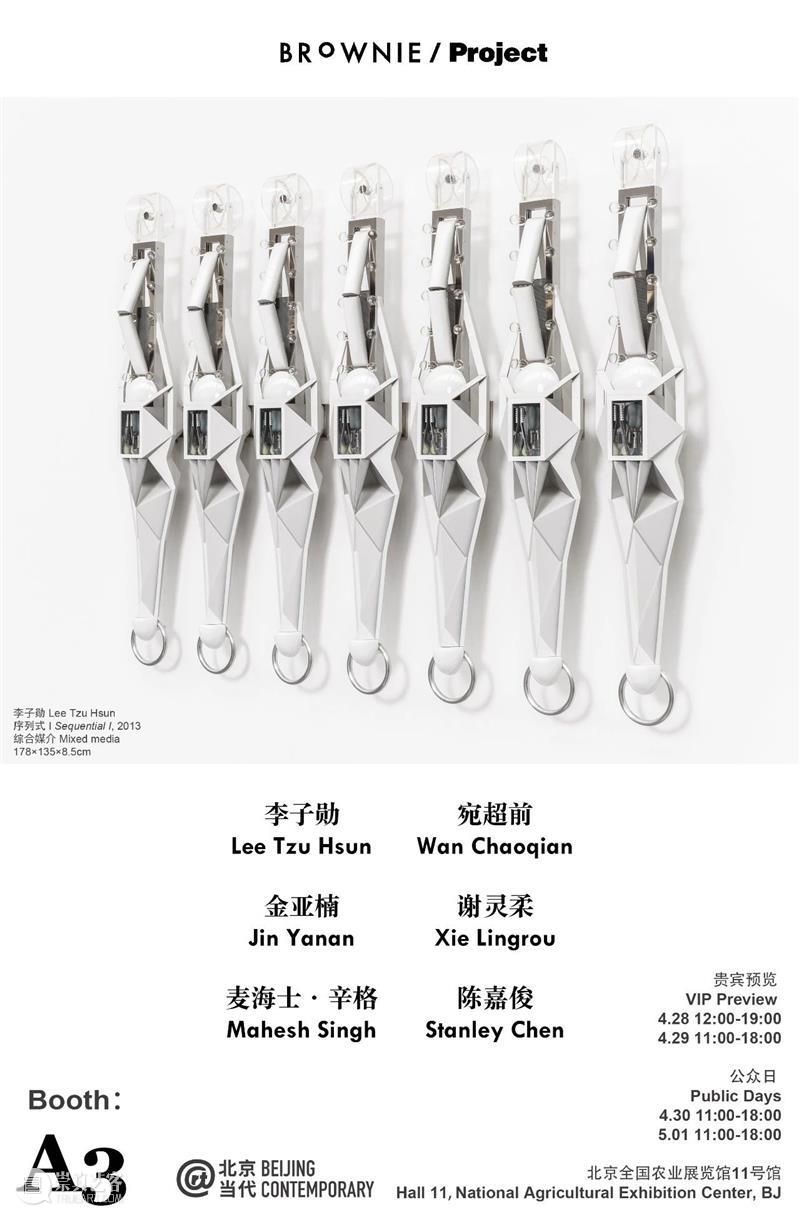
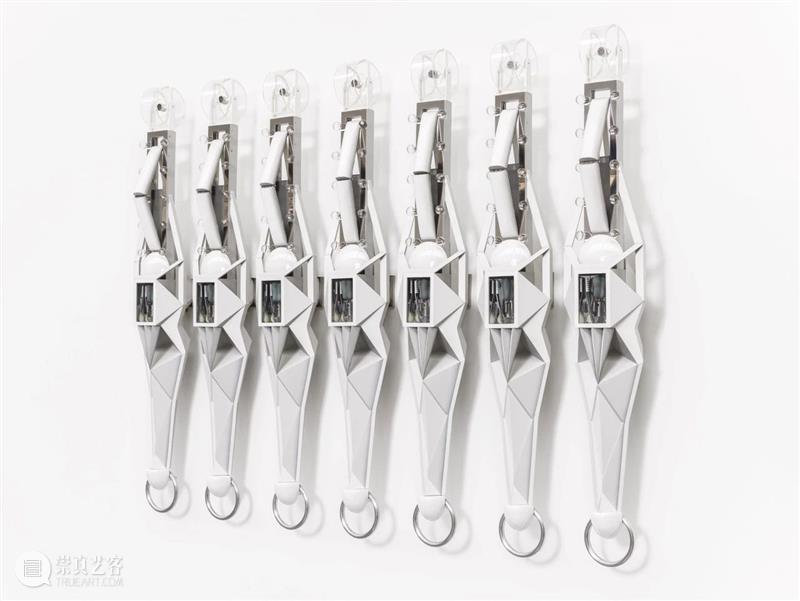
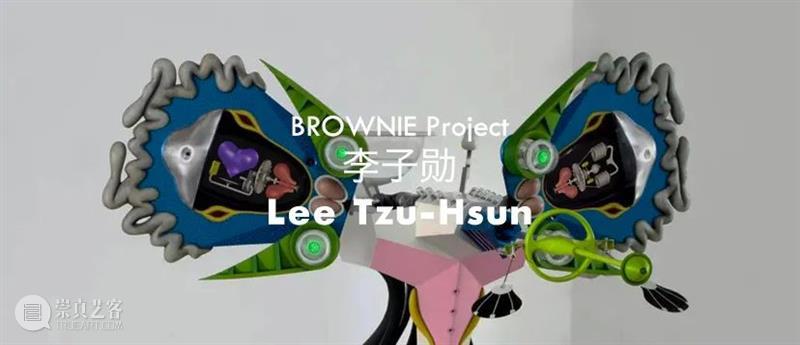
李子勋擅长将心灵对世界的虚幻感受,用极度物理现实的操作手法来展现,两者之间的张力构成了其作品独特的魅力。他的创作主要源于个体对内在生命的感知与体验,并以重新虚构的想像来呈现世界所不可见的本质。他的创作过程如同搭建一个近似于推演法则的独立实验系统,在逻辑的极限内争取自由发展的可能性,藉由不断地自我进化,来构筑完善一个非现实的想像世界。他的大型剧场装置,自然地营造出一种梦境时空氛围,以及诗意和理性秩序并存的个人化美学风格;2007 年开始创作“异星”系列则藉由融汇运动、声音、光等不同介质,将高度制作技术带入纯艺术形式,创造了一种介于生命体、无生命体之间的“仿生机械” 与其半抽象独特的机械美学秩序与语言。
他曾多次参加国内外大型展览,其中重要个展:“异星系”(台北市立美术馆,2018);“异星系列”(佩斯北京,2012);“玻璃珠游戏的秘密”(台北诚品画廊,2004)。联展选辑如下:《迷惑的潘朵拉》 发表于台中台湾美术馆(2015)、上海当代艺术馆(2008);《迷宫剧场》发表于台北双年展(2002);《爱情殿堂》分别发表于北京今日美术馆(2009)、 法国克雷泰伊艺术之家、莫伯日演艺剧场(2007)、台北当代艺术馆(2001)、德国舒林恩的巴登美术馆(2000)等;《大鱼》发表于北京中国美术馆(1999)、台北历史博物馆(1999)、高雄山美术馆(1999);《机械人Ⅱ》发表于德国科隆视觉艺术家协会(2006)、美国纽约康奈尔大学/ 赫伯特F·约翰逊美术馆(2004)、高雄市立美术馆(2002)与德国杜塞尔多夫艺术宫(1997)。他的作品被海内外各大美术馆、基金会、艺术机构、藏家收藏。
Born in Taipei in 1973, Lee Tzu Hsun lived in Germany from 1995 to 2009 and graduated with a master's degree from the Kunstakademie Düsseldorf in 2003. In 2001 he was awarded the "Most Popular Award" at the 54th Art Exhibition of the Kunsthalle Baden, in 2006 he was awarded the "Friedrich Woldenbech Scholarship" by the City of Cologne, in 2007 he was awarded the 1st "Bosch Rexroth AG Art Prize" in Germany. "Bosch Rexroth AG Art Prize" in 2007, Lee Tzu Hsun is considered one of the most representative contemporary artists in Taiwan and currently lives and works in Beijing, China.
Lee Tzu Hsun is adept at presenting the mind's illusory feelings about the world with the manipulation of utmost physical reality, and the tension between the two forms the unique appeal of his works. Lee’s work originates from the artist's perception and experience of inner life, which he translates into symbolic images that correspond to each other, and through complex mechanical design, he constructs a continuous running scenic installation. Lee Tzu Hsun's work uses re-fictional imagery to present the invisible nature of the world, and uses a precise and detailed expression to map the relationship between people and the world. His large-scale theatre installations naturally create a dream-time atmosphere and a personal aesthetic style where poetic and rational order coexist. "The Alien Galaxy" series that Lee began to create in 2007 is a 'bionic machine' that lies between living and inanimate objects. In this way, Lee Tzu hsun mimics life forms, exploring whether there are forms of existence outside the human perspective in order to consider a redefinition of the consciousness of life.
Lee has participated in many major exhibitions both at home and abroad, among which are important solo exhibitions: "The Alien Galaxy" (Taipei Fine Arts Museum, 2018); "The Alien Galaxy" (Pace Beijing, 2012); "Mystery of the Glass Bead Game " (Cheng Pin Gallery, Taipei, 2004). Selected group exhibitions are as follows: "Confused Pandora" published at the National Taiwan Museum of Fine Arts, Taichung (2015) and the Museum of Contemporary Art, Shanghai (2008); "Maze Theatre" published at the Taipei Biennale (2002); "Temple of Love" published at the Today Art Museum, Beijing (2009), Maison de l'Art de Créteil, France, Theatre de l'Acte de Maubeuge (2007), Museum of Contemporary Art, Taipei (2001) and Baden-Museum in Schwerin, Germany (2000), among others. “Big Fish” was published at the National Art Museum of China, Beijing (1999), the Museum of History, Taipei (1999), and the Kaohsiung Museum of Fine Arts (1999); "Robot II" was published at the Association of Visual Artists, Cologne, Germany (2006), Cornell University/Herbert F. Johnson Museum of Art, New York, USA (2004), the Kaohsiung Museum of Fine Arts (2002), and the Kunstpalast, Düsseldorf, Germany (1997). His works have been collected by major art museums, foundations, art institutions and collectors in China and abroad.




 {{newsData.good_count}}

 {{newsData.transfer_count}}




 分享
分享