
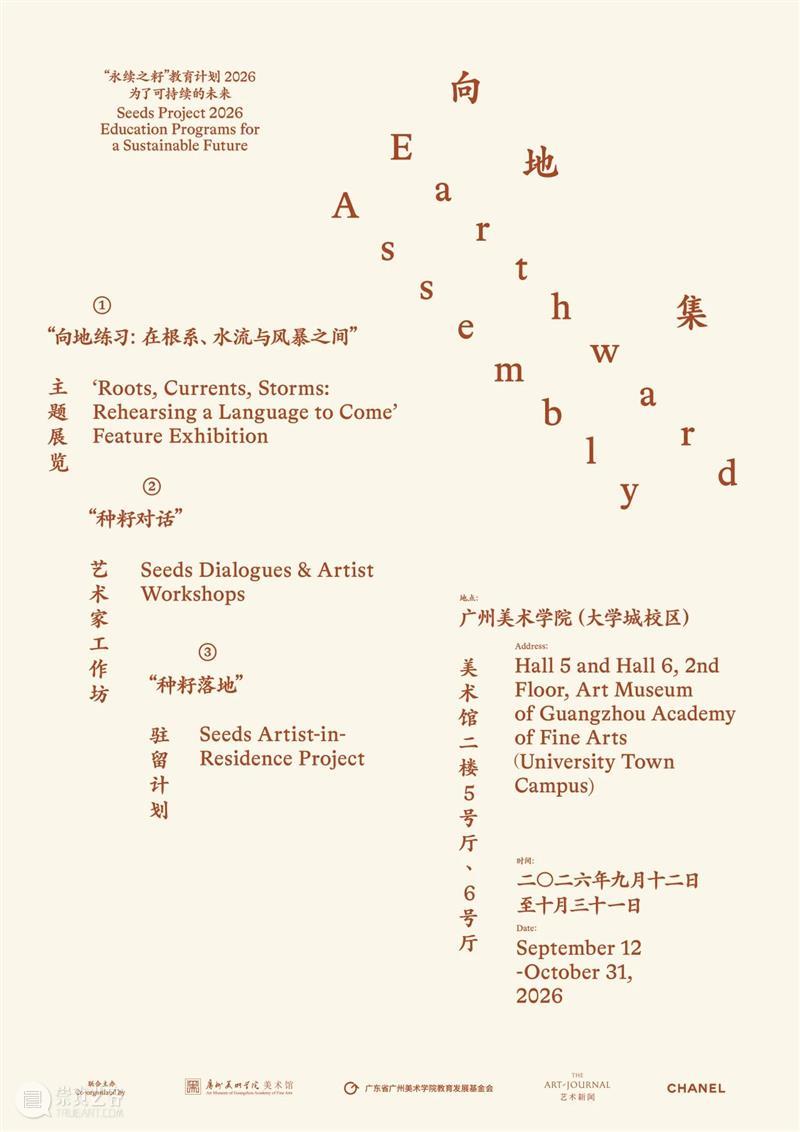
展览预告 | 2026“永续之籽”主题展览“向地练习:在根系、水流与风暴之间”
“永续之籽”教育计划由《艺术新闻》与CHANEL于2023年共同发起,旨在“面向新生态,发现新世代,孕育新创作”,通过共学、工作坊、展览、驻留等方式,支持青年创作者展开生态艺术实践与跨学科研究。
2025年,第二届“永续之籽”来到广州,由《艺术新闻》与广州美术学院研究生院、广州美术学院大学城美术馆展开合作,以“共栖之岛”为主题开展交流共学与创作支持,组织全国高校青年创作者进入广州美术学院大学城校区及周边村落、水域、社区与城市空间进行田野调研。
2026年,“永续之籽”教育计划由广州美术学院美术馆、广东省广州美术学院教育发展基金会、《艺术新闻》及CHANEL联合举办。以“向地集”为主题,通过主题展览、艺术家工作坊、驻留及公共教育等项目,持续探索高校艺术教育与地方生态实践之间的连接。
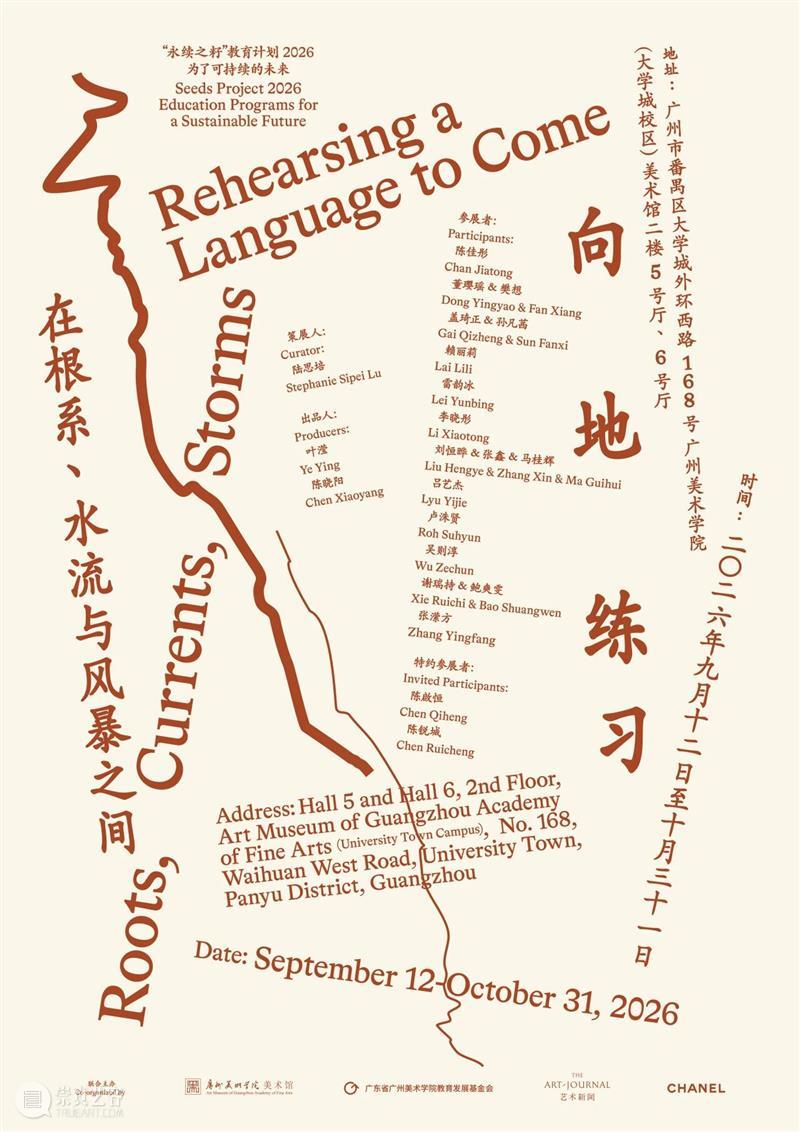
向地练习:在根系、水流与风暴之间
Roots, Currents, Storms: Rehearsing a Language to Come
展期:2026年9月12日–10月31日(逢周一闭馆)
地点:广州美术学院(大学城校区)美术馆二楼5号厅、6号厅
开幕时间:2026年9月12日 (周六)14:30
联合主办:广州美术学院美术馆、广东省广州美术学院教育发展基金会、《艺术新闻》、CHANEL
出品人:叶滢、陈晓阳
策展人:陆思培
展览统筹:赵凡
项目统筹:赵悦
项目执行:季佳雯、申采奕
展览执行:陈绘 黄兴彪
项目传播:姚佳南、赵时雨
公共教育:王秀媛、余爽、刘子瑗
执行助理:郑衡
展览文本协力:叶葳
空间设计:第一芬兰松馆
平面设计:a one and a two design
参展者:陈佳彤、董璎瑶&樊想、盖琦正&孙凡茜、赖丽莉、雷韵冰、李晓彤、刘恒晔&张鑫&马桂辉、吕艺杰、卢洙贤、吴则淳、谢瑞持&鲍爽雯、张潆方
特约参展者:陈啟恒、陈锐城
Date:September 12-October 31, 2026 (Close on Monday)
Address:Hall 5 and Hall 6, 2nd Floor, Art Museum of Guangzhou Academy of Fine Arts (University Town Campus)
Opening Time:September 12, 2026 (Saturday) 14:30
Co-organised by:Art Museum of Guangzhou Academy of Fine Arts | GAFA Education Development Foundation | The Art Journal | CHANEL
Producers:Ye Ying & Chen Xiaoyang
Curator:Stephanie Sipei Lu
Exhibition Coordinator:Zhao Fan
Project Coordinator:Zhao Yue
Project Execution:Ji Jiawen & Shen Caiyi
Exhibition Production:Chen Hui & Huang Xingbiao
Project Communication:Yao Jianan & Zhao Shiyu
Public Education:Wang Xiuyuan & Yu Shuang & Liu Ziyuan
Production Assistant:Zheng Heng
Exhibition Text Collaborator:Ye Wei
Space Design:One Pine House
Graphic Design:a one and a two design
Participants:Chan Jiatong, Dong Yingyao & Fan Xiang, Gai Qizheng & Sun Fanxi, Lai Lili, Lei Yunbing, Li Xiaotong, Liu Hengye & Zhang Xin & Ma Guihui, Lyv Yijie, Roh Suhyun, Wu Zechun, Xie Ruichi & Bao Shuangwen, Zhang Yingfang
Invited Participants:Chen Qiheng, Chen Ruicheng
一旦试图讲述一个地方,事情便会复杂起来。“地方”并不存在稳定不变的本质:河流、电网与耕地彼此嵌入,不同的地质时间相互叠合,风景在被不断制造,人和非人也总是在关系中塑成彼此……什么是地方?我们如何面对关于地方叙事的冲动与责任?
第二届“永续之籽”教育计划在2025年度开启“共栖之岛”交流共学与创作支持项目,聚焦“可共享的地方经验”。在这里,“地方经验”是一个目标,一个提示词,还是一种路径?在2025年10月为期一周的共学工作坊与田野工作之后,学员们重新提交了创作方案,并进入到作品创作阶段。作为第二届“永续之籽”教育计划2026年度展览项目的策展人,我的主要工作是与学员沟通方案深化、作品制作,并促成展览成形。我注意到,有的作品聚焦聚焦调研和知识生产,有的作品强调“与我有关”的切身处境;“地方经验”既可能是长期创作中被提取的一个切面,也可能进入作品话语和形式的中心。创作者也讨论如何“命名”和“观看”:什么关系、什么时间、什么流动与什么尺度,使这个地方暂时成为了现在的这个地方?
在这个过程中,展览的主题—“向地练习:在根系、水流与风暴之间”—浮现出来。我们试图离开抽象的生态议题、宏大的环境叙事或已经被命名的地方知识,而是把身体、经验、材料和行动放回具体的地面。作品带来的最强烈的感受,也许并非是其如何表征,而是创作者如何身处其中,在怎样的目光与路径中与世界接触、交换,并被其改变。而“我”之所以感到某种责任,不只是因为“我”和“这里”有关,也是因为“这里”本身就已经参与了无数超越这里的关系。
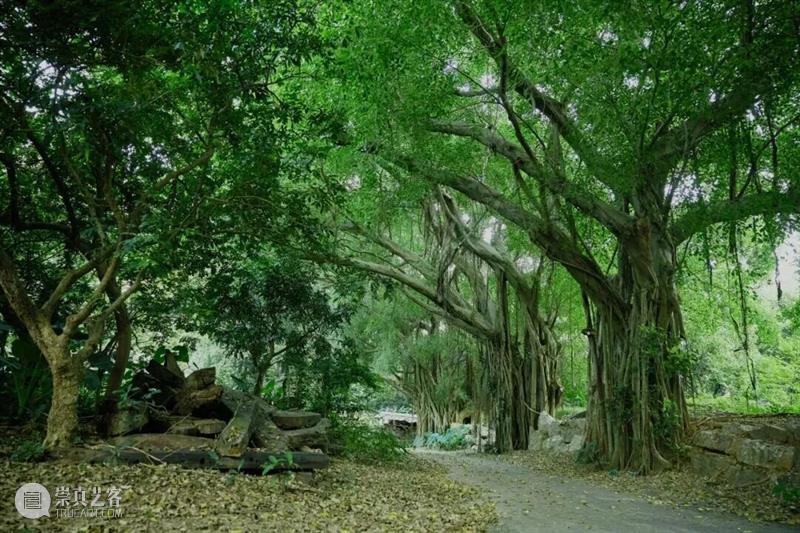
小谷围岛上的榕树景观
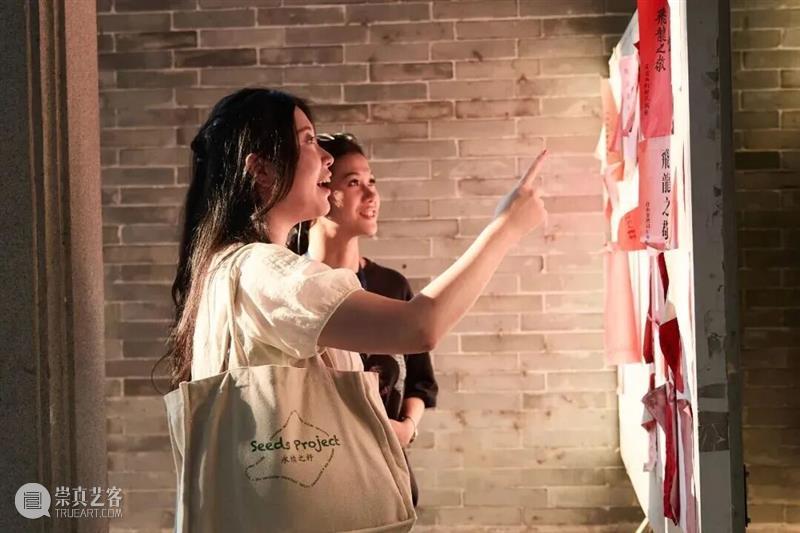
探访南亭村关氏祠堂,第二届 “永续之籽”教育计划“共栖之岛”交流共学与创作支持项目现场,2025年
有的创作反复来到现场。吴则淳在两年的时间中以重庆虎溪河为中心行走、观察与记录,从科学测绘、社会变迁研究等不同角度接近河流,并由此创作影像、装置、绘画、自出版物及参与式艺术工作坊,形成作品《行溪·摸脉》。《电系、清洁与都市塔基农作》源自雷韵冰对重庆大学城高压输电塔下耕地的观察。土地如何被使用、占领、分割?人们如何对耕种环境进行适应性改造?基础设施在其中扮演什么角色?艺术家通过影像、3D打印雕塑等形式回应这些伴生关系。谢瑞持、鲍爽雯的影像《新的山》则以南京冶山野菜及其生长环境为局部切口,摄影机穿越矿山自20世纪50年代至今多重时间,最终抵达因长期采矿而暴露的断层表面,而植物的采摘、交易与消化过程则生成新的地景。《植物的漫游》关注小谷围岛上一块特殊的地方:“大学城南”地铁站顶板。这里长期处于围栏封锁的闲置状态,周边被学校与居住社区环绕,内部非人工栽培植物自发演替,熙熙攘攘的人群早已习惯对这片“荒地”视而不见。刘恒晔、张鑫、马桂辉从景观/建筑的学科背景出发进行采样调查,设计了一套桌游和现场互动装置,带我们进入这一片复杂而又多元的地方生态。在这些实践中,地方并不是等待被描绘的对象,而是在反复行走、测绘、劳作、调整距离的过程中,持续生成的关系现场。
有些对象无法直接抵达。《寻找家园:鸟之栖境》的创作者卢洙贤发现城市建筑常常会安装防鸟刺,而鸟类会将防鸟刺作为筑巢材料。她使用钢丝、木材、防鸟刺等城市中被丢弃的材料,并结合自身对鸟类、对城市开发的观察记录,生成了一个充满不确定性的空间:我们在城市中是以何种?式被“允许”存在,又如何随时可能被排除?《过海计划:舌尖犹尝咸涩》是一次对生命的靠近和追问—陈佳彤“从未见过的外婆”在她的生命中无处不在。在一年多“过海”的时间里,陈佳彤通过渡轮、步行、电动车等方式沿着水系漂流,途经十余渡口,融合身体展演、参与式共创、环境装置等媒介,以半虚构影像展开叙事。这些作品试着发问:我们能否理解一只鸟?我们如何想象别的生命?我们无法真正成为他者,但仍然尝试靠近。我们无法完整体验没有我们的历史,却仍然通过材料、身体向世界敞开并建立联系。
有的作品强调,接近的路径本身就在改变对象。《土肉》围绕?连近海养殖户?述、家族养殖经历、灾害事件等展开在地研究。盖琦正、孙凡茜通过表演性演讲,探讨海参这一物种如何在科技、效率与资本的挤压下成为流水线上被精密定价的商品。吕艺杰的影像创作《云永不消散》将“云”视为一种由自然环境和人类认知技术共同塑造的介质;作品想象了一位纳西族族人的目光,以此编排数段美籍植物学家约瑟夫·洛克(Joseph F. Rock)自1922年进入云南之后的探险旅途,拆解摄影机“造云的技术”,聚焦影像同生态、政治等因素的纠缠互动。董璎瑶、樊想聚焦玻璃—这一在都市生活中被用于隔绝自然的界面。《台风经过之后》放大了台风对生命、人造环境产生的形变,以及人类面对灾害时逐渐形成的生活习惯、观察台风的不同视角。在这些创作中,海参、云、荒地植物与台风痕迹都不再只是被观看的对象;它们牵动着技术、资本、规划、灾害与身体经验,也迫使观看者不断调整自身所处的尺度、媒介和位置。
有的作品则将“地方”折叠、携带。布在《碎·花》中是一种多层次的媒介:随风飘起的碎花布是赖丽莉的童年记忆;在晓港碎布市场的纺织产业链边角料获得了新生命;布料的柔软经过堆叠、缝纫、造型也可变成赤裸的伤疤,创作者以此与女性使用布料的不同方式和她们对于劳作和家庭的态度进行对话。《每条江水都会重逢》延续李晓彤过往研究和创作中对于日常生活及其感官裂隙的关注,以基于黄埔港潮汐数据生成的编程动态影像、城市声景、凝固潮汐三个瞬间的水墨盐画为媒介,串联自然节律、城市循环与个体心理。张潆方的创作《落脚》关注身体经验、亲情与民间知识。作品以“汤”为核心线索,以影像和手工书两种媒介,回应离开家乡的人的记忆与情感。在这些作品中,地方经验沉积在布料、潮汐、汤水与身体记忆之中,通过日常材料和媒介实验产生持续回响。
“落脚”“过海”“漫游”“行溪”“电系”“土肉”“新的山”……造新的词,或给已有的词赋予新的涵义,无疑是一种行动方式。这些词标记的是一段段尚未完成的学习:学习如何靠近一条河,如何进入一片野地,如何听见台风在不同身体中的回声,如何在汤水、布料、潮汐和植物的迁徙中辨认自身所在。展览并不试图将这些作品归入固定分类,而希望让它们在彼此交织的主题、材料与经验之间彼此牵引。如何在别无他法的处境中与一个复杂、受损、无法完全掌握的世界重新发生关系?也许,在答案尚未形成之前,在无法全然理解彼此之时,我们仍然可以通过感知、共处与实践,慢慢生成另一种语言。
本次展览还特别设置了“种籽影院”和“种籽图书馆”板块。其中,“种籽影院”邀请第一届参与者陈锐城的《浮游之地——下沉的海洋牧场》以及陈啟恒的《兰花如何思考:成为兰》进行特别放映,这两件以物种与地方生活经验为背景的创作,亦契合本届“永续之籽”教育计划的主题。“种籽图书馆”则收集了本届“永续之籽”学员与导师们在研究与创作中受到启发的读物和文献。在展览之外,项目也邀请了艺术家程新皓、生态艺术研究者与艺术家靳立鹏开展工作坊,并开展“种籽”驻留计划。这些板块共同构成了以“向地集”为题的第二届“永续之籽”教育计划(2026年度)。因此,“永续之籽”教育计划并不是一个以展览为终点的项目。项目希望通过分享历届参与者之间的创作共鸣,促进不同阶段创作者之间的交流,以及社群里的持续学习。
陆思培
广州美术学院新美术馆学研究中心 副研究员
Things get complicated when we try to describe a place. No ‘place’ is essentially static or immutable. Rivers, power grids and cultivated land are woven into one another. Different geological times overlap. Landscapes are continuously being made. Humans and more-than-human beings are constantly making and remaking one another. What is a place? How do we respond to the urge and the responsibility to tell a place’s story?
In 2025, the second edition of the ‘Seeds Project: Education Programs for a Sustainable Future’ launched ‘Island of Coexistence’, an initiative of exchange, collective learning and creative support focusing on shareable experiences of place. In this context, what does it mean to experience a place? Is it an aspiration, a prompt, or a method? Following a week-long collective-learning workshop and fieldwork in October 2025, the participants resubmitted their proposals and began developing their works. My role as curator of the 2026 feature exhibition was primarily to work with the participants as their proposals evolved, to support the production of their works, and to help the exhibition take shape. I noticed that while some works centred on research and knowledge production, others began from lived realities that felt personally connected to them. ‘Experiences of place’ might be just one strand drawn from a longer-term practice, or it might become central to a work’s discourse and form. The artists also investigated how to ‘name’ and ‘look’ — what kinds of relations, temporalities, movements and scales make this place what it is?
It was through this process that the exhibition’s theme emerged — ‘Roots, Currents and Storms: Rehearsing a Language to Come’. We sought to move away from abstract ecological concerns, sweeping environmental narratives and established accounts of local knowledge. Instead, we attempted to ground the work in lived experience where bodies, materials and actions meet. Perhaps the most powerful thing about these works is not how they represent a place, but how the artists situate themselves within it — what ways of looking and what paths of encounter allow them to meet the world, exchange with it, and be changed in the process? ‘My’ sense of responsibility arises not only from ‘my’ own connection to ‘this place’, but also from recognising that ‘this place’ is already implicated in countless relationships extending beyond itself.
Some practices return to the site again and again. Over the course of two years, Wu Zechun walked, observed and recorded along the Huxi River in Chongqing, examining it through scientific mapping and research into social change. His Touch the River, Touch Life emerged from this process, comprising moving image, installation, pictorial works, self-published books, and participatory art workshops. Electrical System, Cleanliness, and Urban Tower-Base Cultivation grew out of Lei Yunbing’s observations of cultivated land beneath high-voltage transmission towers in Chongqing’s University Town. How is land used, occupied and divided? How do people adapt and transform their farming environments? What role does infrastructure play in the process? Lei uses moving image and 3D-printed sculpture to unpack the entangled relations. Xie Ruichi and Bao Shuangwen’s film New Mountain delves into the wild vegetables in Nanjing’s Yeshan Mountain and its natural habitats. The camera moves through the mine’s layered temporalities, from the 1950s to the present, eventually arriving at the fault surface exposed by decades of mining. The gathering, trading and consumption of these plants, in turn, give rise to a new landscape. The Wandering of Plants zooms in on the roof slab of the University Town South underground station, a peculiar spot on Xiaoguwei island in Guangzhou. Surrounded by universities and residential areas, the site has been deserted for years with fences outside and plants growing wild inside, while the ebb and flow of passing crowds take no interest in this patch of ‘wasteland’. Drawing on their backgrounds in landscape and architecture, Liu Hengye, Zhang Xin and Ma Guihui carried out a sampling survey and developed a board game and a series of interactive installations that invite audiences into this complex and diverse local ecology. In these practices, ‘place’ is not an object waiting to be depicted. It is a relational site that takes shape through repeated walking, mapping, labour and continual adjusting distances.
Some works begin with what cannot be reached directly. In Finding Home: Birds’ Home, Suhyun Roh noticed that urban buildings are often fitted with anti-bird spikes that birds repurpose as nesting material. The artist works with discarded urban materials, such as wire, wood and bird spikes, and builds on her observations and records of birds and urban development, to create an uncertain space of installation. In what ways are we ‘permitted’ to exist in the city, and how might we find ourselves cast out at any moment? The Sea-Crossing Project: Still Taste the Salty is an attempt to trace, and reckon with, a life that remains out of reach. Chan Jiatong’s ‘grandmother whom she never met’ is nevertheless present throughout her life. Over the course of more than a year of ‘sea-crossing’, Chan drifted along waterways by ferry, on foot and by electric scooter, passing through more than ten ferry crossings. Her work is a mix of bodily performance, participatory co-creation and environmental installation, unfolding its narrative through semi-fictional moving image. Together, these works ask: can we understand a bird? How do we imagine other forms of life? We cannot truly become another being, yet we keep approaching what we cannot fully know. We cannot fully inhabit histories in which we were not present, yet we continue to embrace and connect with the world through material and bodily experience.
Some works suggest that the very ways in which we approach an object also shape how it comes into view. Flesh of the Soil develops its place-based research through oral accounts from inshore aquaculture farmers, family experiences of aquaculture and episodes of environmental disaster in Dalian. Through a lecture-performance, Gai Qizheng and Sun Fanxi explore how technology, efficiency and capital forcefully reduce the sea cucumber to a commodity assigned a precise value on the industrial production line. In Lyu Yijie’s moving image work Clouds Never Disperse, ‘cloud’ becomes a medium shaped by both the natural environment and mechanism of human perception. The film reimagines the expeditions undertaken by the American botanist Joseph F. Rock after his arrival in Yunnan in 1922 through the imagined perspective of a Naxi member of the expedition. In doing so, it unpacks the camera’s role in ‘making clouds’ — not only bringing Yunnan into view, but also producing layers of technological and epistemic mist — and examines the entanglement of images with ecological, political and other forces. In Dong Yingyao and Fan Xiang’s piece, the focal medium is glass, a material used in urban life to keep nature at a distance. After the Typhoon Passed attends not only to the physical transformations that typhoons bring about in living beings and built environments, but also to the everyday habits people gradually develop in response to disaster as well as to the different positions from which typhoons are observed. In these works, sea cucumbers, clouds, wasteland plants and traces left by typhoons cease to be passive objects before the gaze. Instead, they draw technology, capital, urban planning, disaster and bodily experience into relation, compelling viewers to reconsider the scale, media and position from which they encounter the world.
In other works, ‘place’ is folded and carried beyond its original geography. Fabric functions as a multi-layer medium in Lai Lili’s Fragments of Flowers. The floral fabric fluttering in the wind evokes the artist’s childhood memories, while offcuts from the textile supply chain at Xiaogang Fabrics and Textile Market in Guangzhou are given a new life. Layered, stitched and shaped, the soft fabric becomes a landscape of exposed scars. Through such transformation, the artist places these material changes in dialogue with the many ways in which women use and live with fabric, and with their complex relationships to labour and family. In All Rivers Shall Meet Again, Li Xiaotong continues her enquiry into everyday life and its sensory ruptures. The artist weaves together the rhythms of nature, the cycles of the city and the inner movements of the individual through a generative moving image based on tidal data at Huangpu Port, an urban soundscape, and three ink-and-salt works in which the tide is held, for a moment, in crystallised form. Zhang Yingfang’s Luojiao traces the connections between bodily experience, kinship and vernacular knowledge. Soup lies at the heart of the work, bringing together moving image and a handmade book to stir the memories and emotions of those who have left home. Across these works, experiences of place settle into fabric, tides, soup and bodily memory, continuing to reverberate through everyday materials and experiment in media.
'Luojiao', 'sea-crossing', 'wandering', 'touch the river', 'electrical system', 'flesh of the soil', 'new mountain’… Coining new words, or opening up new meanings within familiar ones, is itself a form of action. These words mark a series of unfinished learning journeys: how to draw close to a river, how to step into a wild place, how to hear the typhoon echoes across different bodies, and how to find our place amid the migrations of soup, fabric, tides and plants. The exhibition does not seek to confine these works within fixed categories. It aims to allow the works to speak to one another through their interwoven themes, materials and experiences. How might we reconnect with a world that is complex, damaged and ultimately beyond our grasp when there seems no way forward? Perhaps, before any answer has taken shape, and while we remain unable to fully understand one another, we can still slowly create another language into being through perception, co-existence and practice.
The exhibition also features two special sections: Seeds Cinema and Seeds Library. Seeds Cinema presents special screenings of Chen Ruicheng’s Land of the Floating: Sinking Sea Ranch, created during the first edition of the Seeds Project, and Chen Qiheng’s How Orchids Think: Become(ing) Orchids. Both works, grounded in the lives of particular species and the realities of place, speak directly to this year’s theme of the Seed Project. Seeds Library showcases a collection of books and source materials that have inspired the current participants and mentors in their research and creative practices. In parallel to the exhibition, the 2026 Seeds Project has invited the artist Cheng Xinhao and the ecological art researcher and artist Jin Lipeng to lead workshops, and has launched a residency programme. Together, these activities complete the 2026 Seeds Project titled ‘Earthward Assembly’. The Seeds Project is not intended to end with the feature exhibition. It aspire to catalyse exchanges between artists at different stages of their development and to keep collective learning alive within the community by sharing the creative affinities and connections that emerge among previous and current participants.
Stephanie Sipei Lu
Associate Research Fellow
Research Centre for New Art Museum Studies,
Guangzhou Academy of Fine Arts
“永续之籽”教育计划这一命名本身,便蕴含着一种生长的姿态——种子虽小,却承载着破土而出的可能;而“永续”并非一季的耕种,而是持续的浇灌与陪伴。2023年,《艺术新闻》与CHANEL联合发起这一教育计划,旨在“面向新生态,发现新世代,孕育新创作”。四年来,该计划已与诸多关注生态与环境议题的高校及艺术机构建立了深度合作。已举办两届的“永续之籽”,每届以两年为期,面向全国高校在校青年创作者公开征集创作方案,通过工作坊、展览、驻留等方式,逐步构建起推动生态艺术创作与教育发展的孵化平台。
“永续之籽”教育计划联结跨学科与跨国界的交流与对话网络,让艺术与生态学、建筑与设计、人类学等领域的知识与经验相互渗透。入选学员与来自生态思想与艺术实践前沿的艺术家、策展人、建筑师和科学家一道,成为“共学”的同伴。在不同学科之间、理论与实践之间、本地经验与全球视野之间,彼此交流与启发——我们相信,真正的创见诞生于跨越边界的地带。
“永续之籽”既扎根于在地的自然、历史与文化脉络之中,又主动对接国际思想与实践的脉动。在2025年“永续之籽”与广州美术学院美术馆与研究生院联合主办的“共栖之岛”交流共学与创作支持项目中,“可共享的地方经验”成为该年度的核心议题。在与来自新加坡、泰国及中国不同学科的导师共学的过程中,学员们的研学并不局限于课堂之内——他们走进小谷围岛的村落、祠堂与水域,观察本地的植被与鸟类,走访艺术家工作室与艺术空间,感受当地社群、历史空间与自然环境的相互嵌合。共学交流、田野调查与艺术思辨融为一体,形成了一个密集而开放的共学场域。
学科维度、认知方式与创作环境的拓展,也在潜移默化中改变着“永续之籽”的生长土壤。如果说2025年度以“共栖之岛”为主题的“永续之籽”教育计划,是在追问“地方经验如何被共享”,那么2026年的“向地集”系列项目则试图将这一问题意识推向新的纵深。“向地”既指向对土地的贴近,也暗示着一种谦逊的转向:创作者以身体力行的方式,与土地、水系、生物乃至周遭的基础设施建立一种共处的关系;“集”所意味的,不仅是作品的汇聚,更是不同学科、生命经验与创作方法之间的相遇与交织。
本年度以“向地集”之名开启的系列项目,包括由入选的12组(17位)“永续之籽“学员参与的“向地练习:在根系、水流与风暴之间”主题展览、“种籽对话”艺术家工作坊与“种籽落地”驻留计划。“向地集”是对“共栖之岛”的延伸——从共栖的状态进一步下沉、俯身,去感知土壤之中植被如何共生,水流如何牵引着个人记忆,风暴的能量如何在环境中被转化,如何在日常的织物与汤水中体察生命的温度……正如生态学研究的是生物与其周遭环境的相互关系,在历时两年的创作发展过程中,“永续之籽”的创作者们逐步打开的,正是对周遭世界及其关联的敏感度与体察能力。
回望“永续之籽”教育计划从2023年至今的发展历程,它不仅是工作坊、主题展览和驻留项目的叠加,更是一种教育范式的持续建构。我们尝试将教育实验带出围墙,进入田野、社区和更广阔的社会现场与自然环境之中。浸润其中的年轻创作者们,也在真实的世界中逐步寻找到与万物联结的语言。
“永续之籽”教育计划持续生长,如同菌丝网络般蔓延、联结。它不追求中心化的控制,而是通过林下的传导,让信息、营养和能量流向需要的地方;它不急于在地表之上建造宏大的结构,而是在根茎之间织就富有韧性的网络,让整片土壤变得丰饶、通透、充满生机。在适宜的时机,土壤中自然会生长出如子实体一般的成果,乃至生发成群的蘑菇圈。
有一天,当我们回望此刻,会发现今天所有这些绵密的耕耘,都在为一种更具包容性、更富敏感度与行动力的艺术教育生态,提供着不可或缺的养分。以培育生态的方式展开生态艺术教育实验,并非去塑造某一个确定的未来,而是为未来的种籽营造有机的土壤,从而生发更多可能。
叶滢
《艺术新闻》主编
“永续之籽”教育计划发起人
The very name of the Seeds Project: Education Programs for a Sustainable Future carries within it a gesture of growth—though small, a seed holds the potential to break through the soil; and "sustainability" is not a single season of cultivation, but an ongoing process of watering and companionship. In 2023, The Art Journal and CHANEL jointly launched this educational initiative, with the aim of "embracing new ecologies, discovering new generations, and nurturing new creations." Over the past four years, the program has established deep collaborations with many art institutions focused on ecological and environmental issues. Now in its second edition, Seeds Project operates on a two-year cycle for each iteration, openly calling for project proposals from young creators currently enrolled in universities nationwide. Through workshops, exhibitions, residencies, and other formats, it has gradually built a platform that fosters both ecological art practice and educational development.
The Seeds Project weaves a cross-disciplinary and transnational network of exchange and dialogue, allowing knowledge and experience from fields such as art, ecology, architecture, design, and anthropology to interpenetrate one another. Selected participants, together with artists, curators, architects, and scientists at the forefront of ecological thought and artistic practice, become companions in "co-learning." Across disciplines, between theory and practice, between local knowledge and global perspectives, through mutual exchange and inspiration, we believe that genuine insight is born in the spaces that transcend boundaries.
The Seeds Project is rooted in local natural, historical, and cultural contexts, while actively engaging with international currents of thought and practice. In the 2025 "Island of Coexistence" exchange, co-learning, and creation support project, co-organized with the Guangzhou Academy of Fine Arts, "shareable local knowledge" became the year's core theme. During the co-learning process with mentors from Singapore, Thailand, and China across various disciplines, the participants' studies extended far beyond the classroom—they ventured into the villages, ancestral halls, and waterways of Xiaoguwei Island, observed local vegetation and birdlife, visited artist studios and art spaces, and experienced the interweaving of local communities, historical spaces, and the natural environment. Co-learning exchanges, fieldwork, and artistic reflection were integrated into a dense yet open field of shared learning.
The expansion across disciplinary dimensions, cognitive approaches, and creative environments has also been subtly transforming the soil in which Seeds Project grows. If the 2025 edition, under the theme "Island of Coexistence," asked the question "how can local experience be shared?", then the 2026 "Earthward Assembly" series of projects seeks to advance this questioning toward a new consensus. "Earthward" points both to a closeness to the land, while also suggesting a humble turn: creators establish a co-existential relationship with the land, waterways, living beings, and even the surrounding infrastructure through embodied practice. The term "Assembly" implies not only the coming together of works, but also the encounters and interweaving of different disciplines, life experiences, and creative methods.
This year's series of programs launched under the name “Earthward Assembly," includes a thematic exhibition titled “Roots, Currents, Storms: Rehearsing a Language to Come”, featuring works by the 12 selected groups (17 participants) of the Seeds Project, “Seeds Dialogues” Artist Workshop and Seeds Artist-in-Residence Project. “Earthward Assembly” is a extension of "Island of Coexistence"—descending further from a state of co-habitation, bending down to perceive how vegetation symbiotically grows within the soil, how water currents carry personal memories, how the energy of storms is transformed within the environment, and how one may sense the warmth of life through everyday fabrics and broths… Just as ecology studies the interrelationships between organisms and their surroundings, what the creators of Seeds Project have gradually unfolded over this two-year creative journey is precisely a heightened sensitivity and capacity for perceiving the world around them and its interconnections.
Looking back on the trajectory of Seeds Project from 2023 to the present, it is not merely an accumulation of workshops, exhibitions, and residencies, but rather an ongoing construction of a new educational paradigm. We have sought to bring educational experimentation beyond institutional walls, into fields, communities, and the broader social and natural landscape. The young creators immersed in this process are, step by step, finding a language of connection with all living things in the real world.
The Seeds Project continues to grow, spreading and connecting like a mycelial network. It does not pursue centralized control, but channels information, nutrients, and energy through the underground network to where they are most needed. It does not rush to build grand structures above the surface, but weaves resilient webs among the roots and rhizomes, enriching the entire soil—making it fertile, permeable, and vibrant. When the conditions are right, fruiting bodies will naturally emerge from the soil—and even rings of mushrooms will appear in abundance.
One day, when we look back at this moment, we will recognize that all of today's painstaking cultivation is providing indispensable nourishment for a more inclusive, more sensitive, and more action-oriented art-educational ecology. To carry out the experiment in ecological arts education through the cultivation of ecology itself is not to shape a predetermined future, but to cultivate the organic soil for the seeds of tomorrow, so that they may find ever more possibilities for germination.
Ye Ying
Editor-in-Chief, The Art Journal
Founder, Seeds Project: Education Programs for a Sustainable Future
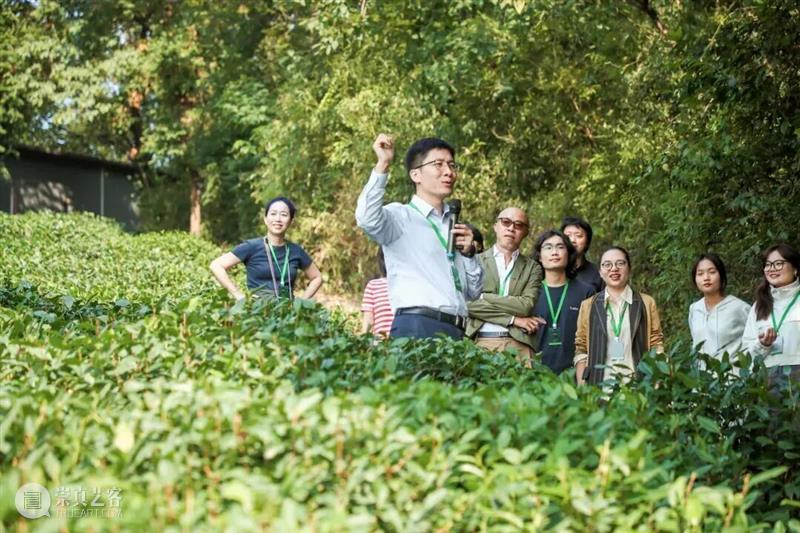
第一届“永续之籽”教育计划“向山学园”交流共学与创作支持项目现场,中国美术学院象山校区,2023年
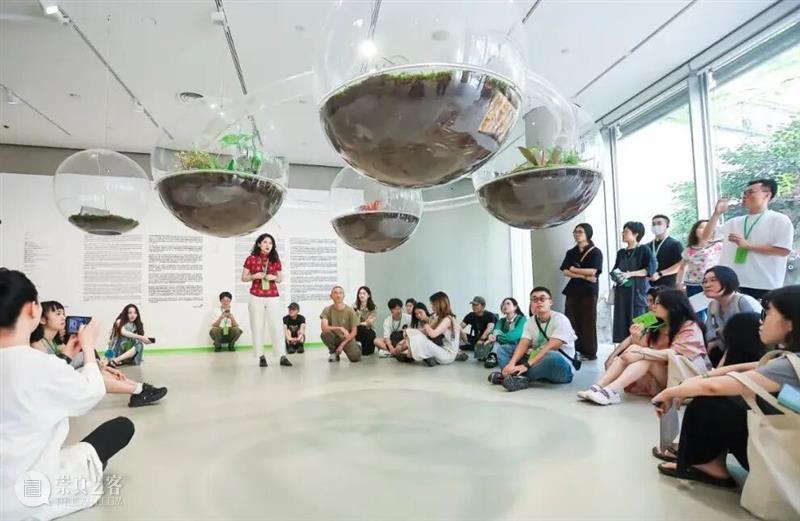
第一届“永续之籽”教育计划“看见万物”主题展览开幕现场,BY ART MATTERS RESIDENCY天目里美术馆驻留中心,2024年
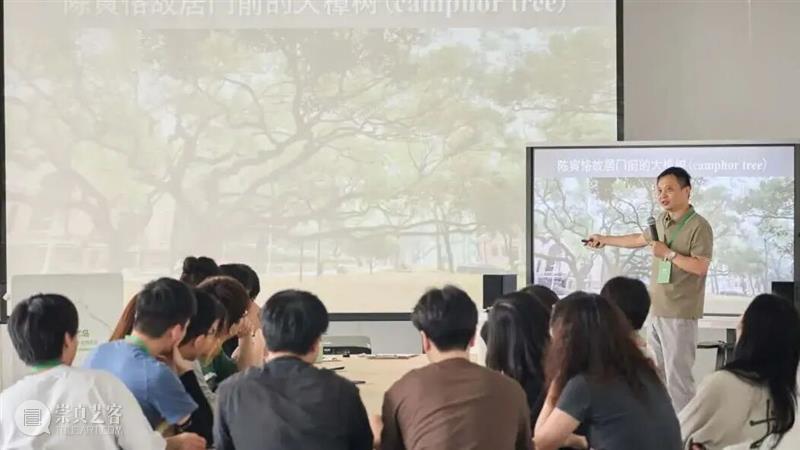
第二届 “永续之籽”教育计划“共栖之岛”交流共学与创作支持项目现场,广州美术学院大学城校区,2025年
编辑 | 赵凡
审核 | 王秀媛 刘子瑗 余 爽
审定 | 陈晓阳 洪荣满

 {{newsData.good_count}}

 {{newsData.transfer_count}}


 {{item.good_count}}k
已展示全部
{{item.publisher_name}} 发布了 文章
{{item.title}}
更多功能等你开启...


 分享