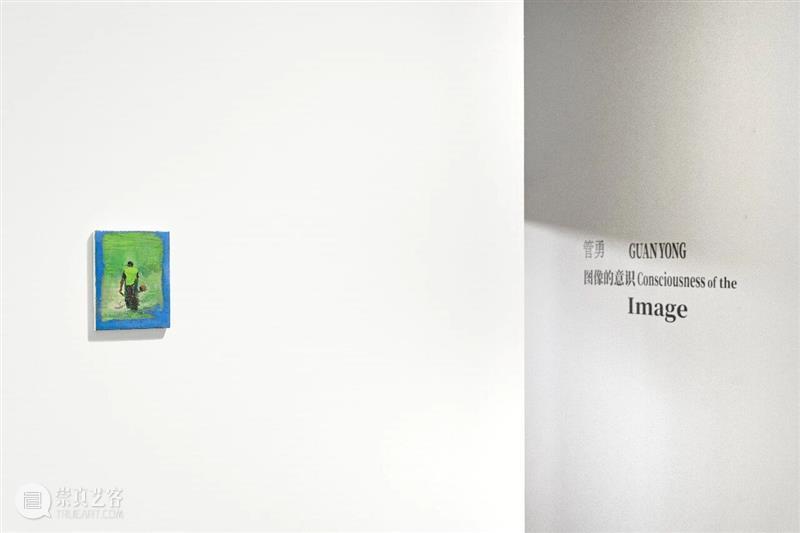
Guan Yong: Consciousness of the Image
Text by Sun Yongzeng
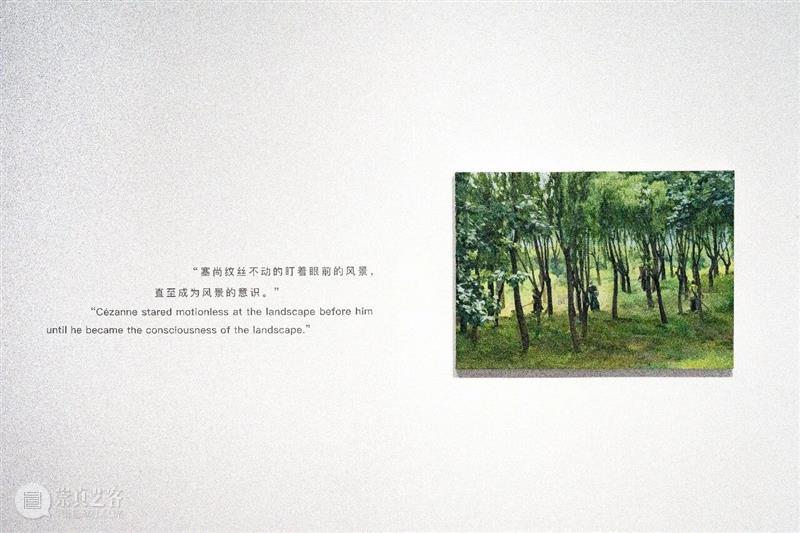
From the theoretical perspective of the phenomenology of visual art, gazing is never a mere visual act, but an ontological interaction in which the subject and the world, consciousness and being, interpenetrate at profound levels. If phenomenology offers us a mode of perception that returns us to the things themselves, then visual art, acknowledged for its phenomenological depth, constitutes a perceptive and incisive path for perceiving the world. In Cézanne’s Doubt, Maurice MerleauPonty quotes Cézanne’s own words: “The landscape thinks itself in me, and I am its consciousness.” Cézanne described himself as “the consciousness of the landscape”. This intrinsic bond of reciprocal co-existence and mutual reflection between human beings and the world reshapes how we look at nature and reality, and transforms both creative practice and aesthetic reception in modern art.
Guan Yong’s recent artistic practice inherits this phenomenological vision and mindset, from which he develops a critical reflection on “imageviewing” in the age of images. Moving from Cézanne’s embodied gaze upon nature and Morandi’s profound contemplation of objects, he extends his inquiry into the digital era to ponder the question: “How do humans look at an image?” For Guan Yong, human society has evolved from natural civilisation and the industrial age into the information era, where images represent an inescapable reality of our present time. Taking imagemedia as his creative foundation, he engages in repeated subjectobject interactive gazing alongside painterly practice, excavating the symbolic meanings and perceptual structures embedded within images to achieve a painterly translation of “the consciousness of the image”. If images carry the consciousness through which objects and the world manifest themselves, Guan Yong’s paintings enact a reawareness of that manifested consciousness and a further transformation of existing images. Through painting, the ontological essence and perceptual structures borne by images open themselves to viewers. Within the twoway dynamic of media reconstruction and retrospective consciousness, painting transcends mere visual representation and becomes a spiritual vehicle reaching the depths of worldly being. Through this highly reflective body of work, he responds to the prevailing visual context of our digital age: the proliferation of fragmented images fosters superficial, fleeting and passive viewing habits that dissolve the profound implications and intrinsic value of things, while fragmenting the wholeness of human perception and subjective agency. Guan Yong’s phenomenological mode of seeing and practice offers an aesthetic correction and spiritual redemption for this predicament of superficial vision, reawakening human attention and capacity to perceive the world deeply.
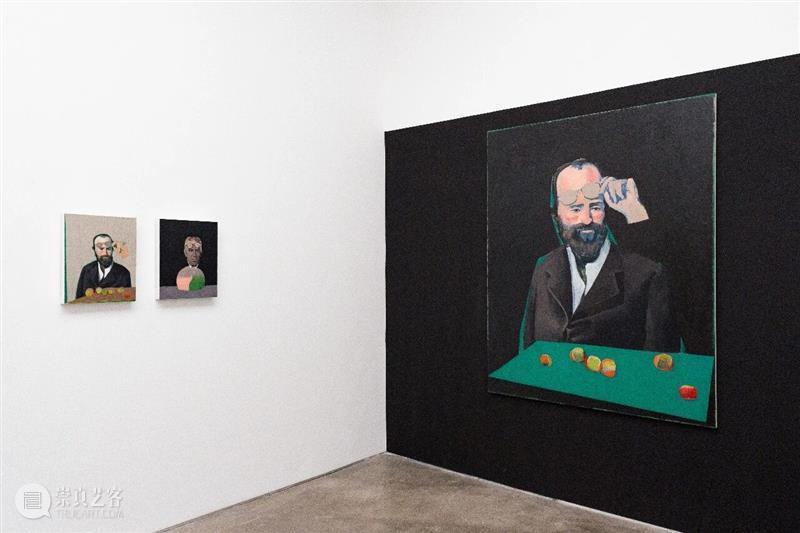
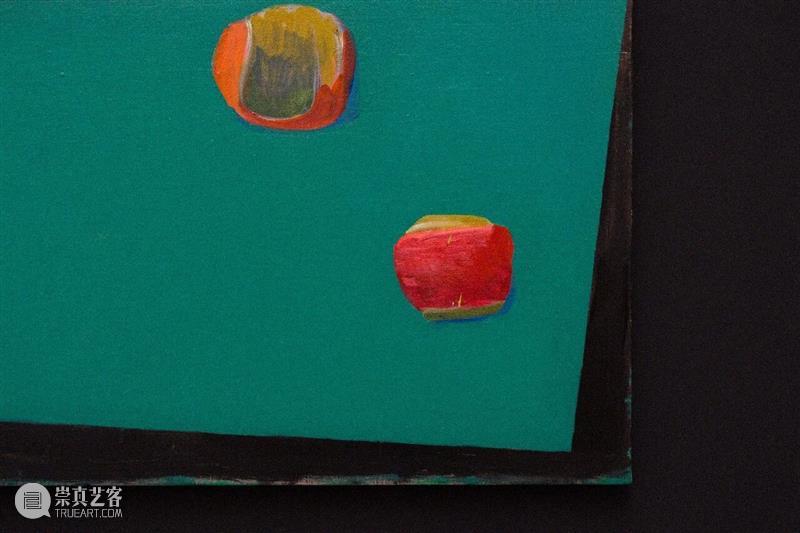
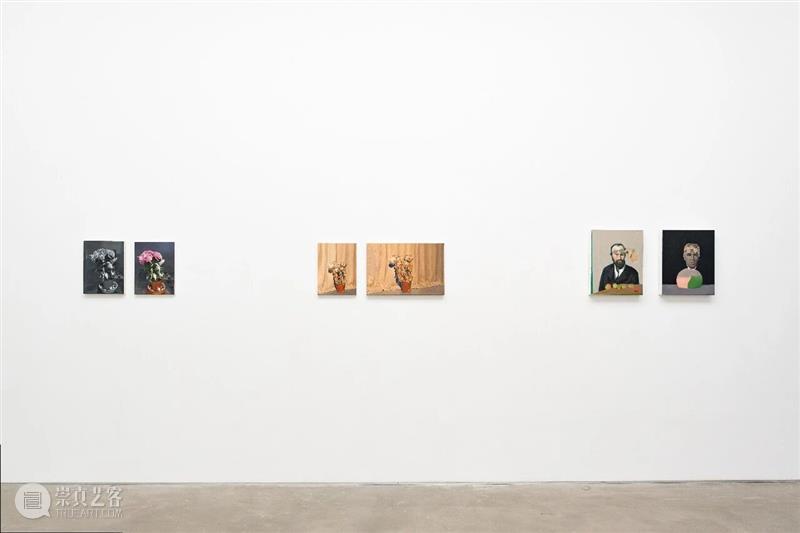
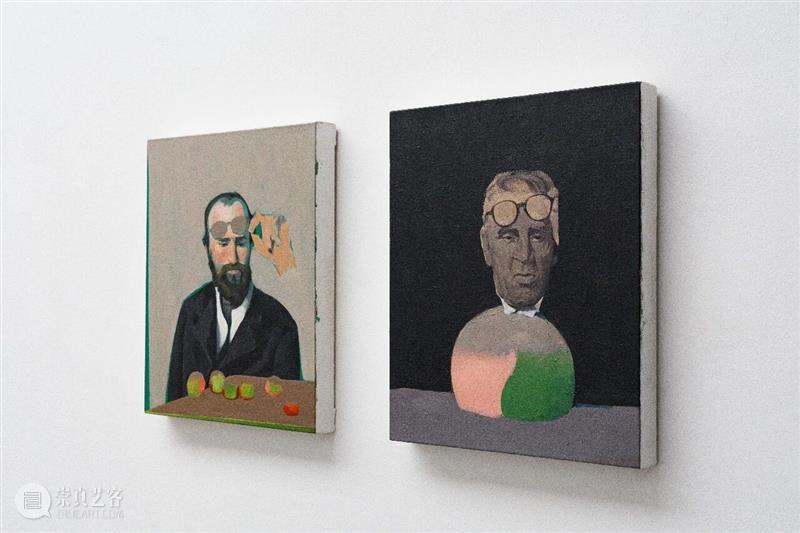
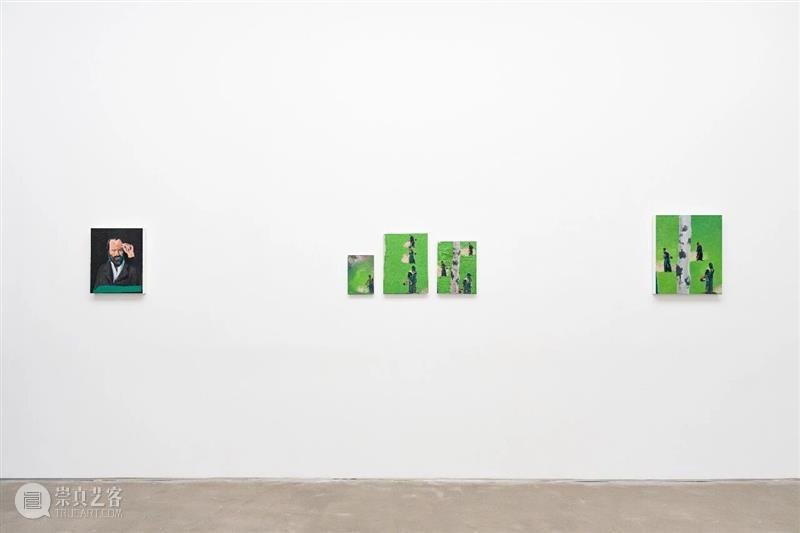
The exhibition Consciousness of the Image presents three recent series by Guan Yong: portraits, floral stilllifes, and The Man Mowing in the Woods. Together they articulate his reflections and explorations surrounding the consciousness of the image.
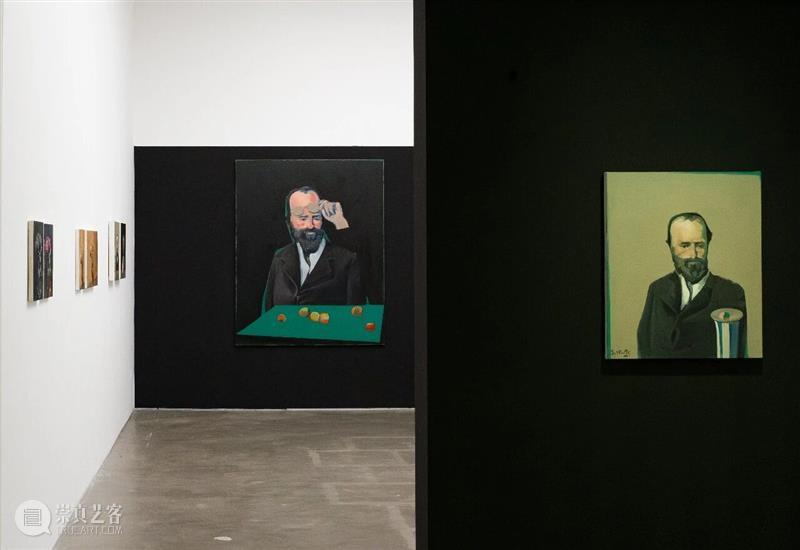
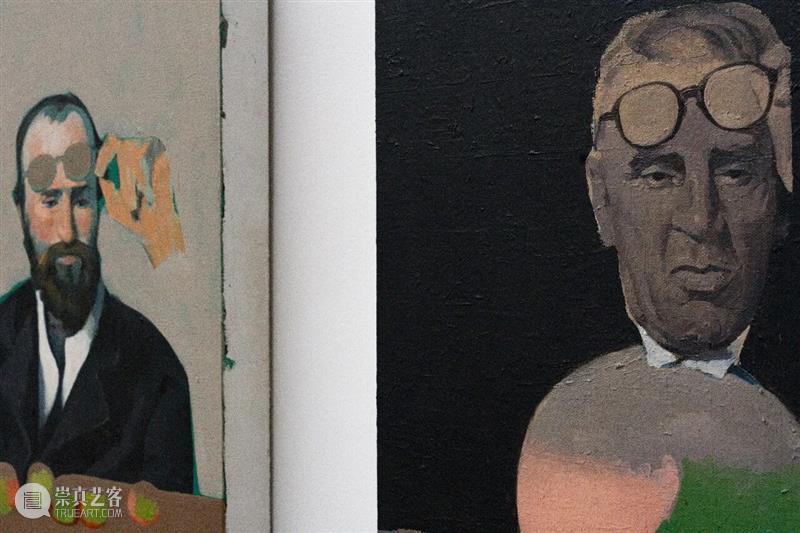
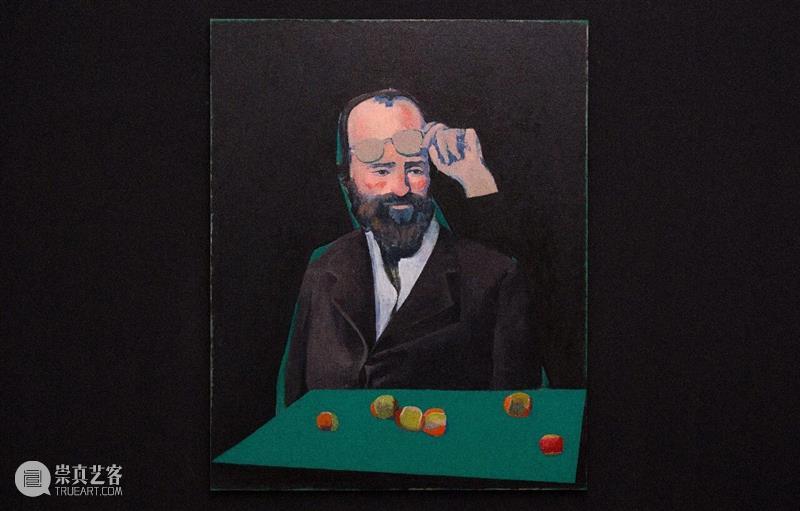
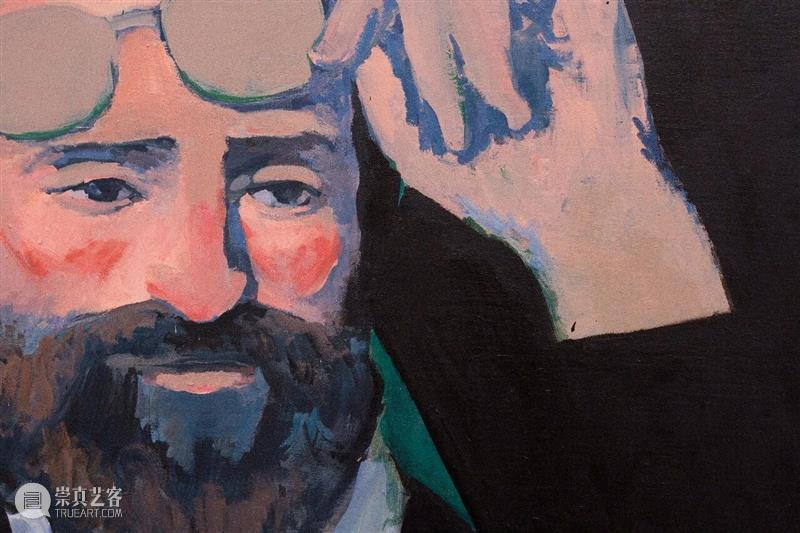
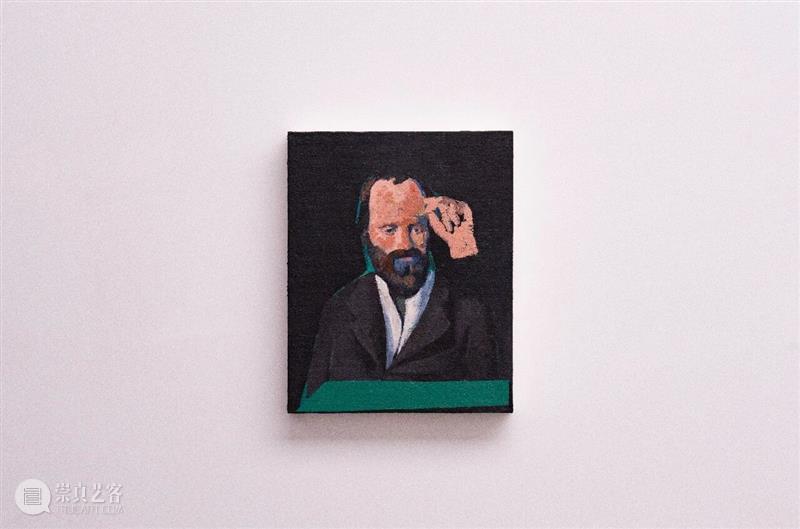
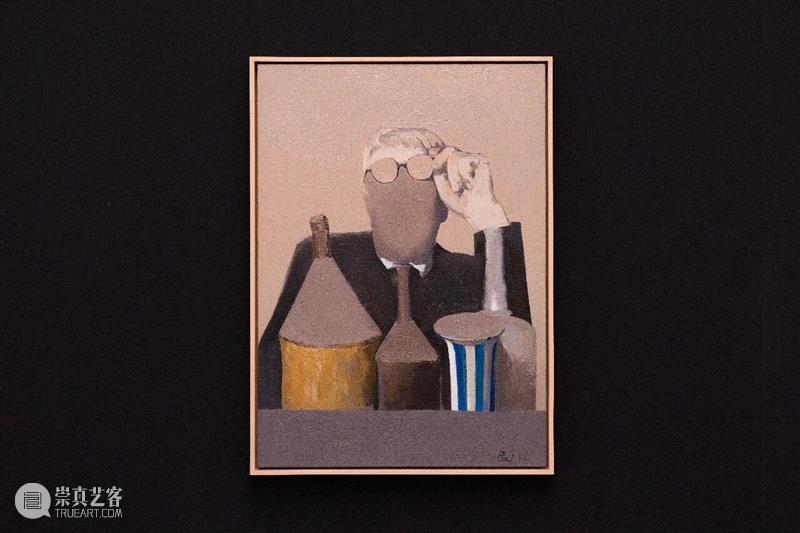
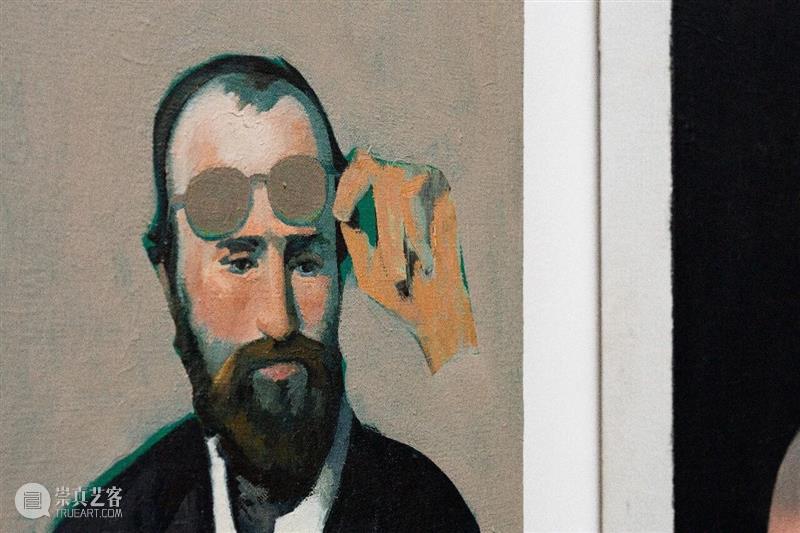
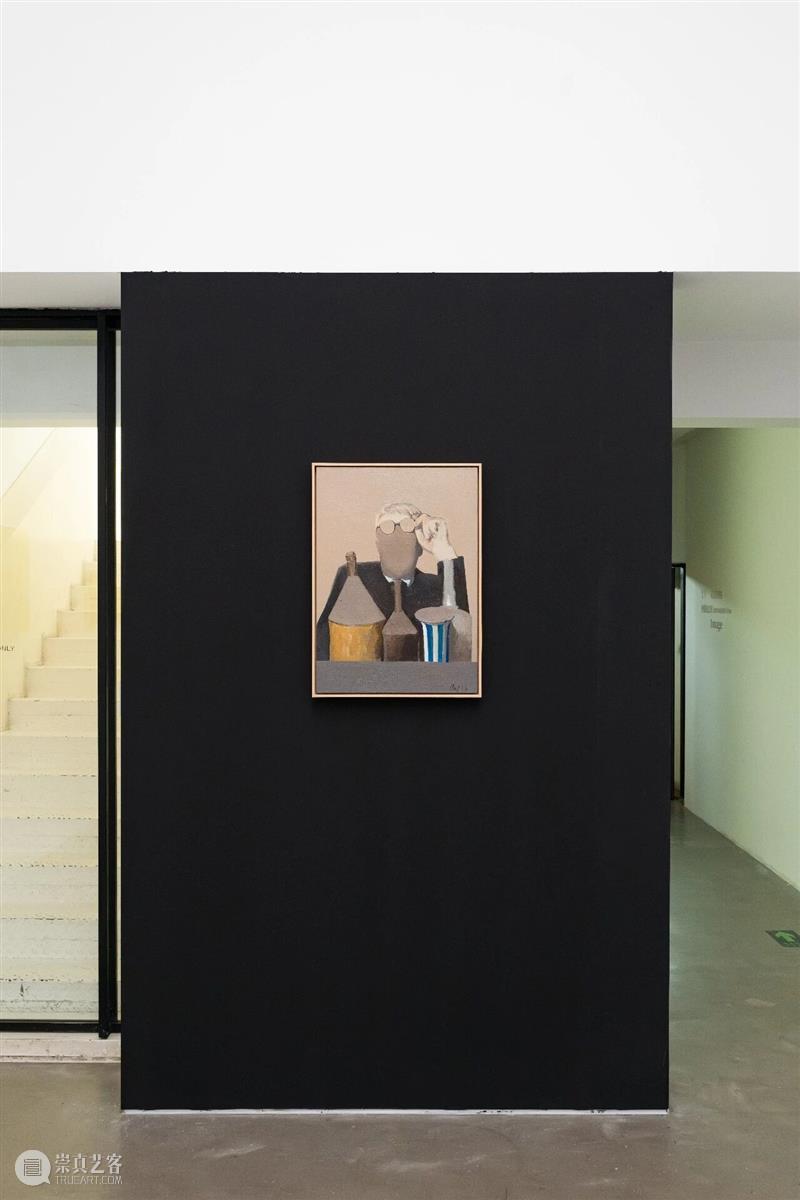
Within the portrait series, Guan Yong selects the symbolic figures of Cézanne and Morandi as the point of departure and spiritual reference for his investigation into the consciousness of the image. As MerleauPonty interprets it, the core value of Cézanne’s art lies in the reciprocal interweaving of bodily perception and the natural field. This is evident in his Montagne SainteVictoire series: through prolonged observation and gazing at this native landscape, Cézanne attained a profound harmony between subjective spirit and objective nature. He allowed the latent order, rhythm and vitality of nature to permeate his consciousness, enabling nature’s being to manifest itself in painting through the artist’s embodied experience. Morandi’s practice, by contrast, continuously purified stilllife vision and stripped away extraneous symbolism from objects. Both artists were practitioners of this “pure seeing”. However, Guan Yong’s portraits of Cézanne and Morandi are not portraiture in the conventional sense. Using portraiture as a medium, he seeks to inhabit Cézanne’s and Morandi’s systems of vision and perceptual paradigms, tempering and reconstructing his own way of seeing. Unlike Cézanne and Morandi’s direct, embodied contemplation of nature and physical objects, Guan Yong’s work gradually builds a threelayered perceptual framework: “imageperceiving subjectpainterly text”. His object of gaze shifts from original natural scenes to manmade secondary images. If the source images he works from hold his initial gaze and primary consciousness of objects, the act of painting constitutes a second gaze and perception of that aesthetic experience, which then brings forth the consciousness of the image.
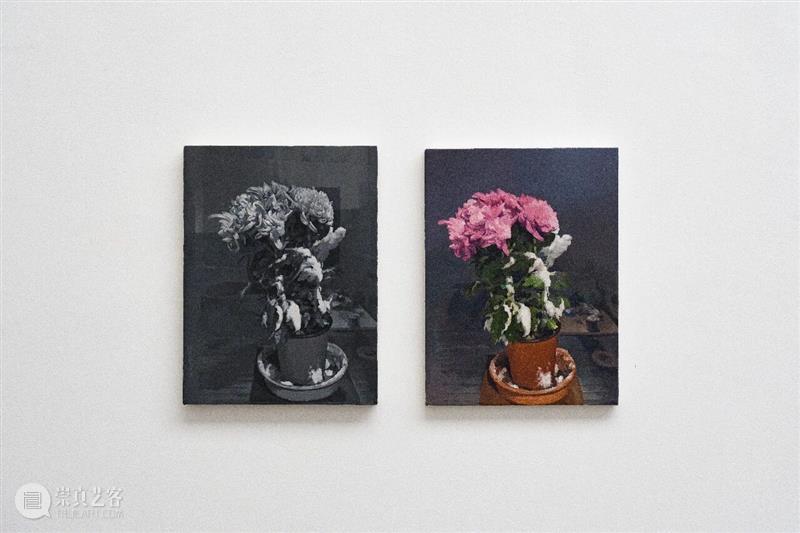
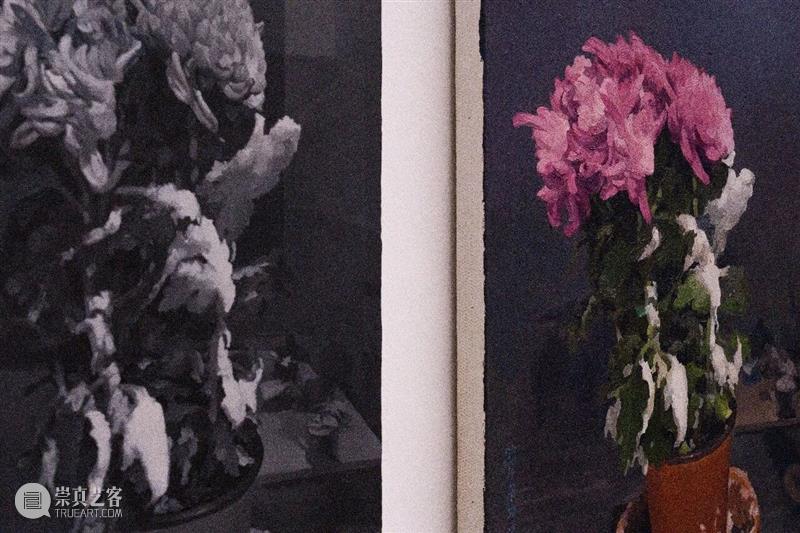
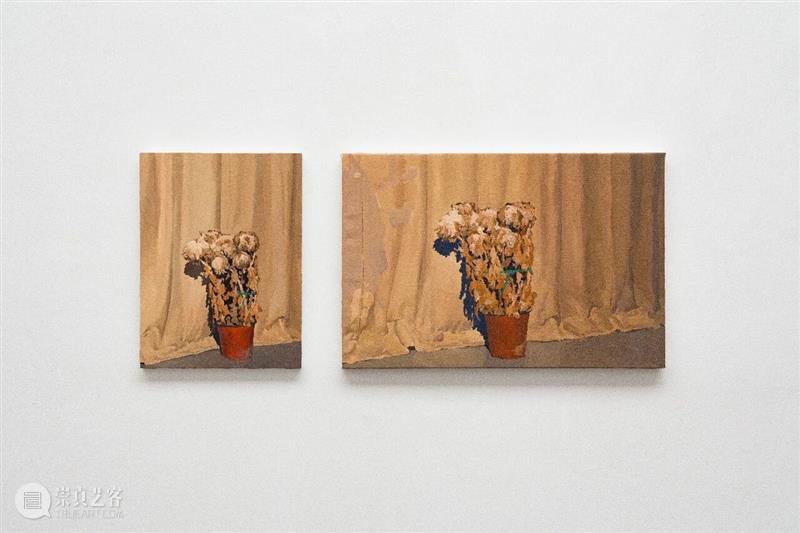
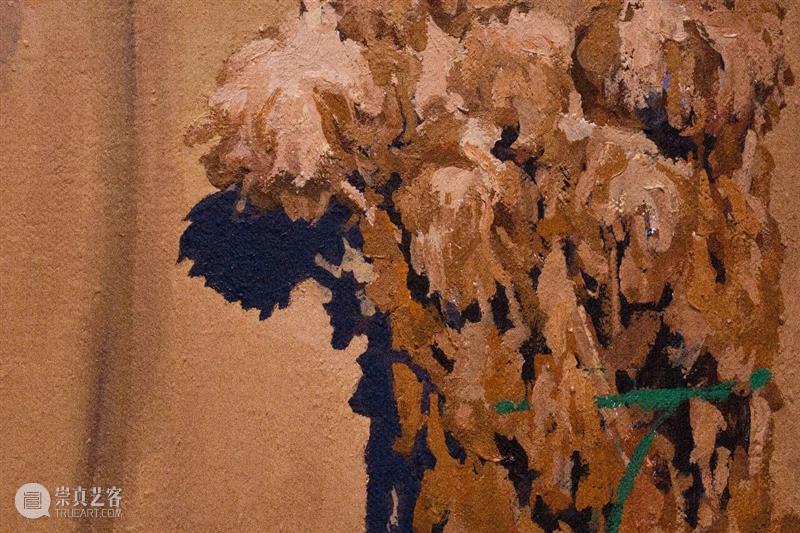
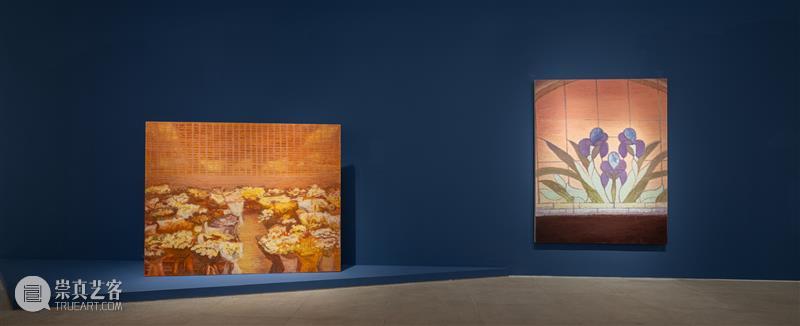
The floral series forms another key vessel for Guan Yong’s thinking on image consciousness and the philosophy of life. All works in this series are drawn from documentary photographs of one single plant in his studio. By capturing its life trajectory from full bloom to withering, together with modulating background voids and dynamic layers of light and shadow, the artist has restored time and life to the images in painting. Rejecting the emotional projection and symbolic conventions of traditional flower painting, Guan Yong retains a pure phenomenological intuition to meditate on the essence of life behind blooming and decay. Blossoming clusters glow vividly with exuberant life. Withered branches carry quiet solemnity, distilling the authentic meaning of existence. This media translation from ordinary photos to painting is far from mechanical reproduction. It is subjective consciousness’s act of awakening and endowing meaning upon the inner life of the source image that grants the static documentary imagery an intuitive spiritual depth and philosophical dimension.
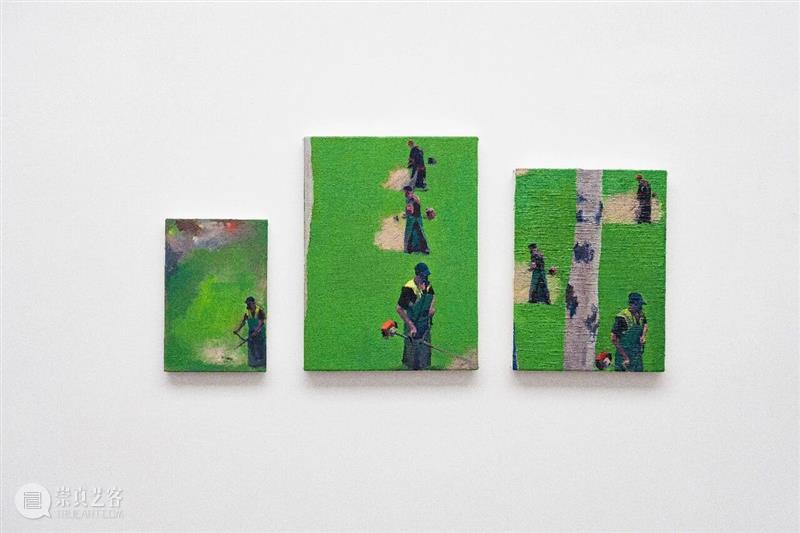
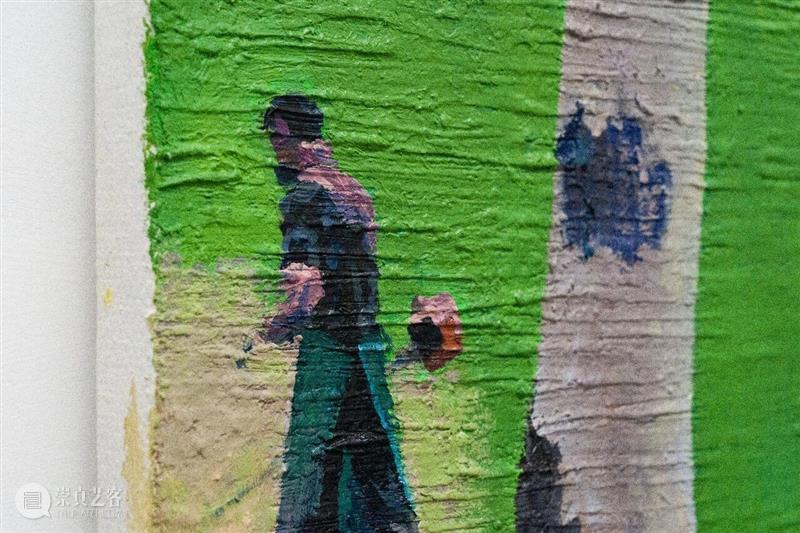
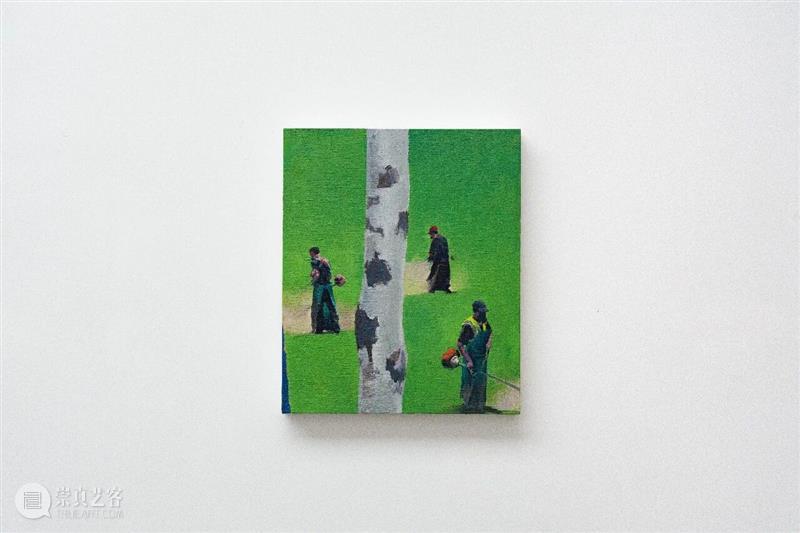
In the series The Man Mowing in the Woods, the artist deconstructs and reconstructs the positions of object images and spatial structures, further deepening his proposition of creation: how does an image appear to consciousness? Guan Yong deliberately chooses this mundane motif of a mower in woodland, steering clear of implicit social narratives, symbolic connotations and critical agendas. This ordinary, neutral scene, largely free of heavy symbolic coding, strips away surplus symbolic and social burdens, releasing the image from narrative duty so that the image becomes a pure object of gaze and perceptual investigation. For this series, photography is used to capture positional relations and spatial configurations in an instant. Yet Guan Yong does not settle for accepting photography’s “one definitive moment”. By repeatedly shifting the mower’s position and adjusting spatial distance and overlapping occlusion between figure and woodland backdrop, he unlocks the frozen stasis embedded in the source image. Slow, subtle displacements of the figure simulate the movement of gazing inside the pictorial medium. The painter’s gaze no longer merely receives the readymade visual output of the photo. Instead, he repeatedly enacts seeing itself: what would this scene manifest if my sight shifted slightly, if the figure moved marginally within space?
Guan Yong’s oeuvre can be examined through the rich lenses of phenomenology. Edmund Husserl’s theory of intentionality reveals that the appearance of an image always unfolds within the intentional conscious experience of the beholder. Without the consciousness of seeing, a painting is nothing more than material components such as pigment and canvas. It is the intuitive gaze of consciousness that transforms objective physical matter into phenomenal appearance with existential meanings. Meanwhile, MerleauPonty’s phenomenological notion of the flesh elucidates that seeing is an existential event featuring the entanglement between subject and image: the subject opens perception to the image, and the image in turn discloses its authentic significance to the subject. JeanLuc Marion’s theory of saturated phenomena further demonstrates that when the subject suspends prior prejudices and rigid preconceptions, the intuitive givenness of the image breaks preestablished conceptual frameworks, exceeds preprogrammed narratives, and reveals an abundant surplus of being. It should be emphasised that the artist does not set out deliberately to execute a philosophical project. Rather, as philosophy interrogates the essence of art, visual art is recognised as the perceptual faculty most endowed with “phenomenological depth”.
Seen in this light, Guan Yong’s recent paintings can be interpreted as “images of images”: they take not original natural things as their model, but secondary images that have already undergone gazing, selection, fixation and manifestation, upon which he represents and reopens the world of images. Equally, they can be described as “consciousness of consciousness”: a dualawareness structure establishes two successive layers of vision. The first layer is the primary image-consciousness carried by objects: photographic images accomplish a first phenomenological manifestation. Landscapes, flowers, figures and lightshadow reveal their own order and mode of existence through the intuitive capture of the lens, which constitute the primary awareness of things. The second layer is the secondary reflective consciousness through painterly transcription: building upon the gaze toward the image, and through a painterly consciousness that sediments, corrects and reconstructs, one performs a second intuition, reduction and unveiling of the image that has already manifested itself. If images enable objects to manifest, Guan Yong’s paintings point to the re-consciousisation and speculative reflection upon the very process of object image’s manifestation. His practice is not the mechanical copying of images. It is consciousness returning to itself, gazing inward and deepening, so that the life and sensuous power of images are reopened within painting.
Endnotes
[1] Phenomenological depth: Core concept proposed by Paul Crowther in Phenomenology of the Visual Arts. It refers to the ontological relation between subject and object within experience. See Paul Crowther, Phenomenology of the Visual Arts, trans. Li Mu, Nanjing: Nanjing University Press, 2021, Introduction pp.34; Chapter 4 “The Presence of the Painter”, p.100.
[2] Maurice MerleauPonty, “Cézanne’s Doubt”, in Eye and Mind, trans. Liu Yunhan, The Commercial Press, 2019, p.42.







 {{newsData.good_count}}

 {{newsData.transfer_count}}




 分享